

Introduction
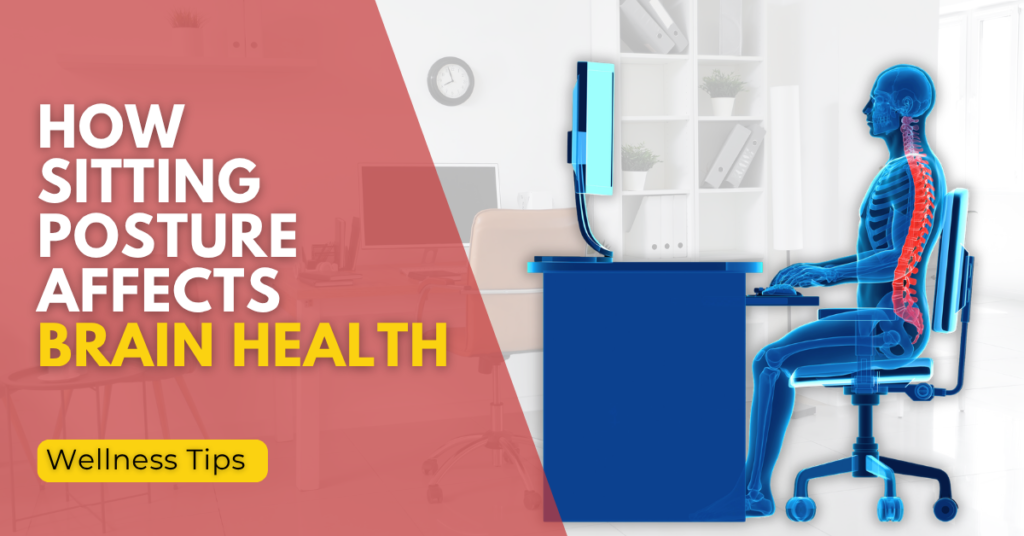
Do you know that how you sit, your sitting posture, can significantly impact your brain health?

Oh yes, it can. Most people think posture only affects the spine or causes back pain, but research suggests it may also influence your energy levels, mental clarity, and cognitive performance and productivity throughout the day. Your sitting posture may affect how your body functions overall, including how efficiently oxygen and nutrients are delivered to the brain.
How Poor Sitting Posture Affects the Brain
- Tiredness and mental fatigue
- Reduced focus and concentration
- Decreased alertness
- Lower productivity
3 Simple Ways to Improve Posture for Better Brain Function
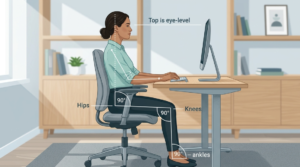 The 90-90-90 rule means keeping your hips, knees, and ankles at approximately 90 degrees. This is the same posture angle many of us were taught in school. When your body is properly aligned, it reduces unnecessary strain and supports more comfortable and stable sitting positions for long hours.
2. Keep Your Work at Eye Level

Whether you are using a laptop, reading a book, studying, sewing or braiding hair, or even scrolling through your phone, try not to stay in a bent-forward position for too long. Bring your work closer to eye level when possible. This helps reduce strain on your neck and supports better posture habits over time.
3. Take Short Breaks
 If your work requires that you sit for long hours, after 60–90 minutes of sitting or focused work, take a short break. Stand up, stretch, or walk around for a few minutes before returning to your task. These short breaks support better circulation, reduce physical tension, and help refresh your mental focus.
Good posture supports better breathing patterns, reduces physical strain, and may help maintain mental alertness throughout the day. While posture alone is not the only factor affecting brain health, it plays a supportive role in how energized, focused, and productive you feel.
Conclusion
I hope this helps.