
Dami

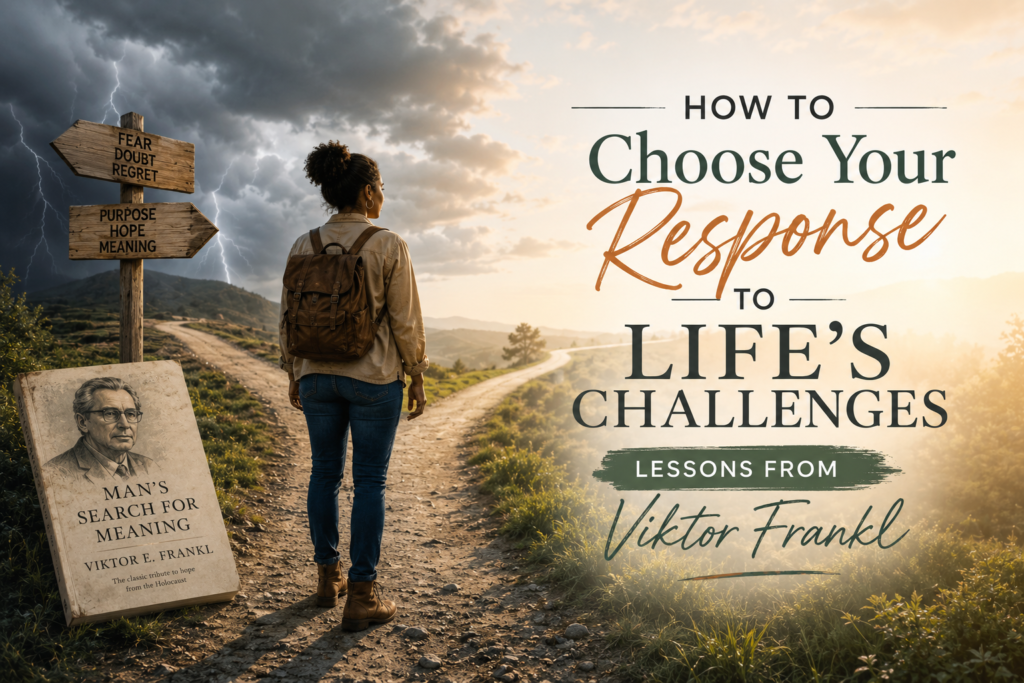
The Space Between What Happens and How You Respond: A Lesson from Viktor Frankl

About two years ago, during a course I was taking, it was my first time hearing about concentration camps. Concentration camps were places where large groups of people were forcibly held and confined, usually because of their ethnicity, religion, political views, or other targeted identities. During World War II, they were most infamously used by Nazi Germany as part of the events of the Holocaust. People were kept in overcrowded, harsh conditions with very little food, poor sanitation, and limited freedom. Many were subjected to forced labor, and millions lost their lives as a result of the conditions and systematic violence. So we were talking about ethics and some of the extreme things humans have gone through in history, and I remember a few of the stories touched me deeply. It honestly made me pause and wonder how situations like that were ever allowed to happen in the first place. It made me wonder how anyone could ever justify or normalize inflicting such an unquantifiable level of pain on another person. But that’s not the subject of discussion for today. When people talk about World War II, the focus is often on the war itself, the fighting, and the massive loss that came with it. But tucked inside that history is something many people don’t really talk about. Despite the harsh conditions people were subjected to, some persons didn’t give up on life. I know a lot of what happened there wasn’t just physical suffering, but also the loss of identity, freedom, and basic dignity. But in the middle of that reality was a man named Viktor Frankl. Let’s talk about Viktor Frankl. Before the war, Frankl was a neurologist and psychiatrist in Vienna. He spent his early years studying the human mind, particularly what gives life a sense of purpose. Then the war interrupted everything. He was taken into a concentration camp along with his family. Over time, he lost his parents, his brother, and his pregnant wife. The life he had built disappeared piece by piece. He moved through multiple camps and lived under conditions defined by hunger, uncertainty, and constant exposure to suffering. Yet even there, he paid attention, not just to what people were going through, but to how they responded to their experiences. Viktor noticed that, while many people were overwhelmed by the conditions, some still made small, intentional choices about life. Someone would share food even when they barely had enough. Someone would offer a word of comfort to others, even when they were in pain. These actions didn’t change their situation, but they revealed something about the people making them. That observation led him to conclude that even when circumstances are extremely bad, there is still a point at which a person decides how to respond. You have a choice. Yes, you do. Viktor described it as a space between what happens and what you do next. After the war, Viktor returned to Vienna and began rebuilding his life. He continued his work in psychology and developed an approach called logotherapy. Logotherapy is a form of therapy based on the idea that finding meaning in life is the central human drive and a key source of resilience, even in suffering. He also wrote Man’s Search for Meaning, where he documented both his experiences in the camps and the psychological insights that came from them. The book has remained widely read because it speaks to something fundamental about being human. When you reflect on his story, it naturally brings your attention back to your own life. Most people are not facing the kind of extreme conditions Viktor endured, but that doesn’t mean life feels easy. Challenges still show up, plans don’t always work out, relationships can be complicated, and there are moments that feel your world is crushing right before your eyes. In those situations, it’s common to react quickly. Something happens, and the response follows almost immediately. It can feel automatic. But Viktor’s perspective suggests something slightly different. There is a brief moment, sometimes barely noticeable, where a decision is made. It might look like choosing how long to stay in a negative spiral after something goes wrong. I used to be very guilty of this. It might be deciding whether to speak to yourself or others with harshness or with patience. It might be recognizing when a reaction is coming from habit rather than intention. These are not dramatic decisions, but they are consistent ones. Over time, they influence how you experience life. I am not saying you should ignore how you truly or pretend everything is fine. Viktor’s work does not dismiss pain; it acknowledges it directly. His point was that even within difficult experiences, you still have a level of control. You can feel frustrated and still decide what to do next. You can feel disappointed and still choose how you move forward. You can feel uncertain and still take your next step. Viktor’s life shows that what’s happening around you doesn’t fully decide what happens within you. He could have given up on life like most people did. We wouldn’t blame him if he had. But do you know that instead of trying to control everything outside, your attention can shift to how you respond on the inside? That kind of awareness gives you control and helps you respond better. And over time, it can shape the way you live your life. Take this as a reminder not to let what’s happening around you control how you respond to life. I hope this blesses you. Rooting for you, always.

The Space Between What Happens and How You Respond: A Lesson from Viktor Frankl Read More »

Get Inspired, , , , , , , , , , , , , , , , , , , ,

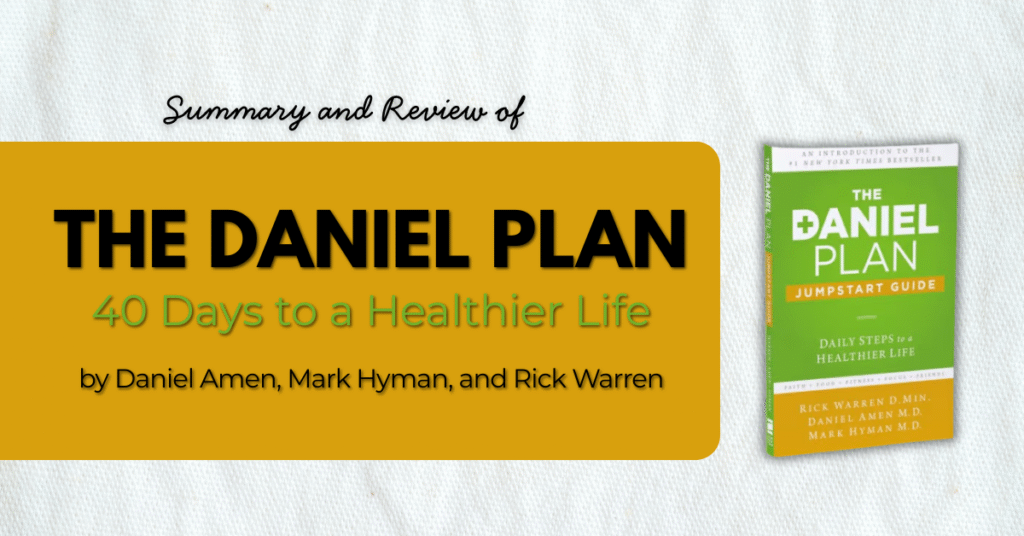
The Daniel Plan: A Chapter-by-Chapter Journey Toward Wholeness, Health, and Abundant Living

I shared a summary of one of the books read in the GLC Community titled “How Not to Die” some weeks ago, the feedback has been so encouraging. If you haven’t read is, you can get on it HERE. “The Daniel Plan: 40 Days to a Healthier Life“, a book by Daniel Amen, Mark Hyman, and Rick Warren is another health-focused book that will greatly bless you. It is like an invitation to take better care of the life you’ve been given, your body, your mind, your spirit, so you can actually show up fully for what you’ve been called to do in this one life of yours. In this book, Pastor Rick Warren shares how it dawned on him that he had neglected his health for years, even while leading others. That moment became a turning point, not just for him, but eventually for an entire community. One thing that stands out early is how the book reframes health. It’s not about appearance or pressure, but about stewardship. Your body isn’t just something you own; it’s something entrusted to you. It belongs to God, it was paid for, it houses His Spirit, and you are responsible for how you care for it. This perspective shifts the focus from trying to look better to learning to honor what you’ve been given. This isn’t about quick fixes because sometimes there are setbacks; life, stress, and even grief can pull you back into old patterns and make you lose track of your goals. Instead of guilt, the book leans into love as the driving force for change. Not fear, not pressure, but learning to receive God’s love, extend it to yourself, and stay supported by others. At the center of The Daniel Plan are five key areas: faith, food, fitness, focus, and friends. What makes this powerful is how connected they are. You can’t truly fix one area without addressing the others. Real transformation happens when your habits, your mindset, your relationships, and your spiritual life begin to align. The book also takes time to explain why change can feel so difficult. Many of our habits are formed over years, sometimes tied to comfort, identity, or emotional coping. But one thing we must never forget is that your habits are not who you are. They are patterns you’ve learned, and they can be changed. Lasting change requires more than motivation. It takes honesty, intentional choices, a renewed way of thinking, dependence on God’s power, and the support of community. You really need others to keep moving. There’s something powerful about not doing this alone, about having people who walk with you, encourage you, and help you stay consistent. Faith remains the foundation of it all. It’s about trusting God even when you don’t see immediate results, and continuing the journey even when it feels slow. That shift, from chasing quick outcomes to building a sustainable lifestyle, is what makes this approach different. By the end, it becomes clear that this isn’t just a 40-day plan. It’s an invitation to live differently. To become more intentional with how you eat, think, move, and connect. And more than anything, it reminds you that real change doesn’t come from willpower alone. You’re supported by God, and you were never meant to do it on your own. God cares more than your know. Below are some everyday spices and herbs shared in the book. These may help you enjoy healthier meals while also enhancing the overall quality and nutritional value of your diet. Bay leaves add a mild, earthy depth to soups and stews. Use whole while cooking and remove before serving. Black pepper enhances flavour and supports nutrient absorption. Best used freshly ground on most meals. Cayenne pepper adds heat and may support metabolism. Use in small amounts in sauces or soups. Cinnamon brings warmth and may help with blood sugar balance. Great for oats, smoothies, or some savory dishes. Chili powder gives a mild spicy, smoky flavour. Works well in beans, rice, and stews. Cumin has a rich, earthy taste and may aid digestion. Common in rice, beans, and meat dishes. Dried oregano is bold and aromatic, with antibacterial properties. Great for sauces and grilled foods. Dry mustard adds a subtle tang. Use in dressings, marinades, or sauces. Garlic powder is convenient and supports heart health. Adds a savory boost to most dishes. Kosher or sea salt enhances natural flavours. Use moderately. Onion powder gives a mild onion flavour without texture. Ideal for soups and seasoning blends. Paprika adds colour and mild warmth, with antioxidant benefits. Sprinkle during cooking or before serving. In closing, please remember that healthy living doesn’t have to feel complicated or overwhelming. Choose what’s right for you today and every day. I hope this helps you.

The Daniel Plan: A Chapter-by-Chapter Journey Toward Wholeness, Health, and Abundant Living Read More »

Book Summaries, , , , , , , , , , , , , , , , , , , , , , , , , , , ,

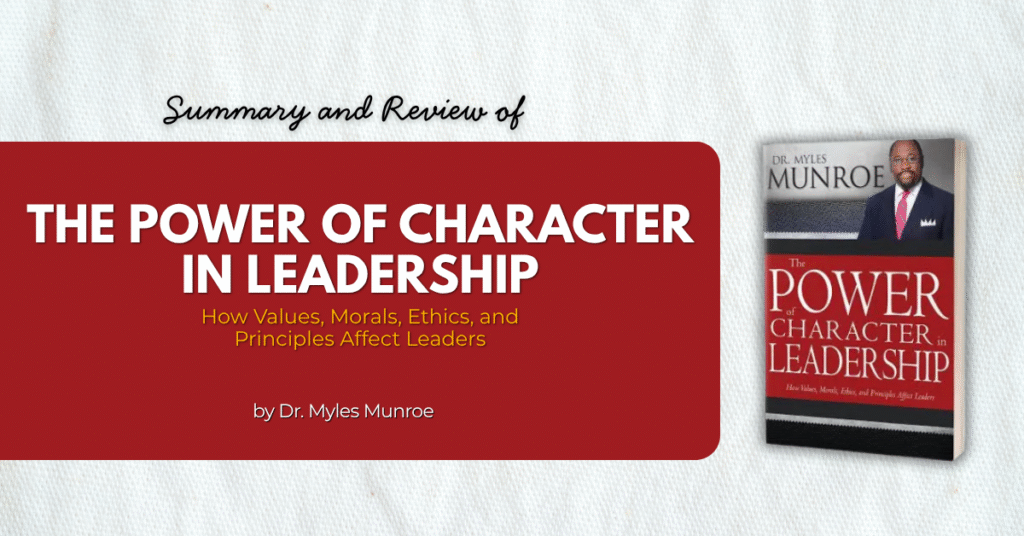
The Power of Character in Leadership | Lessons from Myles Munroe’s Book

I used to think a lot about why some leaders rise so fast… and still fall just as quickly. Not because they weren’t gifted. Not because they lacked vision. But because something deeper wasn’t solid. That’s exactly what The Power of Character in Leadership by Myles Munroe addressed. This book doesn’t just show you where you are, but quietly asks who you’re becoming. One of the strongest truths I learned from the book is that leadership is not only sustained by talent, charisma, or even vision. It is sustained by CHARACTER. This is not the kind we perform in public, but the kind that we hold dear in private, when no one is watching. Dr. Munroe talks about the crisis of character in leadership, and it’s hard to ignore how real that is. We’ve all seen people rise, sometimes brilliantly, and then fall in ways that undo years of influence. And while it’s easy to think of “leaders out there,” this book brings it closer, to you and me. It reminds us that without the right foundation, anyone can drift. Let’s dive into some of the key lessons. Part 1: How character is really formed This section confronts a truth most people don’t like to admit: leadership failure is rarely about lack of skill; it is usually a result of lack of character. Myles Munroe makes it very clear that talent, charisma, intelligence, or even vision cannot sustain a leader. They can open doors, but they cannot keep them open. What keeps a leader standing, especially when pressure, success, or temptation shows up is character. Many leaders don’t crash because they weren’t gifted enough, but because they weren’t grounded enough. You can build something impressive on the outside while slowly collapsing on the inside. A relatable way to think about it: You might be doing well publicly, school, work, leadership roles, but privately, you cut corners, avoid accountability, or compromise small values. Those “small things” are actually cracks forming in your foundation. Character is like a personal security system. It protects you not just from external pressure, but from your own weaknesses. Without it, success becomes dangerous. Ponder on this – if people described your character, not your achievements, what would they say? Part II: The Source of Moral Leadership Here’s a powerful question: Where does character actually come from? It was broken down into three layers: What you believe, what you value, and what you serve. Your beliefs shape your values, and your values shape your actions. So leadership isn’t first about what you do, it’s about what is happening inside you consistently. For example:If you believe success is everything, you may justify unethical shortcuts.If you value integrity, you’ll choose differently, even when no one is watching. Munroe also emphasises that principles are not optional tools, they are laws. Just like gravity works whether you believe it or not, principles like honesty, discipline, and responsibility have consequences when ignored. This part becomes very practical when applied to everyday life: How do you behave when no one is checking? What do you prioritise when things get hard? What do you protect: your image or your integrity? Leadership is not just personal; it spreads. Part III: Personal Character Development This section becomes very introspective and honest. It moves from theory to self-examination and growth. Character isn’t automatic, you build it intentionally. And one of the biggest tests of character is temptation. Not always big, dramatic failures, but subtle ones like cutting corners, being inconsistent, letting emotions control decisions, choosing convenience over discipline. Every decision you make is like writing a sentence in your life story. Over time, those sentences form your character. Some of the qualities of principled leaders include self-discipline, integrity, consistency, and responsibility. What makes this part relatable is how it highlights everyday behaviors: Being late repeatedly, avoiding responsibility, reacting emotionally; these things quietly weaken leadership. One powerful takeaway here is: You don’t suddenly fail; you gradually drift. And the opposite is also true: You don’t suddenly become strong; you build strength daily. Part IV: Restoring a Culture of Character This final part is both hopeful and challenging. It acknowledges something real: People fail. Leaders fail. But failure doesn’t have to be the end. Munroe introduces the idea of “falling up”, that is, learning from failure, rebuilding your values, and becoming stronger from it. He emphasises that character can be restored, integrity can be rebuilt, but it requires honesty, responsibility, and change. He also talks about aligning your vision with your values. Because having a big dream without strong character is dangerous. You might achieve it, but lose yourself in the process. This part expands beyond individuals to society. If leaders lack character, systems break. Trust disappears. People become skeptical. And you can see this in real life, people often question leaders, institutions, even success itself, because trust has been broken too many times. If we want better leadership, we need better character, starting with ourselves. Final Reflection The whole book can be summed up in one honest thought: You can build influence, success, and visibility, but only character determines whether it lasts. Now ask yourself: Who am I when no one is watching? What am I building my life on? Am I becoming someone people can truly trust? Never forget this: leadership is not just what you achieve, it is who you become while achieving it.

The Power of Character in Leadership | Lessons from Myles Munroe’s Book Read More »

Book Summaries, , , , , , , , , , , , , , , , , , , , , , , , ,

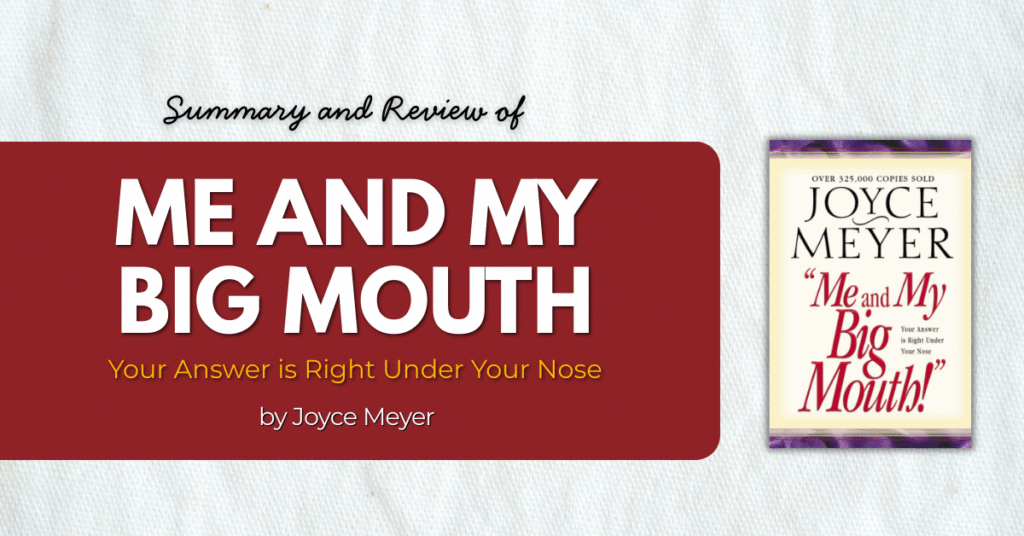
How the Words We Speak Quietly Shape Our Lives | A Review of “Me and My Big Mouth” by Joyce Meyer

I’ve read a few books by Joyce, but this one really stands out for me. The first time I saw the title, it immediately caught my attention, and I knew I had to read it. From the very start, Joyce lays down a truth that’s hard to ignore: our words are never neutral. Everything we say reflects what’s going on inside, our thoughts, our emotions, the choices we’re making. This reminded me that I’ve heard Mummy Funke Felix-Adejumo say words don’t die, and shouldn’t be taken lightly. Words aren’t just sounds; they carry weight. They can reveal fear, doubt, or resentment, or echo truth that lines up with God’s heart. They either build life or slowly drain it, and understanding that is the first step toward speaking differently, not just for appearances, but in a way that shapes how we live. I couldn’t help but pause and think: when was the last time I really considered the impact of my own words? Below is a quick summary of each chapter of the book. Chapter 1: Learning to Speak God’s Language From the first chapter, Joyce challenges a habit many of us don’t even notice: constantly talking about problems. We rehearse them in conversations, repeat them in prayer requests, and replay them in our own minds. She points back to Jesus’ instruction to speak to obstacles with faith. This isn’t about pretending life isn’t hard, it’s about refusing to let fear set the tone. Words only carry power when they’re backed by obedience and aligned with God’s character. I found myself wondering: how often have I spoken without thinking about whether my words matched my faith? Chapter 2: The Effect of Words in the Natural Realm Here, the author brings the idea down to everyday life. Words don’t stay in the spiritual realm, they shape how we respond, what we expect, and what we quietly accept as normal. And we must understand that confession isn’t empty repetition; it’s agreement. Over time, what we say becomes the lens through which we live. By pointing back to creation, Joyce reminds us that God has always taken speech seriously. While we’re not creating worlds, we are invited to reflect His nature by speaking life, truth, and intention into ordinary moments. That invitation carries responsibility: faith doesn’t excuse carelessness or lack of discernment. Let me ask you: are your everyday words reflecting life or draining it? Think about this! Chapter 3: Calling Things into Alignment Do you know that negative words have quiet, cumulative effects? Fear-filled speech doesn’t just express worry, it trains the soul to expect negativity. Using Abraham’s story, Joyce shows how faith-filled words can shape identity long before circumstances change. Positive confession isn’t wishful thinking; it’s disciplined agreement with what God has already said. Over time, these repeated truths loosen resignation and make space for expectation. I couldn’t help but reflect: what patterns in my speech might be quietly shaping who I am becoming? You may ask yourself, too. Chapter 4: Prophesying the Future Words don’t just describe where we are, they nudge us toward where we’re headed. Joyce compares the tongue to a steering mechanism: small, consistent words quietly influence direction. The things we casually complain about, when repeated often enough, don’t just pass through; they start to settle into our lives. Over time, they can shape what feels normal. In the same way, words spoken with intention and rooted in faith don’t always show immediate results, but they quietly begin to align our lives with what God has promised. It made me realise that my words are giving my life direction, and over time, they’re shaping the path I walk. Chapter 5: Becoming God’s Mouthpiece At this point, the focus shifts from self-expression to stewardship. Speaking for God requires more listening than talking. A consecrated mouth isn’t loud or dramatic; it’s rooted in humility, obedience, and alignment with His Word. True influence doesn’t come from personality; it comes from living in step with God’s will. Joyce asks a simple question that stuck with me: how aligned am I with His heart in what I speak every day? It is becoming a quiet daily check for me. Chapter 6: Complain and Remain, Praise and Be Raised This chapter hits differently. It reminded me that complaining isn’t just a slip, it’s a posture. Joyce uses Israel’s wilderness journey to show how persistent grumbling kept a whole generation stuck for 40 whole years. What a complete waste of time! But do you know praise works differently? I’m not saying the circumstances are going to change magically, but by shifting perspective. Gratitude redirects attention and creates space for God’s presence. What the mouth consistently magnifies gradually shapes the heart. Think about this, do you let small complaints always dictate your mood, emotions and focus? Chapter 7: Crossing to the Other Side Faith is tested in the middle of the journey. Promises often meet resistance after they’re spoken, not before. Storms reveal what we’ve truly anchored to. Words spoken in panic can undo months of quiet trust. Choosing steady, faith-filled speech during difficulty is an act of endurance. God secures the destination, but our words shape how we travel there. It made me reflect: when life feels hard, do my words reflect trust or fear? Chapter 8: Is Your Mouth Saved? This question sounds funny, but it’s real. Here Joyce asks a question most of us are guilty of: what happens when faith lives in the heart but never reaches the mouth? Spiritual growth eventually shows up in daily speech. When the Holy Spirit has room to work, our words start to carry grace, restraint, and truth more consistently. I paused and asked myself: are my words reflecting what I truly believe in my heart? If they don’t, then something needs to shift, either what I’m holding onto within, or the way I choose to speak. Chapter 9: When Fasting Includes Silence When we think of fasting, we often think of staying away from

How the Words We Speak Quietly Shape Our Lives | A Review of “Me and My Big Mouth” by Joyce Meyer Read More »

Book Summaries, , , , , , , , , , , , , , , , , , ,

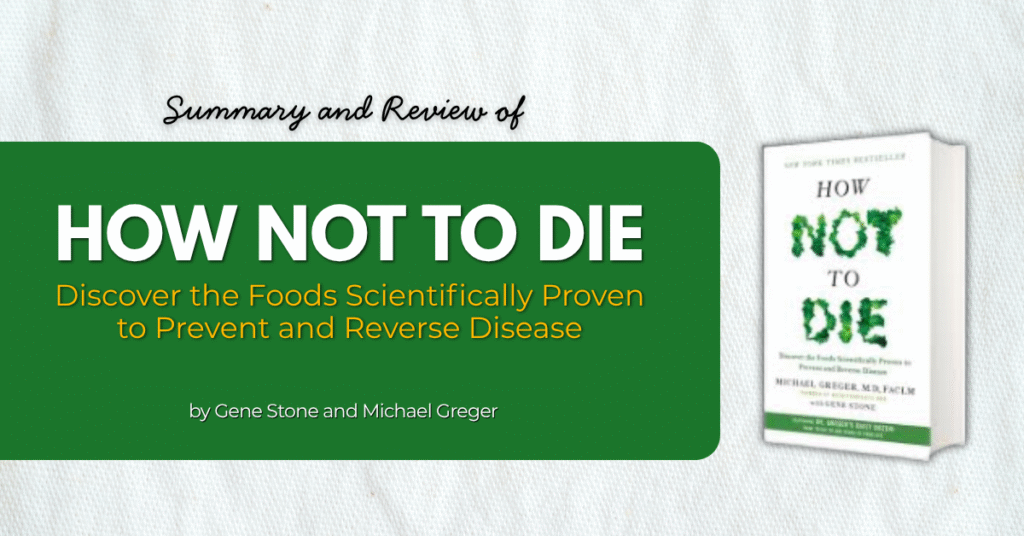
How Not to Die by Dr. Greger: Life-Changing Lessons on Diet, Health, and Longevity

There are some books you read and move on from… and then there are the ones that stay with you long after the last page. “How Not to Die”, a great book written by Gene Stone and Michael Greger felt like that for me, and for many members of the GLC Community (Click HERE to learn more about GLC). Most of us have started applying the lessons from the book. For me, I read the book slowly, and what stayed with me was realising how much of our health is quietly shaped by the small, everyday choices we treat as normal. At its core, the book keeps returning to one clear idea: many of the diseases we fear do not just happen to us randomly. They often grow from patterns, especially what we eat, and those patterns can be changed (if you really want to). Here’s a breakdown of the book with the practical steps we can all take to live a healthy life. Brain Disease: Brain health isn’t something to think about only in old age. It’s something that shapes how we live, think, feel, and function every single day. We all need a healthy, functioning brain to enjoy a good quality of life. Our memory, focus, mood, decision-making, and even emotional balance all depend on how well the brain is supported over time. Conditions like stroke and Alzheimer’s are influenced by long-term habits, including what we eat. Diets high in salt, saturated fats, and processed foods can raise blood pressure, increase clot risk, and gradually affect brain function over time. It often comes down to small daily choices, what you spread on your bread, your snacks, what fills your plate. Swapping butter for olive oil, adding spinach, or choosing blueberries over biscuits may feel small, but they add up. Foods like berries, leafy greens, nuts, flaxseeds, and whole grains help support and protect the brain over time. Heart Disease: Heart disease is still the leading cause of death worldwide, yet many people feel fine until something suddenly goes wrong. What’s surprising is that plaque (fat buildup in the arteries), can start forming as early as childhood, long before symptoms appear. Over time, it narrows the arteries and slows blood flow, and if it ruptures, it can trigger a clot that leads to a heart attack. The encouraging part is that it’s largely preventable. In places like rural China and Uganda, where diets are built around grains, legumes, and vegetables, heart disease is rare. Whole-food, plant-based eating doesn’t just lower cholesterol, it can even help reverse arterial damage. Choosing more beans, leafy greens, and fruits, while cutting back on animal fats and processed foods, makes a difference. Even simple swaps, like oatmeal with berries instead of bacon, matter. Digestive Cancers: Our gut is more than a digestive system. It’s a key part of our overall health. Fiber-rich foods like beans, whole grains, fruits, and vegetables feed good gut bacteria and help the body clear out harmful substances. On the other hand, diets high in red and processed meats, excess sugar, and fried foods increase cancer risk. Adding turmeric, cruciferous vegetables, and colorful produce to improve our gut health. Simply put, your plate becomes part of how you protect your gut every day. Infections: I don’t think we talk enough about how much what we eat supports our immune system. It’s not just about avoiding germs, it’s about whether your body is ready for them when they come. Some animal products can expose us to pathogens, while plant foods quietly strengthen our defense system. Foods like garlic, mushrooms, green tea, and colorful fruits and vegetables give your body what it needs to fight foreign substances. Choosing more plant-based meals isn’t only about preventing long-term diseases; it’s about equipping your body daily to stay healthy. Diabetes: For a long time, many of us thought sugar was the main problem. But it goes deeper than that. When there’s too much fat, especially from animal sources and processed foods, it interferes with how insulin works. The beautiful part is that the body responds when we make changes. Foods like beans, whole grains, nuts, and even simple additions like cinnamon or a splash of vinegar can help stabilize blood sugar. There are real stories of people turning things around just by changing how they eat. And yes, you can do the same. High Blood Pressure: High blood pressure is often seen as something that just comes with age, but that’s not the full story. What we eat plays a huge role. Diets high in processed foods, excess salt, and animal products can push blood pressure up over time. On the other hand, foods rich in potassium—like bananas, beans, leafy greens, beets, and flaxseeds—help bring it down naturally. In some cases, these changes can be just as effective as medication, without the extra burden on the body. Liver Disease: Your liver is constantly working for you behind the scenes, and it is affected by more than just alcohol. Diets high in animal fat, sugar, and refined carbs can lead to fat buildup in the liver. The encouraging part is that the liver can heal when you support it adequately. Eating more plant-based foods, especially vegetables like broccoli and cabbage, and reducing or completely eliminating alcohol, can help reduce that burden and even reverse early damage. Kidney Disease: The kidneys do a lot of quiet work filtering waste from the body. When we consume too much animal protein, it can put extra strain on the kidneys over time. Shifting towards plant proteins, along with fruits, vegetables, and foods like flaxseeds, can ease that load. For people already dealing with kidney issues, healthy diets can help slow down the progression of the disease and support better function for longer. Cancer: Cancer isn’t one single disease, and it rarely has one single cause. It builds up over time from a mix of genetics, environment, and lifestyle patterns. What research keeps pointing to is a pattern: diets high in processed meats,

How Not to Die by Dr. Greger: Life-Changing Lessons on Diet, Health, and Longevity Read More »

Book Summaries, , , , , , , , , , , , , , , , , , , , , , , , , , , , , , , , , ,

Breaking the Impossible: What Roger Bannister Teaches Us About Our Limits

I saw this beautiful quote: ‘Limits exist only until someone decides to challenge them.’ It perfectly describes the story of the man I’m about to share — Roger Bannister. I recently came across the story of Roger Bannister, and it completely blew my mind. Who is he? You may want to ask. Roger Bannister was a British medical student who, on May 6, 1954, became the first person in history to run a mile in under four minutes. Despite training minimally while studying to become a doctor, he finished in 3 minutes and 59.4 seconds. Here’s the back story. In the early 1950s, the four-minute mile was widely considered an unbreakable physical limit. Doctors, coaches, and athletes believed the human body simply couldn’t handle the speed and endurance required. Some experts even warned it could cause the heart to explode or lead to collapse. Scientists wrote papers, experts debated, and the world collectively agreed: it was impossible. And then Bannister did it. He didn’t just break a record, he shattered a belief. Within years, can you believe that dozens of people did same? Today, over 2,000 athletes have run a sub-four-minute mile. His feat didn’t just change athletics; it changed what people thought was humanly possible. He proved that many limits exist only in our minds, until someone dares to challenge them. And that is what made him stand out. There’s something quietly revolutionary in that story. Bannister didn’t wait for permission, for the world to believe in him, or for conditions to be perfect. He took a bold step. He acted on what He believed was possible. He ran. He focused on what he could do, not what everyone else said he couldn’t. And in doing so, he shifted the horizon for everyone who came after him. What a great way to live! I find myself thinking about this in my own life. I imagine the small battles we fight every day. Maybe it’s a dream that seems too big, a skill you want to master, or just a habit you want to change. The truth is, the world may tell you “impossible” in one way or another, but impossible only becomes real when you accept it. When you act, when you take that step, you begin to rewrite what’s possible for yourself, and maybe even for someone else who’s watching. So today, I want to invite you to run your own mile. Not necessarily on a track, not literally (unless you want to, of course!), but in life. Take that step toward what feels impossible. Do the thing that makes you doubt, that scares you, that everyone else says you can’t do. The more you practice challenging your limits, the more you realise those “impossible” walls are often just ideas waiting to be shattered. Because here’s what you need to know: when you do the little things that feel right, when you push yourself just a little further than yesterday, you don’t just achieve, you become a better version of yourself. And just like Bannister, your courage to act might open the door for someone else to believe, to try, and to run their own mile. What are you doing differently today? This month? Challenge your fears, break the barrier. Go for gold. Do the impossible. Yes, you can! I hope this encourages you.

Breaking the Impossible: What Roger Bannister Teaches Us About Our Limits Read More »

Get Inspired, , , , , , , , , , , , , ,

Insights from John Mark Comer’s The Ruthless Elimination of Hurry

Lately, I’ve been noticing how easy it is to live in a constant state of rush. Not always because there’s too much to do, but because everything around us seems to be moving fast. Reading The Ruthless Elimination of Hurry by John Mark Comer made me pause in a way I didn’t expect. This book made me realise some errors that could have been avoided if I were calmer and more patient. John Mark Comer begins with his own story, and it’s surprisingly relatable. On the outside, everything looked fine, he was leading a growing church, doing meaningful work and showing up where he was needed. But internally, something was off. He describes it not just as burnout, but as a loss of joy, a growing frustration, even towards people he loved. What stood out to me is that the problem wasn’t what he was doing, it was the pace at which he was living. And that alone feels worth sitting with, because it’s possible to be doing the right things… at the wrong pace. Part One: The problem we don’t always name This part gently confronts something we often normalise, HURRY. Not just being busy, but living in a constant state of rushing mentally, emotionally, and even spiritually. The book describes hurry as one of the greatest enemies of a meaningful life, because the things that truly matter, love, joy, and peace, don’t grow well in a rushed life. Love needs time. Joy needs presence. Peace needs stillness. And when life is always moving quickly, those things begin to fade quietly. What made this even more real is how he explains where this comes from. From how our world has evolved, from natural rhythms to clock-driven schedules, and now to a digital life where everything is always on. There’s barely any boundary anymore. You’re reachable at all times. There’s always something to respond to, something to check, something to consume, information everywhere. Over time, it creates a kind of restlessness that doesn’t go away, it just gets managed with more distraction. And if I’m being honest, that part felt very familiar. Part Two: Why more time isn’t the answer If we’re given the opportunity to, most of us will ask for more time. Comer challenges the idea that stress can be fixed with setting our priorities right. He reminds us that we are finite our time, energy, and capacity are limited. These limits are actually gifts, guiding us to focus on what truly matters. Instead of doing more, we are called to do less, but with our whole hearts. He draws on Matthew 11:28-30, explaining that Jesus’ “yoke” represents His lifestyle. Many try to experience His peace without adopting His rhythms. The invitation is simple: stop striving and start learning to live at the unhurried pace of Jesus. Comer also introduces the concept of a “Rule of Life,” a framework of habits that shapes our days. Like a trellis helping a vine grow, this structure helps our soul grow toward God. Most people live by a default rule dictated by the world, which fuels hurry. Creating an intentional rule protects our spiritual health. Spiritual disciplines, prayer, fasting, silence, aren’t just tasks to check off. They are practices that place us where God can transform our hearts, helping us grow in love, patience, and presence. Part Three: Learning a new way to live This part becomes very practical, which I love. It introduces simple practices including silence and solitude, sabbath, simplicity and slowing down. Silence and solitude stood out to me as a starting point. I learned to create a space to be still, away from noise and regular activities. It sounds simple, but it’s not something we naturally do anymore. Then there’s Sabbath, not just as rest, but as intentional rest. A time to pause, to enjoy, and to step out of constant productivity. Simplicity made me reflect on how much we carry, physically and mentally. Sometimes, having more actually costs us more time, more energy, and more attention. And finally, slowing down not just in big ways, but in small, everyday choices. Choosing not to rush through everything. Choosing to be present in what you’re doing. In summary, this kind of life won’t come naturally in a fast-paced world. It takes intention. It takes consistency. But the reward is something deeper than productivity. This is calling you to connection with God, with people, and even with yourself. And ultimately, it’s becoming a person of love. So for now, I’m choosing to: slow down, breathe, and be present. Because sometimes, the change we desire isn’t found in doing more, it’s learning how to fully be in what already is.

Insights from John Mark Comer’s The Ruthless Elimination of Hurry Read More »

Book Summaries, , , , , , , , , , , , , , ,

When a Dry Rod Bloomed: Lessons from Numbers 17

I’ve read the story of Aaron’s rod that budded a couple of times. A few days ago, I read it again, and some lessons lingered in my heart that I’d love to share with you. The story is found in Numbers 17. At the time, there had been murmuring among the Israelites about who God had truly chosen to lead. To settle the dispute, God instructed Moses to collect a rod from each of the twelve tribes and place them before Him in the Tent of Meeting. The rod that blossomed would be the sign of the one He had chosen. By morning, only Aaron’s rod had sprouted, budded, blossomed, and produced almonds. This serves as a clear evidence that God had set him apart. Now, just imagine this with me: Aaron’s rod was a cut piece of wood. An ordinary staff. It was simply placed before God overnight. And by morning? It was alive with blossoms and fruit. What a God! From this, I drew four life lessons I believe will bless you: 1. God Knows How to Confirm What He Has Said There had been a lot of murmurings and conversations. But God did what He had to do, giving physical evidence to the congregation that truly, He had separated Aaron. He allowed Aaron’s rod to bloom. That part comforts me deeply. When God calls, He doesn’t need chaos to defend His decision. He is able to confirm what He has established, in His own way, in His own time, and IN HIS WAY! Sometimes we exhaust ourselves trying to prove what God has already approved. But divine confirmation does not require our/human panic. 2. Life Can Come from What Feels Completely Dry Here, I had to pause and think deeply. I pictured a rod, like the one elderly people use as support for movement. Usually, a rod is lifeless. It seems as though it has come to the end of itself. It has no roots, no soil, no water. It’s like a hopeless situation—but not with God. The One who brings surplus out of nothing is the God we serve. What looks finished to people is not always finished with God. So when anyone tells you it’s over, tell them to check again, and again tomorrow. No level of dryness can stop the move of God. With Him, dryness is not the final verdict. Sometimes it is simply the setting for a different kind of miracle. 3. Fruit Speaks Without Straining There was pressure in that environment. There were accusations, comparison, and doubts. But the confirmation didn’t come through arguments. That speaks to the part of us that feels the need to constantly explain ourselves, to prove to people that we are worthy, to silence every critic. I know there are times we need to speak, to express ourselves. But there are also times to be quiet. There is a healthier posture. Diligence is good. Growth is good. But there is also a quiet confidence that comes from allowing God to establish you, and what He is doing with you. When something is truly from Him, the fruit becomes its own voice. You don’t have to shout when you are blooming. Everyone will see. 4. What God Establishes for His Purpose Lasts After the rod budded, it wasn’t discarded. It was preserved as a sign, a reminder to the people of what God had done. When we are in alignment with the plans and purposes of God, we become a miracle, and a wonder. A testimony to the world. This doesn’t mean life will never challenge you again. But it does mean that what God builds in alignment with His will is not temporary. As long as we remain on God’s side, He preserves our inheritance and our lot. Maybe you are in a season that feels like cut wood, no visible growth, no applause, no clear movement or progress. But if your life is placed in God’s hands, do not measure your future by your current dryness. The same God who caused a staff to bloom overnight has not changed. He still makes the extraordinary out of the ordinary. He is for you, not against you. I hope this blesses you!

When a Dry Rod Bloomed: Lessons from Numbers 17 Read More »

Blog, , , , , , , , , , , , , , , , , , , , , , , , ,

How Gratitude Changes Your Brain (In the Best Way)

Sometime last year, I read a book titled ‘The Psychology of Money’ by Morgan Housel. It’s an interesting read. (Interested? Read Book Summary here – CLICK HERE). But that’s not where I’m going. One of the chapters, “Luck and Risk,” really stuck with me. As I read this chapter, I paused and pondered on this truth: a lot of the good things in my life, my job, my home, my health, aren’t just because I worked hard. After all, I’m not the only ‘hardworker’. Sometimes, I was just… lucky. And if you share my faith, I would say I attribute it to the mercy of God, because I’m very aware that it is not of him who runs or wills, but of God who shows mercy. That realisation humbled me. And it made me ask myself: Am I truly grateful for what I have? That question started a little journey for me. I began digging into the connection between gratitude and brain health. And what I found amazed me. Science shows that being thankful, really thankful, can actually change your brain. Not in some abstract way, but in real, physical ways that affect how you think, feel, and cope. Here are five simple (but powerful) ways gratitude boosts your brain: 1. Gratitude Makes You Feel Good – Literally. Have you noticed that under normal circumstances, you can’t be happy and sad at the same time? Let me explain why. When you’re happy, and thankful, your brain releases a chemical known as dopamine, the feel-good chemical. It’s like a natural mood booster. The more often you practice gratitude, the more your brain gets used to feeling good and starts to look for more reasons to be happy. It’s like training your brain to enjoy the moment more. 2. Gratitude helps you stress less. Many times, we’re here and there, trying to make ends meet. Life gets stressful, we all know that. But gratitude can calm your brain’s stress center (the amygdala) and even lower levels of the stress hormone, cortisol. So when things feel overwhelming, taking a moment to appreciate what’s going well, things that are already working around you (the little blessings we sometimes ignore), can actually help your brain relax and reset. 3. Gratitude sharpens your focus and memory. I love this so much. Without doing much, being grateful helps shift your mind away from what’s going wrong and toward what’s going right. That shift helps you stay present in the present. And when you’re present, your brain works better. Research shows that people who practice gratitude regularly think more clearly and remember things better. I’m sure you want that too. 4. Gratitude keeps you and your brain flexible. Our brains are always changing; that’s what science calls neuroplasticity. Gratitude helps build new, positive pathways in your brain. It’s like exercise for your mind. Over time, it makes you more emotionally resilient and better at handling tough situations. Sounds too good to be true, but it is true, and it works for me. 5. Gratitude is good for your mental health. Gratitude helps break the loop of negative thinking that often comes with anxiety or depression. When you focus on what’s good in your life, you train your brain to notice the positive, not just the pain. Studies show that grateful people tend to feel more hopeful, calm, and content. And I believe this is the life you want. Gratitude isn’t just about saying thank you. It involves simple, daily practice that helps your mind and your brain stay happy, healthy, and strong. You don’t need a fancy journal or perfect routine to start. Just pause once a day and think of one thing, whether big or small, that you’re thankful for. It could be your health, your family, a kind word, or even the fact that you got through a hard day, especially in some parts of the world, and you survived. Whatever it is, take a moment to say thank you, or I’m grateful for this. Your brain and your mind will thank you right back. If this post resonated with you, subscribe to my newsletter for more gentle tips on brain health, mental wellness, and living a joy-filled life. You can also watch my YouTube video on GRATITUDE here: CLICK HERE. Until next time, stay grateful, be ‘thank-full‘.

How Gratitude Changes Your Brain (In the Best Way) Read More »

Blog