
Book Summaries

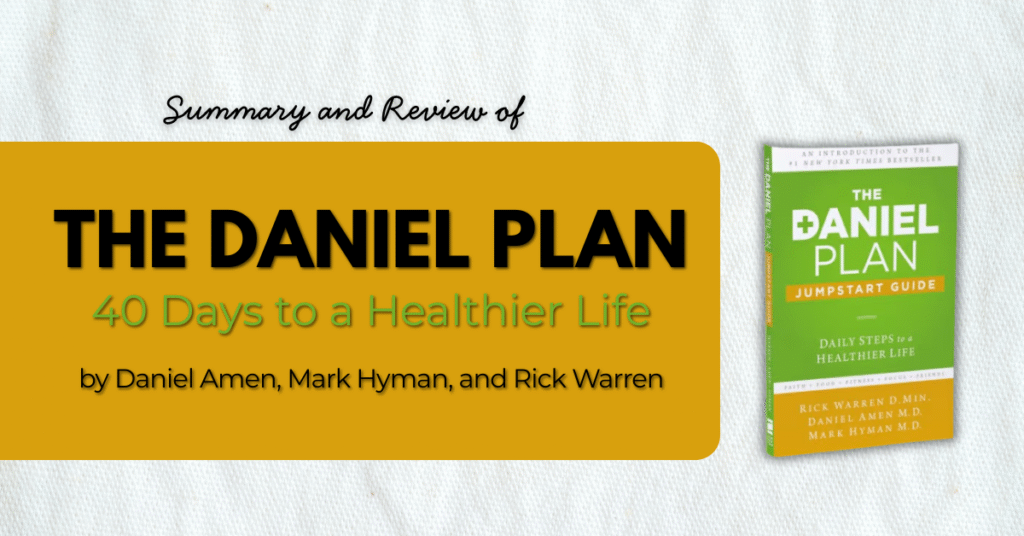
The Daniel Plan: A Chapter-by-Chapter Journey Toward Wholeness, Health, and Abundant Living

I shared a summary of one of the books read in the GLC Community titled “How Not to Die” some weeks ago, the feedback has been so encouraging. If you haven’t read is, you can get on it HERE. “The Daniel Plan: 40 Days to a Healthier Life“, a book by Daniel Amen, Mark Hyman, and Rick Warren is another health-focused book that will greatly bless you. It is like an invitation to take better care of the life you’ve been given, your body, your mind, your spirit, so you can actually show up fully for what you’ve been called to do in this one life of yours. In this book, Pastor Rick Warren shares how it dawned on him that he had neglected his health for years, even while leading others. That moment became a turning point, not just for him, but eventually for an entire community. One thing that stands out early is how the book reframes health. It’s not about appearance or pressure, but about stewardship. Your body isn’t just something you own; it’s something entrusted to you. It belongs to God, it was paid for, it houses His Spirit, and you are responsible for how you care for it. This perspective shifts the focus from trying to look better to learning to honor what you’ve been given. This isn’t about quick fixes because sometimes there are setbacks; life, stress, and even grief can pull you back into old patterns and make you lose track of your goals. Instead of guilt, the book leans into love as the driving force for change. Not fear, not pressure, but learning to receive God’s love, extend it to yourself, and stay supported by others. At the center of The Daniel Plan are five key areas: faith, food, fitness, focus, and friends. What makes this powerful is how connected they are. You can’t truly fix one area without addressing the others. Real transformation happens when your habits, your mindset, your relationships, and your spiritual life begin to align. The book also takes time to explain why change can feel so difficult. Many of our habits are formed over years, sometimes tied to comfort, identity, or emotional coping. But one thing we must never forget is that your habits are not who you are. They are patterns you’ve learned, and they can be changed. Lasting change requires more than motivation. It takes honesty, intentional choices, a renewed way of thinking, dependence on God’s power, and the support of community. You really need others to keep moving. There’s something powerful about not doing this alone, about having people who walk with you, encourage you, and help you stay consistent. Faith remains the foundation of it all. It’s about trusting God even when you don’t see immediate results, and continuing the journey even when it feels slow. That shift, from chasing quick outcomes to building a sustainable lifestyle, is what makes this approach different. By the end, it becomes clear that this isn’t just a 40-day plan. It’s an invitation to live differently. To become more intentional with how you eat, think, move, and connect. And more than anything, it reminds you that real change doesn’t come from willpower alone. You’re supported by God, and you were never meant to do it on your own. God cares more than your know. Below are some everyday spices and herbs shared in the book. These may help you enjoy healthier meals while also enhancing the overall quality and nutritional value of your diet. Bay leaves add a mild, earthy depth to soups and stews. Use whole while cooking and remove before serving. Black pepper enhances flavour and supports nutrient absorption. Best used freshly ground on most meals. Cayenne pepper adds heat and may support metabolism. Use in small amounts in sauces or soups. Cinnamon brings warmth and may help with blood sugar balance. Great for oats, smoothies, or some savory dishes. Chili powder gives a mild spicy, smoky flavour. Works well in beans, rice, and stews. Cumin has a rich, earthy taste and may aid digestion. Common in rice, beans, and meat dishes. Dried oregano is bold and aromatic, with antibacterial properties. Great for sauces and grilled foods. Dry mustard adds a subtle tang. Use in dressings, marinades, or sauces. Garlic powder is convenient and supports heart health. Adds a savory boost to most dishes. Kosher or sea salt enhances natural flavours. Use moderately. Onion powder gives a mild onion flavour without texture. Ideal for soups and seasoning blends. Paprika adds colour and mild warmth, with antioxidant benefits. Sprinkle during cooking or before serving. In closing, please remember that healthy living doesn’t have to feel complicated or overwhelming. Choose what’s right for you today and every day. I hope this helps you.

The Daniel Plan: A Chapter-by-Chapter Journey Toward Wholeness, Health, and Abundant Living Read More »

Book Summaries, , , , , , , , , , , , , , , , , , , , , , , , , , , ,

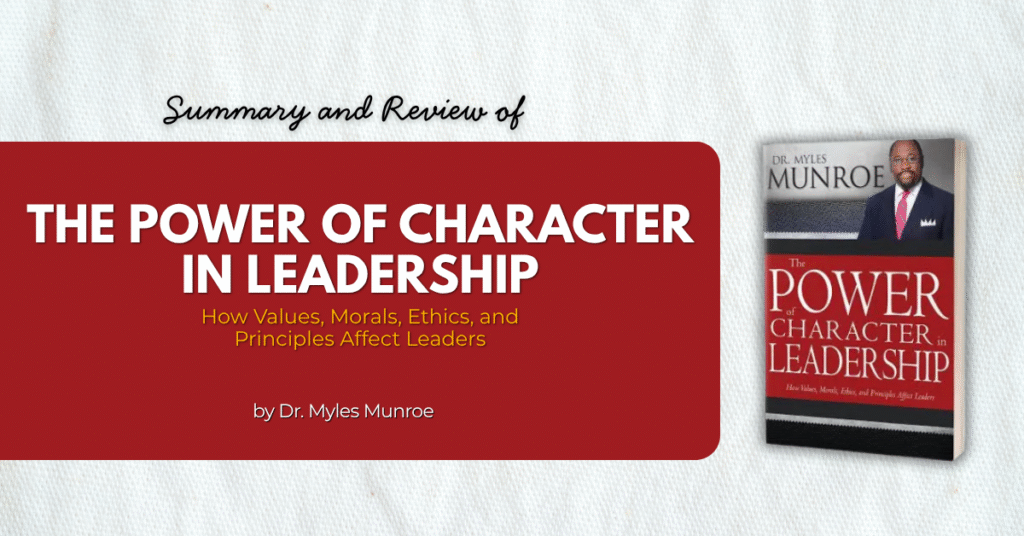
The Power of Character in Leadership | Lessons from Myles Munroe’s Book

I used to think a lot about why some leaders rise so fast… and still fall just as quickly. Not because they weren’t gifted. Not because they lacked vision. But because something deeper wasn’t solid. That’s exactly what The Power of Character in Leadership by Myles Munroe addressed. This book doesn’t just show you where you are, but quietly asks who you’re becoming. One of the strongest truths I learned from the book is that leadership is not only sustained by talent, charisma, or even vision. It is sustained by CHARACTER. This is not the kind we perform in public, but the kind that we hold dear in private, when no one is watching. Dr. Munroe talks about the crisis of character in leadership, and it’s hard to ignore how real that is. We’ve all seen people rise, sometimes brilliantly, and then fall in ways that undo years of influence. And while it’s easy to think of “leaders out there,” this book brings it closer, to you and me. It reminds us that without the right foundation, anyone can drift. Let’s dive into some of the key lessons. Part 1: How character is really formed This section confronts a truth most people don’t like to admit: leadership failure is rarely about lack of skill; it is usually a result of lack of character. Myles Munroe makes it very clear that talent, charisma, intelligence, or even vision cannot sustain a leader. They can open doors, but they cannot keep them open. What keeps a leader standing, especially when pressure, success, or temptation shows up is character. Many leaders don’t crash because they weren’t gifted enough, but because they weren’t grounded enough. You can build something impressive on the outside while slowly collapsing on the inside. A relatable way to think about it: You might be doing well publicly, school, work, leadership roles, but privately, you cut corners, avoid accountability, or compromise small values. Those “small things” are actually cracks forming in your foundation. Character is like a personal security system. It protects you not just from external pressure, but from your own weaknesses. Without it, success becomes dangerous. Ponder on this – if people described your character, not your achievements, what would they say? Part II: The Source of Moral Leadership Here’s a powerful question: Where does character actually come from? It was broken down into three layers: What you believe, what you value, and what you serve. Your beliefs shape your values, and your values shape your actions. So leadership isn’t first about what you do, it’s about what is happening inside you consistently. For example:If you believe success is everything, you may justify unethical shortcuts.If you value integrity, you’ll choose differently, even when no one is watching. Munroe also emphasises that principles are not optional tools, they are laws. Just like gravity works whether you believe it or not, principles like honesty, discipline, and responsibility have consequences when ignored. This part becomes very practical when applied to everyday life: How do you behave when no one is checking? What do you prioritise when things get hard? What do you protect: your image or your integrity? Leadership is not just personal; it spreads. Part III: Personal Character Development This section becomes very introspective and honest. It moves from theory to self-examination and growth. Character isn’t automatic, you build it intentionally. And one of the biggest tests of character is temptation. Not always big, dramatic failures, but subtle ones like cutting corners, being inconsistent, letting emotions control decisions, choosing convenience over discipline. Every decision you make is like writing a sentence in your life story. Over time, those sentences form your character. Some of the qualities of principled leaders include self-discipline, integrity, consistency, and responsibility. What makes this part relatable is how it highlights everyday behaviors: Being late repeatedly, avoiding responsibility, reacting emotionally; these things quietly weaken leadership. One powerful takeaway here is: You don’t suddenly fail; you gradually drift. And the opposite is also true: You don’t suddenly become strong; you build strength daily. Part IV: Restoring a Culture of Character This final part is both hopeful and challenging. It acknowledges something real: People fail. Leaders fail. But failure doesn’t have to be the end. Munroe introduces the idea of “falling up”, that is, learning from failure, rebuilding your values, and becoming stronger from it. He emphasises that character can be restored, integrity can be rebuilt, but it requires honesty, responsibility, and change. He also talks about aligning your vision with your values. Because having a big dream without strong character is dangerous. You might achieve it, but lose yourself in the process. This part expands beyond individuals to society. If leaders lack character, systems break. Trust disappears. People become skeptical. And you can see this in real life, people often question leaders, institutions, even success itself, because trust has been broken too many times. If we want better leadership, we need better character, starting with ourselves. Final Reflection The whole book can be summed up in one honest thought: You can build influence, success, and visibility, but only character determines whether it lasts. Now ask yourself: Who am I when no one is watching? What am I building my life on? Am I becoming someone people can truly trust? Never forget this: leadership is not just what you achieve, it is who you become while achieving it.

The Power of Character in Leadership | Lessons from Myles Munroe’s Book Read More »

Book Summaries, , , , , , , , , , , , , , , , , , , , , , , , ,

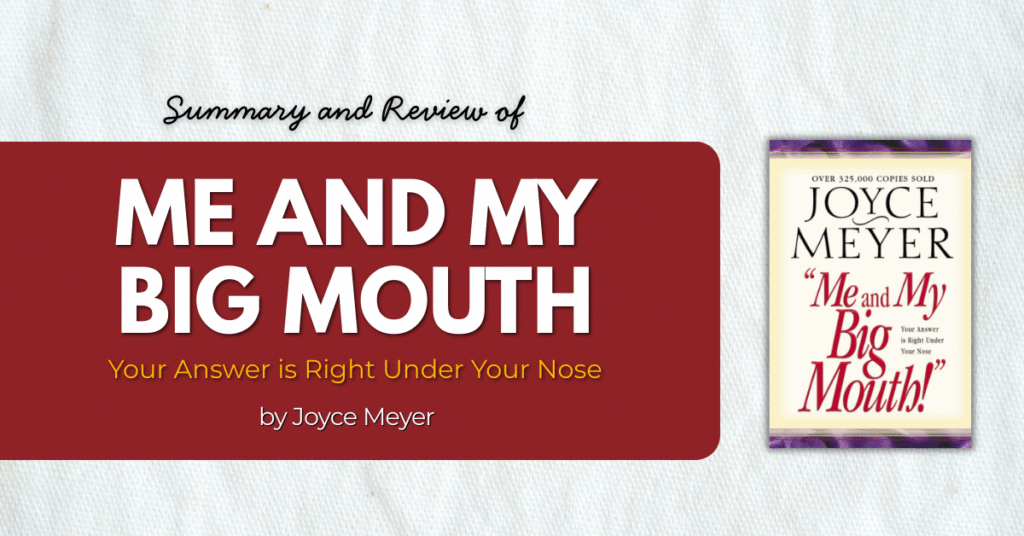
How the Words We Speak Quietly Shape Our Lives | A Review of “Me and My Big Mouth” by Joyce Meyer

I’ve read a few books by Joyce, but this one really stands out for me. The first time I saw the title, it immediately caught my attention, and I knew I had to read it. From the very start, Joyce lays down a truth that’s hard to ignore: our words are never neutral. Everything we say reflects what’s going on inside, our thoughts, our emotions, the choices we’re making. This reminded me that I’ve heard Mummy Funke Felix-Adejumo say words don’t die, and shouldn’t be taken lightly. Words aren’t just sounds; they carry weight. They can reveal fear, doubt, or resentment, or echo truth that lines up with God’s heart. They either build life or slowly drain it, and understanding that is the first step toward speaking differently, not just for appearances, but in a way that shapes how we live. I couldn’t help but pause and think: when was the last time I really considered the impact of my own words? Below is a quick summary of each chapter of the book. Chapter 1: Learning to Speak God’s Language From the first chapter, Joyce challenges a habit many of us don’t even notice: constantly talking about problems. We rehearse them in conversations, repeat them in prayer requests, and replay them in our own minds. She points back to Jesus’ instruction to speak to obstacles with faith. This isn’t about pretending life isn’t hard, it’s about refusing to let fear set the tone. Words only carry power when they’re backed by obedience and aligned with God’s character. I found myself wondering: how often have I spoken without thinking about whether my words matched my faith? Chapter 2: The Effect of Words in the Natural Realm Here, the author brings the idea down to everyday life. Words don’t stay in the spiritual realm, they shape how we respond, what we expect, and what we quietly accept as normal. And we must understand that confession isn’t empty repetition; it’s agreement. Over time, what we say becomes the lens through which we live. By pointing back to creation, Joyce reminds us that God has always taken speech seriously. While we’re not creating worlds, we are invited to reflect His nature by speaking life, truth, and intention into ordinary moments. That invitation carries responsibility: faith doesn’t excuse carelessness or lack of discernment. Let me ask you: are your everyday words reflecting life or draining it? Think about this! Chapter 3: Calling Things into Alignment Do you know that negative words have quiet, cumulative effects? Fear-filled speech doesn’t just express worry, it trains the soul to expect negativity. Using Abraham’s story, Joyce shows how faith-filled words can shape identity long before circumstances change. Positive confession isn’t wishful thinking; it’s disciplined agreement with what God has already said. Over time, these repeated truths loosen resignation and make space for expectation. I couldn’t help but reflect: what patterns in my speech might be quietly shaping who I am becoming? You may ask yourself, too. Chapter 4: Prophesying the Future Words don’t just describe where we are, they nudge us toward where we’re headed. Joyce compares the tongue to a steering mechanism: small, consistent words quietly influence direction. The things we casually complain about, when repeated often enough, don’t just pass through; they start to settle into our lives. Over time, they can shape what feels normal. In the same way, words spoken with intention and rooted in faith don’t always show immediate results, but they quietly begin to align our lives with what God has promised. It made me realise that my words are giving my life direction, and over time, they’re shaping the path I walk. Chapter 5: Becoming God’s Mouthpiece At this point, the focus shifts from self-expression to stewardship. Speaking for God requires more listening than talking. A consecrated mouth isn’t loud or dramatic; it’s rooted in humility, obedience, and alignment with His Word. True influence doesn’t come from personality; it comes from living in step with God’s will. Joyce asks a simple question that stuck with me: how aligned am I with His heart in what I speak every day? It is becoming a quiet daily check for me. Chapter 6: Complain and Remain, Praise and Be Raised This chapter hits differently. It reminded me that complaining isn’t just a slip, it’s a posture. Joyce uses Israel’s wilderness journey to show how persistent grumbling kept a whole generation stuck for 40 whole years. What a complete waste of time! But do you know praise works differently? I’m not saying the circumstances are going to change magically, but by shifting perspective. Gratitude redirects attention and creates space for God’s presence. What the mouth consistently magnifies gradually shapes the heart. Think about this, do you let small complaints always dictate your mood, emotions and focus? Chapter 7: Crossing to the Other Side Faith is tested in the middle of the journey. Promises often meet resistance after they’re spoken, not before. Storms reveal what we’ve truly anchored to. Words spoken in panic can undo months of quiet trust. Choosing steady, faith-filled speech during difficulty is an act of endurance. God secures the destination, but our words shape how we travel there. It made me reflect: when life feels hard, do my words reflect trust or fear? Chapter 8: Is Your Mouth Saved? This question sounds funny, but it’s real. Here Joyce asks a question most of us are guilty of: what happens when faith lives in the heart but never reaches the mouth? Spiritual growth eventually shows up in daily speech. When the Holy Spirit has room to work, our words start to carry grace, restraint, and truth more consistently. I paused and asked myself: are my words reflecting what I truly believe in my heart? If they don’t, then something needs to shift, either what I’m holding onto within, or the way I choose to speak. Chapter 9: When Fasting Includes Silence When we think of fasting, we often think of staying away from

How the Words We Speak Quietly Shape Our Lives | A Review of “Me and My Big Mouth” by Joyce Meyer Read More »

Book Summaries, , , , , , , , , , , , , , , , , , ,

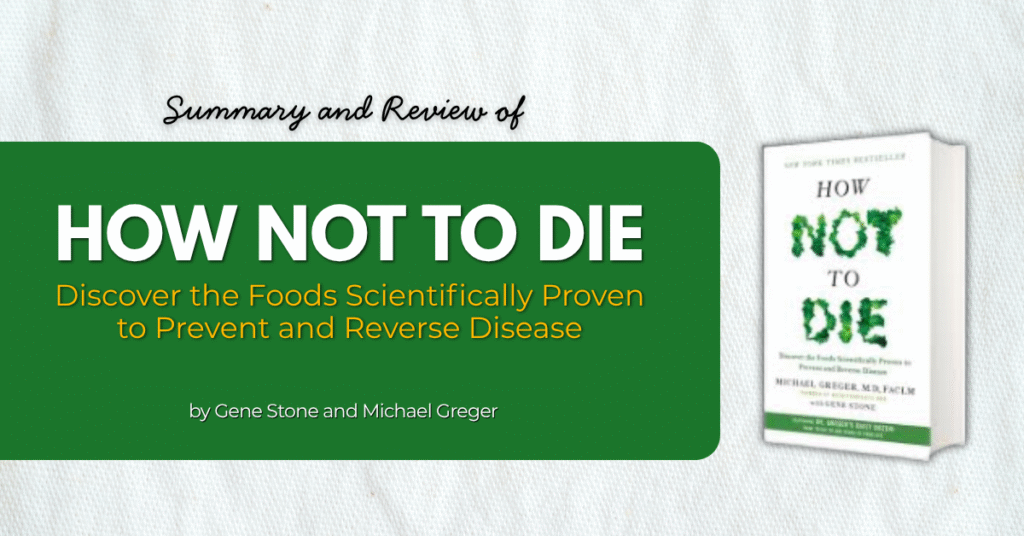
How Not to Die by Dr. Greger: Life-Changing Lessons on Diet, Health, and Longevity

There are some books you read and move on from… and then there are the ones that stay with you long after the last page. “How Not to Die”, a great book written by Gene Stone and Michael Greger felt like that for me, and for many members of the GLC Community (Click HERE to learn more about GLC). Most of us have started applying the lessons from the book. For me, I read the book slowly, and what stayed with me was realising how much of our health is quietly shaped by the small, everyday choices we treat as normal. At its core, the book keeps returning to one clear idea: many of the diseases we fear do not just happen to us randomly. They often grow from patterns, especially what we eat, and those patterns can be changed (if you really want to). Here’s a breakdown of the book with the practical steps we can all take to live a healthy life. Brain Disease: Brain health isn’t something to think about only in old age. It’s something that shapes how we live, think, feel, and function every single day. We all need a healthy, functioning brain to enjoy a good quality of life. Our memory, focus, mood, decision-making, and even emotional balance all depend on how well the brain is supported over time. Conditions like stroke and Alzheimer’s are influenced by long-term habits, including what we eat. Diets high in salt, saturated fats, and processed foods can raise blood pressure, increase clot risk, and gradually affect brain function over time. It often comes down to small daily choices, what you spread on your bread, your snacks, what fills your plate. Swapping butter for olive oil, adding spinach, or choosing blueberries over biscuits may feel small, but they add up. Foods like berries, leafy greens, nuts, flaxseeds, and whole grains help support and protect the brain over time. Heart Disease: Heart disease is still the leading cause of death worldwide, yet many people feel fine until something suddenly goes wrong. What’s surprising is that plaque (fat buildup in the arteries), can start forming as early as childhood, long before symptoms appear. Over time, it narrows the arteries and slows blood flow, and if it ruptures, it can trigger a clot that leads to a heart attack. The encouraging part is that it’s largely preventable. In places like rural China and Uganda, where diets are built around grains, legumes, and vegetables, heart disease is rare. Whole-food, plant-based eating doesn’t just lower cholesterol, it can even help reverse arterial damage. Choosing more beans, leafy greens, and fruits, while cutting back on animal fats and processed foods, makes a difference. Even simple swaps, like oatmeal with berries instead of bacon, matter. Digestive Cancers: Our gut is more than a digestive system. It’s a key part of our overall health. Fiber-rich foods like beans, whole grains, fruits, and vegetables feed good gut bacteria and help the body clear out harmful substances. On the other hand, diets high in red and processed meats, excess sugar, and fried foods increase cancer risk. Adding turmeric, cruciferous vegetables, and colorful produce to improve our gut health. Simply put, your plate becomes part of how you protect your gut every day. Infections: I don’t think we talk enough about how much what we eat supports our immune system. It’s not just about avoiding germs, it’s about whether your body is ready for them when they come. Some animal products can expose us to pathogens, while plant foods quietly strengthen our defense system. Foods like garlic, mushrooms, green tea, and colorful fruits and vegetables give your body what it needs to fight foreign substances. Choosing more plant-based meals isn’t only about preventing long-term diseases; it’s about equipping your body daily to stay healthy. Diabetes: For a long time, many of us thought sugar was the main problem. But it goes deeper than that. When there’s too much fat, especially from animal sources and processed foods, it interferes with how insulin works. The beautiful part is that the body responds when we make changes. Foods like beans, whole grains, nuts, and even simple additions like cinnamon or a splash of vinegar can help stabilize blood sugar. There are real stories of people turning things around just by changing how they eat. And yes, you can do the same. High Blood Pressure: High blood pressure is often seen as something that just comes with age, but that’s not the full story. What we eat plays a huge role. Diets high in processed foods, excess salt, and animal products can push blood pressure up over time. On the other hand, foods rich in potassium—like bananas, beans, leafy greens, beets, and flaxseeds—help bring it down naturally. In some cases, these changes can be just as effective as medication, without the extra burden on the body. Liver Disease: Your liver is constantly working for you behind the scenes, and it is affected by more than just alcohol. Diets high in animal fat, sugar, and refined carbs can lead to fat buildup in the liver. The encouraging part is that the liver can heal when you support it adequately. Eating more plant-based foods, especially vegetables like broccoli and cabbage, and reducing or completely eliminating alcohol, can help reduce that burden and even reverse early damage. Kidney Disease: The kidneys do a lot of quiet work filtering waste from the body. When we consume too much animal protein, it can put extra strain on the kidneys over time. Shifting towards plant proteins, along with fruits, vegetables, and foods like flaxseeds, can ease that load. For people already dealing with kidney issues, healthy diets can help slow down the progression of the disease and support better function for longer. Cancer: Cancer isn’t one single disease, and it rarely has one single cause. It builds up over time from a mix of genetics, environment, and lifestyle patterns. What research keeps pointing to is a pattern: diets high in processed meats,

How Not to Die by Dr. Greger: Life-Changing Lessons on Diet, Health, and Longevity Read More »

Book Summaries, , , , , , , , , , , , , , , , , , , , , , , , , , , , , , , , , ,

Insights from John Mark Comer’s The Ruthless Elimination of Hurry

Lately, I’ve been noticing how easy it is to live in a constant state of rush. Not always because there’s too much to do, but because everything around us seems to be moving fast. Reading The Ruthless Elimination of Hurry by John Mark Comer made me pause in a way I didn’t expect. This book made me realise some errors that could have been avoided if I were calmer and more patient. John Mark Comer begins with his own story, and it’s surprisingly relatable. On the outside, everything looked fine, he was leading a growing church, doing meaningful work and showing up where he was needed. But internally, something was off. He describes it not just as burnout, but as a loss of joy, a growing frustration, even towards people he loved. What stood out to me is that the problem wasn’t what he was doing, it was the pace at which he was living. And that alone feels worth sitting with, because it’s possible to be doing the right things… at the wrong pace. Part One: The problem we don’t always name This part gently confronts something we often normalise, HURRY. Not just being busy, but living in a constant state of rushing mentally, emotionally, and even spiritually. The book describes hurry as one of the greatest enemies of a meaningful life, because the things that truly matter, love, joy, and peace, don’t grow well in a rushed life. Love needs time. Joy needs presence. Peace needs stillness. And when life is always moving quickly, those things begin to fade quietly. What made this even more real is how he explains where this comes from. From how our world has evolved, from natural rhythms to clock-driven schedules, and now to a digital life where everything is always on. There’s barely any boundary anymore. You’re reachable at all times. There’s always something to respond to, something to check, something to consume, information everywhere. Over time, it creates a kind of restlessness that doesn’t go away, it just gets managed with more distraction. And if I’m being honest, that part felt very familiar. Part Two: Why more time isn’t the answer If we’re given the opportunity to, most of us will ask for more time. Comer challenges the idea that stress can be fixed with setting our priorities right. He reminds us that we are finite our time, energy, and capacity are limited. These limits are actually gifts, guiding us to focus on what truly matters. Instead of doing more, we are called to do less, but with our whole hearts. He draws on Matthew 11:28-30, explaining that Jesus’ “yoke” represents His lifestyle. Many try to experience His peace without adopting His rhythms. The invitation is simple: stop striving and start learning to live at the unhurried pace of Jesus. Comer also introduces the concept of a “Rule of Life,” a framework of habits that shapes our days. Like a trellis helping a vine grow, this structure helps our soul grow toward God. Most people live by a default rule dictated by the world, which fuels hurry. Creating an intentional rule protects our spiritual health. Spiritual disciplines, prayer, fasting, silence, aren’t just tasks to check off. They are practices that place us where God can transform our hearts, helping us grow in love, patience, and presence. Part Three: Learning a new way to live This part becomes very practical, which I love. It introduces simple practices including silence and solitude, sabbath, simplicity and slowing down. Silence and solitude stood out to me as a starting point. I learned to create a space to be still, away from noise and regular activities. It sounds simple, but it’s not something we naturally do anymore. Then there’s Sabbath, not just as rest, but as intentional rest. A time to pause, to enjoy, and to step out of constant productivity. Simplicity made me reflect on how much we carry, physically and mentally. Sometimes, having more actually costs us more time, more energy, and more attention. And finally, slowing down not just in big ways, but in small, everyday choices. Choosing not to rush through everything. Choosing to be present in what you’re doing. In summary, this kind of life won’t come naturally in a fast-paced world. It takes intention. It takes consistency. But the reward is something deeper than productivity. This is calling you to connection with God, with people, and even with yourself. And ultimately, it’s becoming a person of love. So for now, I’m choosing to: slow down, breathe, and be present. Because sometimes, the change we desire isn’t found in doing more, it’s learning how to fully be in what already is.

Insights from John Mark Comer’s The Ruthless Elimination of Hurry Read More »

Book Summaries, , , , , , , , , , , , , , ,

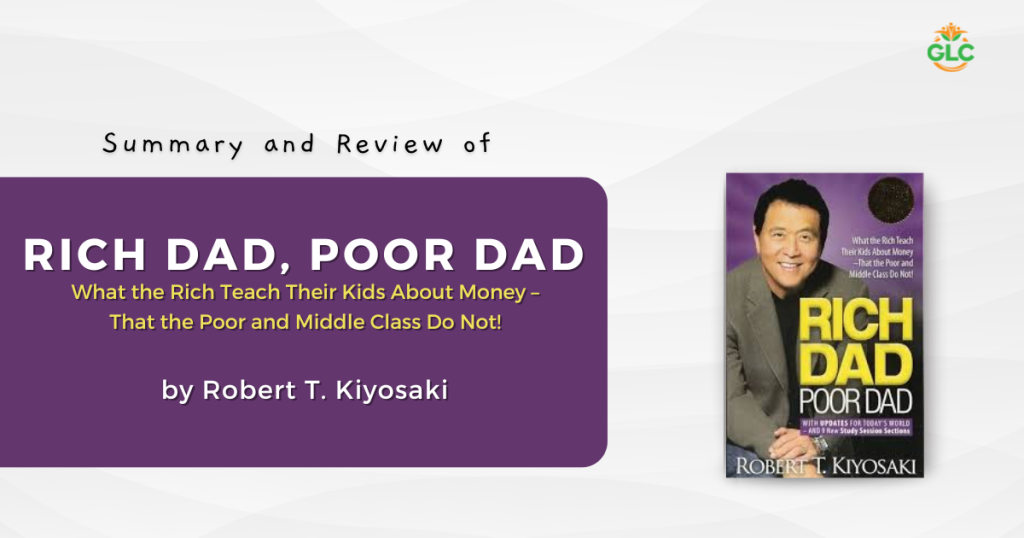
Rich Dad Poor Dad Summary: Life-Changing Money Lessons from Robert Kiyosaki

What truly separates those who merely earn money from those who build lasting wealth? That’s the big question at the heart of this best-selling book: Rich Dad, Poor Dad by Robert Kiyosaki. This isn’t just a book about money. It’s about how we think. It’s about mindset. Through two very different father figures, his highly educated but financially limited “Poor Dad” and his entrepreneurial, wealthy “Rich Dad”, Kiyosaki shows us just how deeply our beliefs about work, money, and success shape our future. One dad encouraged job security, saving, and climbing the corporate ladder. The other encouraged learning how money works, taking calculated risks, and building assets that create freedom. In this summary, we’ll walk through each chapter and unpack the core lessons that continue to challenge, inspire, and guide readers around the world. Let’s dive in. Chapter 1: The Rich Don’t Work for Money Most of us grow up being told to get a good job, work hard, and chase promotions. But the rich think differently. They don’t work for money, they make money work for them. It’s not just about income; it’s about mindset. Fear and greed often drive us into financial traps: staying in jobs we don’t love or overspending to feel secure. The rich learn to master their emotions and focus on building capacity and clarity, not just comfort. Chapter 2: Why Teach Financial Literacy? It’s not always just about how much we earn, it’s about how much we keep and how wisely we manage that which is kept. Many of us make the mistake of buying liabilities that drain our pockets while calling them assets. But real financial literacy starts with understanding the difference. Assets put money into our lives. Liabilities take it out. It’s simple, but powerful, and it changes how we handle everything from housing to habits. Chapter 3: Mind Your Own Business Too often, we spend our entire lives working for someone else’s dream. Even if we’re employed, we can still build our own businesses, our own asset columns. This is so essential. Kiyosaki encourages us to think beyond our professions. What we do for a living is one thing, of course it must be well done. But what we own, what builds wealth in the background, is our true business. We must learn to think long-term and invest in ownership, not just labour. Chapter 4: The History of Taxes and the Power of Corporations The rich play the money game by a different set of rules, unlike the poor. While most employees earn, pay taxes, and spend what’s left, the rich earn, spend, and then pay taxes on what remains, legally, through corporations. This isn’t about trickery; it’s about understanding the system and making it work for us. It’s a powerful reminder that complaining about the rules won’t change our lives, but learning them might be the game-changer. Chapter 5: The Rich Invent Money We often believe that wealth comes from luck or connections. But in truth, financially intelligent people create their own opportunities. They spot possibilities that others miss because they’ve trained their minds to look for them. They act when others freeze. We don’t have to wait for perfect conditions to move. With knowledge, creativity, and courage, we can learn to invent money too. Chapter 6: Work to Learn, Don’t Work for Money What if we chose jobs not just for the paycheck, but for the skills they teach us? Rich Dad urged Robert to try different roles so he could learn how money, business, and people really work. Sales. Leadership. Investing. Communication. These aren’t just “nice to have” skills, they’re wealth-building tools that should be learnt. As leaders and learners, we grow the most when we step out of our comfort zones and stretch our abilities. Chapter 7: Overcoming Obstacles Even when we know what to do, many of us still don’t act. Why? Because of fear, doubt, laziness, bad habits, and ego. These are the inner blocks that keep us stuck. Kiyosaki reminds us that success isn’t about being fearless, it’s about being brave enough to act anyway. Personal growth, financial mastery, and leadership all start with the same thing: courage to move forward. Chapter 8: Getting Started So how do we begin? Kiyosaki offers simple but powerful action steps. Define your “why.” Surround yourself with people who push you to grow. Learn a few key money principles and apply them. Pay yourself first. Use assets, not salaries, to fund your lifestyle. Start small. Start now. We don’t need to have it all figured out. We just need to take one step, then another. Chapter 9: Still Want More? Here Are Some To-Dos Finally, the book closes with a challenge: most people read books, feel inspired, and then do nothing. Don’t let that be you. Kiyosaki encourages readers to make offers, invest in knowledge, shadow mentors, and take baby steps. You don’t have to be perfect. You just have to be intentional. Remember, execution beats theory. Watch the market. Test your ideas. We grow by doing, not just by reading. Perfection isn’t the goal. Progress is. Final Thought Rich Dad Poor Dad is a reminder that financial freedom doesn’t start with money, it starts with mindset. It’s about challenging what we’ve been taught, stepping outside our comfort zones, and leading ourselves toward growth. Financial intelligence, emotional mastery, and a bias for action aren’t optional anymore, they’re essential. So build your vision. Master your finances. Lead your life.

Rich Dad Poor Dad Summary: Life-Changing Money Lessons from Robert Kiyosaki Read More »

Book Summaries, , , , , , , , , , , , , , , , , , , ,

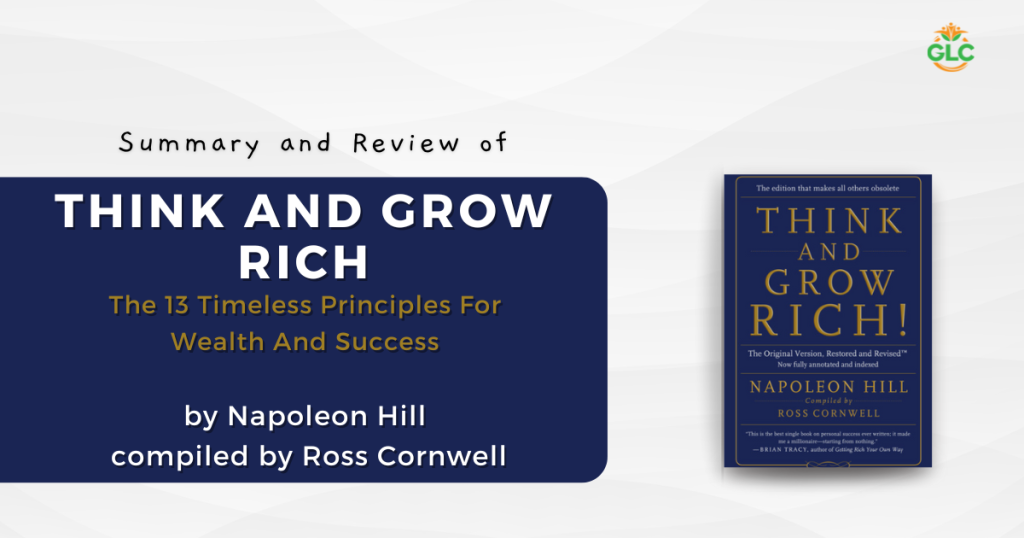
THINK AND GROW RICH- The 13 Timeless Principles For Wealth And Success

INTRODUCTION Think and Grow Rich by Napoleon Hill is a timeless classic, which talks about unlocking the power of your mind to achieve anything you truly desire.  More than a book, it’s a blueprint for personal transformation. It teaches that your mindset shapes your destiny and with the right belief, desire, as well as persistence, no goal is out of reach. This isn’t just about growing rich in wealth, it’s about growing rich in purpose, clarity and self-belief. Whether you’re an entrepreneur, a student, a dreamer, or someone just searching for direction, success isn’t just about luck, talent or where you were born, real success comes from mastering your thoughts, habits and beliefs.  Join me as we explore the principles of lifetime riches together. CHAPTER 1 – DESIRE: The Starting Point of All Achievement In this chapter Napoleon Hill made one thing very clear, which is if you truly want to succeed, you must deeply, passionately want it, not just wish for it, not just hope, it has to burn like a fire inside you. “Desire is the starting point of all achievement.” This isn’t about daydreaming, it is about having a burning desire, backed by faith and action, which separates successful people from everyone else. A good example is the story of Edwin C. Barnes, a man who had one dream: to work with the famous inventor Thomas Edison. Barnes didn’t know Edison personally, he had no money, no connections just a clear goal in his mind, but he was so determined that he hopped on a freight train and showed up at Edison’s lab. He didn’t get a high position right away, but he worked hard and stayed focused, eventually, his moment came. Edison gave him a chance to sell one of his inventions, Barnes grabbed the opportunity, proved himself and went on to become Edison’s partner. A burning desire will unlock the doors for greatest achievements. CHAPTER 2 – FAITH: The Visualization of and Belief in the Attainment of Desire If desire is the spark that starts the fire of success, then faith is the fuel that keeps it burning.  Faith is the foundation of all great achievements. This doesn’t mean religious faith (though the concept can overlap); it means belief in yourself, in your dreams and in your ability to succeed even before there’s any physical proof. Faith is more than just hope or positive thinking, it is a state of mind that can be created through repeated affirmations (what Nill calls “auto-suggestion”) and emotional involvement. When you repeat something to yourself often enough and truly believe it; you begin to act as if it’s already real. The mind is like a garden, your thoughts are the seeds. When you mix those thoughts with emotion especially belief and desire they start to take root and grow. The combination of desire and faith is a kind of spiritual power. When they are blended together, you gain the inner strength to take bold actions, to push through obstacles and to remain confident even when the world doubts you. Success doesn’t start with outside conditions, it starts in the mind. CHAPTER 3 – Auto-Suggestion: The Medium for Influencing the Subconscious Mind Auto-suggestion: Simply put, it’s the practice of feeding your mind with positive, goal-driven thoughts over and over until they become part of your belief system. It is a way to influence your subconscious mind by repeating thoughts, ideas or goals regularly with emotions and beliefs, think of it as self-talk with a purpose. The subconscious mind doesn’t filter what it receives, it simply accepts repeated thoughts as truth, especially when they come with strong emotion. So, if you want to change your life, you must first change what you constantly say to yourself. Hill writes: “Plain, unemotional words do not influence the subconscious mind, you will get no appreciable results until you learn to reach your subconscious mind with thoughts or spoken words which have been well emotionalized with belief.” That means your affirmations must not only be repeated often, but also felt deeply. This combination of repetition and emotion rewires your beliefs and habits. CHAPTER 4 – Specialized Knowledge: Personal Experiences or Observations You’ve probably heard the saying: “Knowledge is power” but in this chapter, Napoleon Hill makes an important clarification: “Knowledge is only potential power. It becomes power only when it is organized into definite plans of action and directed toward a clear goal.” In other words, just knowing things isn’t enough, what matters is what you do with what you know. There are two types of power: General Knowledge: This includes facts, theories and random information like what you might learn in school. It’s broad and scattered. Specialized Knowledge: This is focused, practical and useful knowledge, the kind that can help you make money or achieve a specific goal.  Hill emphasizes that success comes from acquiring and using specialized knowledge that helps you solve problems or create value. You Don’t Need to Know Everything Just What Matters. An example is the story of Henry Ford, who wasn’t highly educated in a traditional sense, but he surrounded himself with people who had the knowledge he needed. He organized and directed that knowledge to build one of the greatest industrial empires of his time. In a world overwhelmed with information, those who know how to apply the right knowledge at the right time, for the right reason have the advantage. CHAPTER 5 –  Imagination: The Workshop of the Mind Ever heard the saying, “If you can dream it, you can achieve it”? This chapter dives into the mental engine behind that idea: Imagination. Hill calls it “the workshop of the mind,” because it’s where desire, faith and knowledge are shaped into plans. It’s where success is first born not in the real world, but in your thoughts. “Man can create anything which he can imagine.” According to Hill, imagination is the ability to form mental pictures of things that don’t yet exist. It’s your inner workshop,

THINK AND GROW RICH- The 13 Timeless Principles For Wealth And Success Read More »

Book Summaries, , , , , , , , , , , , , , , , , , ,

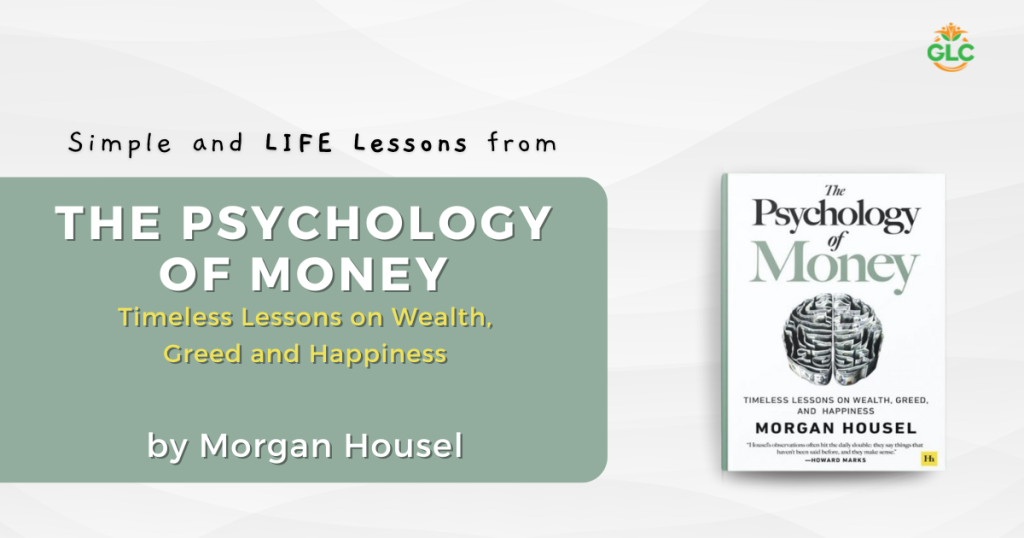
Summary of The Psychology of Money: Timeless Lessons on Wealth, Greed and Happiness

Introduction Money is a big part of all our lives—it influences the choices we make, the goals we chase, and even how we feel about success. As a team, we’ve had plenty of conversations around money—what it means to us, how we handle it, and how we can grow in our financial journeys. So, reading The Psychology of Money by Morgan Housel felt like the perfect fit. This book isn’t about complex financial strategies or investment tricks. It’s about the human side of money—our behaviors, habits, and emotions. Through real-life stories and simple wisdom, Housel helps us see that true financial success often comes down to how we think, not just what we know. In this post, we’re excited to share the key takeaways and lessons that really stood out to us as a team—things we believe everyone can relate to, no matter where you are on your financial journey. So, let’s walk through some of the core ideas in The Psychology of Money—chapter by chapter. Chapter 1: No One’s Crazy When it comes to money, we all think we’re being reasonable—but the truth is, we’re mostly shaped by our own tiny corner of the world. Think about it: your personal experiences with money make up less than 0.00000001% of what’s happening globally, yet they probably influence about 80% of how you think money works. That’s why what seems like irrational financial behavior to one person might make perfect sense to another—once you understand their story. Money decisions are rarely just about logic. They’re rooted in our upbringing, emotions and what we’ve been exposed to. If you grew up seeing your parents struggle to make ends meet, you might become a saver who avoids all risks, but if you came of age during a boom in tech or crypto, taking risks may feel like the norm. Considering generational perspectives: many Millennials chase financial success for the status as well as the respect it brings, while the older generation often just want to survive and provide. It’s not that one group is wiser or crazier than the other—they’re just responding to different worlds. So here’s the big takeaway: don’t be quick to judge how others handle money, don’t blindly copy them either. What worked for them may not work for you—because your experiences, fears and motivations are different. We all see money through our own lens. Understanding this truth can make us more empathetic and wiser with our financial choices. Chapter 2: Luck & Risk Money stories are never black and white. Sometimes success is about being in the right place at the right time. And sometimes failure isn’t because someone didn’t try hard enough—life just threw curveballs. Imagine two friends start a business. One sets up a POS service in a busy location and thrives. The other, in a quieter neighborhood, barely breaks even. Same hustle, same skill—different outcomes. Was one smarter than the other? Not really. One just got luckier. That’s how life works. Luck and risk are twins—we don’t always see them, but they’re behind many of our results. So when someone succeeds, be slow to idolize them. When someone fails, be slow to judge. Stay humble in success, be compassionate in others’ failure, because so much of life is out of our hands. Chapter 3: Never Enough Money is good, but the endless chase for more can destroy the very peace you hoped it would bring. There are people with millions who are still not satisfied—they want more. And sometimes, that greed leads them to foolish or even illegal choices. Like the man earning well from his job who got tempted by a “double-your-money” scam. He lost everything chasing what he didn’t need. The lesson? Know when to say, “This is enough.” Contentment is a shield, it protects your peace, your integrity and your future. Greed, on the other hand, keeps moving the finish line—and one day, you might lose what you already have trying to get what you don’t need. Chapter 4: Confounding Compounding Big wealth doesn’t always come from big moves—it often comes from small, steady steps taken over time. Warren Buffett is a perfect example, of his $84.5 billion net worth, over $81 billion came after he turned 65. Why? Because he started early and let compounding work for decades. That’s the magic—tiny gains, multiplied by time. You don’t need a huge income to build wealth. Even saving ₦5,000 a month in a modest investment can grow into something meaningful over the years. The hard part is being patient enough to wait for the results. So don’t underestimate the power of small beginnings. Save first, spend later and let time multiply your efforts. That’s how wealth grows. Chapter 5: Getting Wealthy vs. Staying Wealthy Making money is one thing, keeping it is another. There are many ways to get rich—through skill, timing or even luck. But staying rich? That requires a different mindset: one of caution, humility and discipline. We’ve all seen stories—someone strikes gold through business, politics, or the entertainment industry and suddenly, money is flowing, but without planning, many lose it all just as fast as it came. On the flip side, someone running a small shop with wisdom and consistency can build lasting wealth. To stay wealthy, you must respect the risks. Don’t spend to impress. Don’t gamble your savings. Live wisely and plan for the long term, because wealth is not just about gaining—it’s about sustaining. Chapter 6: Tails, You Win Have you ever looked at someone who “blew” overnight and thought, “Wow, they’re so lucky?” Here’s the truth: behind every big success you admire—whether it’s a booming business, a viral idea, or a life-changing investment—there were probably dozens of failed attempts you never saw. That’s the power of what Morgan Housel, in The Psychology of Money, calls a “tail event.” These are the rare, one-in-a-thousand breakthroughs that make up for a long string of failures. In life and investing, you don’t have to get it right every time. You just

Summary of The Psychology of Money: Timeless Lessons on Wealth, Greed and Happiness Read More »

Book Summaries, , , , , , , , , , , , , , , , , , ,

11 Key Life-Changing Lessons from Who Moved My Cheese by Dr. Spencer Johnson

It is no news that change is inevitable, yet so many of us resist its tides, clinging to the familiar while yearning for growth. If you’ve ever felt stuck or paralyzed by fear of the unknown, unwilling to move from your comfort zone, “Who Moved My Cheese?” by Spencer Johnson is a sure wake-up call. This short read tells the story of four characters – Sniff, Scurry, Hem, and Haw – each on a journey through a maze, in search of their elusive “Cheese.” But here’s the twist: the “Cheese” is a metaphor for everything we hold dear. Meanwhile, the maze mirrors the unpredictable landscapes of life we all face. As I turned the pages of this book, I found myself chuckling and sometimes nodding at the profound truths tucked into its simplicity. It’s a story that reveals our relationship with change and challenges us to look inward to see whether we sniff out new opportunities, scurry toward growth, resist in fear, or adapt and thrive. Here, I’ll share some lessons on embracing change from this insightful book. Let’s dive in! 1. What You Fear Might Never Happen Fear often paralyzes us, but most of the things we fear never come to pass. Often, breakthroughs come when you simply decide to take a step forward. Whatever it is you’ve set your mind to do, and you’re afraid of failure, ask yourself: Is this fear truly valid, or is it just my mind creating roadblocks? Instead of thinking “what if I fail?”, think “what if I succeed?” 2. Your Friends Are Great Determinants of Your Success or Failure Sometime ago, I stumbled upon a humorous video clip that cleverly pointed out: when surrounded by five foolish people, the total count is actually six.  In other words, the people you surround yourself with can either inspire you to move forward or limit you to remain in stagnation. You become the average of the closest people to you. Therefore, choose your company wisely. 3. Nothing Will Move If You Don’t Move We’ve all heard the saying “if wishes were horses, even beggars would ride.” This is a reminder that no great achievement happens solely through wishful thinking. To make progress in any area of life, action is needed. It is true that the first steps may be uncomfortable, but know that hesitation only prolongs discomfort and prolongs the process. So, it’s time you decide to take that first uncomfortable step and let the momentum build. Just start somewhere! 4. Set Your Heart on Positive ‘What Ifs’ Rather Than Negativity It’s natural for our brains to be on the lookout for threats and what may go wrong. This is because our brains are wired to keep us safe from danger. But to achieve more in life, you may need to shift your focus to the potential good that lies ahead, instead of dwelling on negatives. What if things work out better than you ever imagined? This should be your focus. Don’t dwell too long on negativity. 5. Dare to Stretch; You Have More Strength Than You Think Life’s challenges often reveal untapped strength within us. You’re capable of more than you realize – all it takes is the courage to stretch. You’d be surprised at how far you can go. Go outside your usual space, go a step further. Dare to stretch! 6. Picture the Future You Desire Have you ever heard the saying, “What the mind can conceive, the hands can achieve”? It’s a powerful truth. When you vividly imagine your desired future, you’ll be amazed at how it can motivate and inspire you to take action. What’s your vision for your life? What dreams do you want to achieve? Take a moment to close your eyes, visualize your goals. Write it down, post it somewhere you can see it often, and let it propel you forward. 7. No One Gives Up and Makes It Big Reading biographies and stories of great achievers has always been a great encouragement to me. That’s why I have a blog session for people who want to Get Inspired by other people’s stories of resilient. Every great achievement story involves consistency and persistence. Giving up is a surefire way to miss out on what could have been. So, even when the journey gets tough, keep pressing on. You cannot make it big if you give up! 8. Change Doesn’t Seek Permission Change is inevitable; it doesn’t wait for an invitation, neither does it seek permission from anyone but it will surely come. The question is, will you prepare for it or be caught off guard? While many soar on the winds of change to do big stuff, others crash. The best thing you can do is stay alert and ready to adapt. Change will always come, prepare for it. 9. Start Early, Start Now—Why Wait? Procrastination has always and will always be a dream-killer. The longer you wait to take action, the harder it becomes to get started. Don’t let delay hold you back from achieving your goals. While you may be dragging your feet, someone somewhere may seize that same idea in your head and get ahead of you. Why not start now? Remember, momentum is your friend. Take the first step today. 10. Let Go of the Past The past is where it belongs – behind us. Why bring it into the present? Clinging to the past can hold you back; it’s no longer relevant. Your past doesn’t define your future unless you let it. If there’s a need for corrections or restitution, please make amends and then move on. Release the past and move forward – beautiful things are ahead! 11. Laugh at Your Foolishness Transformation begins with self-awareness and a dash of humor. When you learn to laugh at your own mistakes, you’ll be amazed at how much lighter and freer you’ll feel. Instead of beating yourself up over errors, smile at your missteps, learn from them, and decide to do better. And ensure you

11 Key Life-Changing Lessons from Who Moved My Cheese by Dr. Spencer Johnson Read More »

Book Summaries, , , , , , , , , , , , , , , , , ,