
book review

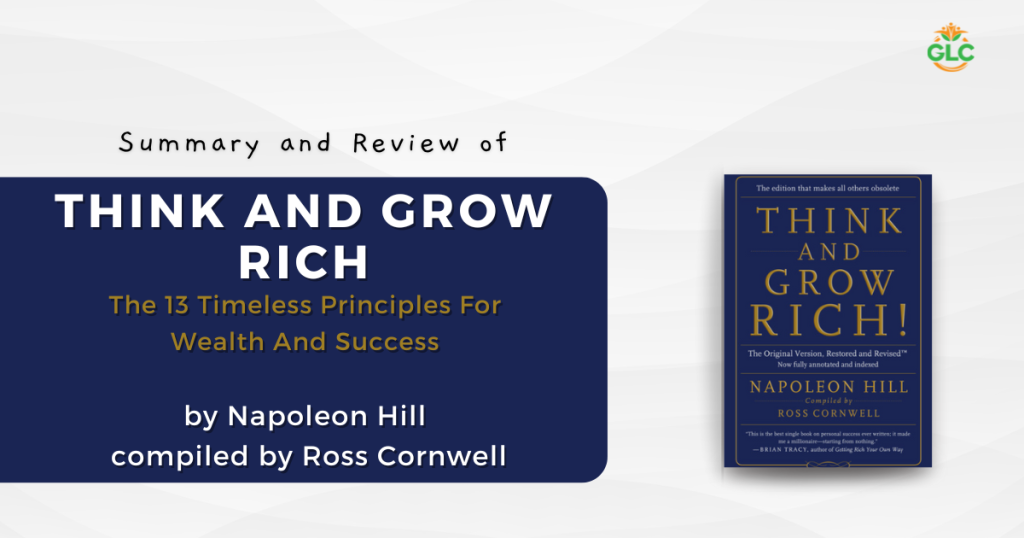
THINK AND GROW RICH- The 13 Timeless Principles For Wealth And Success

INTRODUCTION Think and Grow Rich by Napoleon Hill is a timeless classic, which talks about unlocking the power of your mind to achieve anything you truly desire.  More than a book, it’s a blueprint for personal transformation. It teaches that your mindset shapes your destiny and with the right belief, desire, as well as persistence, no goal is out of reach. This isn’t just about growing rich in wealth, it’s about growing rich in purpose, clarity and self-belief. Whether you’re an entrepreneur, a student, a dreamer, or someone just searching for direction, success isn’t just about luck, talent or where you were born, real success comes from mastering your thoughts, habits and beliefs.  Join me as we explore the principles of lifetime riches together. CHAPTER 1 – DESIRE: The Starting Point of All Achievement In this chapter Napoleon Hill made one thing very clear, which is if you truly want to succeed, you must deeply, passionately want it, not just wish for it, not just hope, it has to burn like a fire inside you. “Desire is the starting point of all achievement.” This isn’t about daydreaming, it is about having a burning desire, backed by faith and action, which separates successful people from everyone else. A good example is the story of Edwin C. Barnes, a man who had one dream: to work with the famous inventor Thomas Edison. Barnes didn’t know Edison personally, he had no money, no connections just a clear goal in his mind, but he was so determined that he hopped on a freight train and showed up at Edison’s lab. He didn’t get a high position right away, but he worked hard and stayed focused, eventually, his moment came. Edison gave him a chance to sell one of his inventions, Barnes grabbed the opportunity, proved himself and went on to become Edison’s partner. A burning desire will unlock the doors for greatest achievements. CHAPTER 2 – FAITH: The Visualization of and Belief in the Attainment of Desire If desire is the spark that starts the fire of success, then faith is the fuel that keeps it burning.  Faith is the foundation of all great achievements. This doesn’t mean religious faith (though the concept can overlap); it means belief in yourself, in your dreams and in your ability to succeed even before there’s any physical proof. Faith is more than just hope or positive thinking, it is a state of mind that can be created through repeated affirmations (what Nill calls “auto-suggestion”) and emotional involvement. When you repeat something to yourself often enough and truly believe it; you begin to act as if it’s already real. The mind is like a garden, your thoughts are the seeds. When you mix those thoughts with emotion especially belief and desire they start to take root and grow. The combination of desire and faith is a kind of spiritual power. When they are blended together, you gain the inner strength to take bold actions, to push through obstacles and to remain confident even when the world doubts you. Success doesn’t start with outside conditions, it starts in the mind. CHAPTER 3 – Auto-Suggestion: The Medium for Influencing the Subconscious Mind Auto-suggestion: Simply put, it’s the practice of feeding your mind with positive, goal-driven thoughts over and over until they become part of your belief system. It is a way to influence your subconscious mind by repeating thoughts, ideas or goals regularly with emotions and beliefs, think of it as self-talk with a purpose. The subconscious mind doesn’t filter what it receives, it simply accepts repeated thoughts as truth, especially when they come with strong emotion. So, if you want to change your life, you must first change what you constantly say to yourself. Hill writes: “Plain, unemotional words do not influence the subconscious mind, you will get no appreciable results until you learn to reach your subconscious mind with thoughts or spoken words which have been well emotionalized with belief.” That means your affirmations must not only be repeated often, but also felt deeply. This combination of repetition and emotion rewires your beliefs and habits. CHAPTER 4 – Specialized Knowledge: Personal Experiences or Observations You’ve probably heard the saying: “Knowledge is power” but in this chapter, Napoleon Hill makes an important clarification: “Knowledge is only potential power. It becomes power only when it is organized into definite plans of action and directed toward a clear goal.” In other words, just knowing things isn’t enough, what matters is what you do with what you know. There are two types of power: General Knowledge: This includes facts, theories and random information like what you might learn in school. It’s broad and scattered. Specialized Knowledge: This is focused, practical and useful knowledge, the kind that can help you make money or achieve a specific goal.  Hill emphasizes that success comes from acquiring and using specialized knowledge that helps you solve problems or create value. You Don’t Need to Know Everything Just What Matters. An example is the story of Henry Ford, who wasn’t highly educated in a traditional sense, but he surrounded himself with people who had the knowledge he needed. He organized and directed that knowledge to build one of the greatest industrial empires of his time. In a world overwhelmed with information, those who know how to apply the right knowledge at the right time, for the right reason have the advantage. CHAPTER 5 –  Imagination: The Workshop of the Mind Ever heard the saying, “If you can dream it, you can achieve it”? This chapter dives into the mental engine behind that idea: Imagination. Hill calls it “the workshop of the mind,” because it’s where desire, faith and knowledge are shaped into plans. It’s where success is first born not in the real world, but in your thoughts. “Man can create anything which he can imagine.” According to Hill, imagination is the ability to form mental pictures of things that don’t yet exist. It’s your inner workshop,

THINK AND GROW RICH- The 13 Timeless Principles For Wealth And Success Read More »

Book Summaries, , , , , , , , , , , , , , , , , , ,
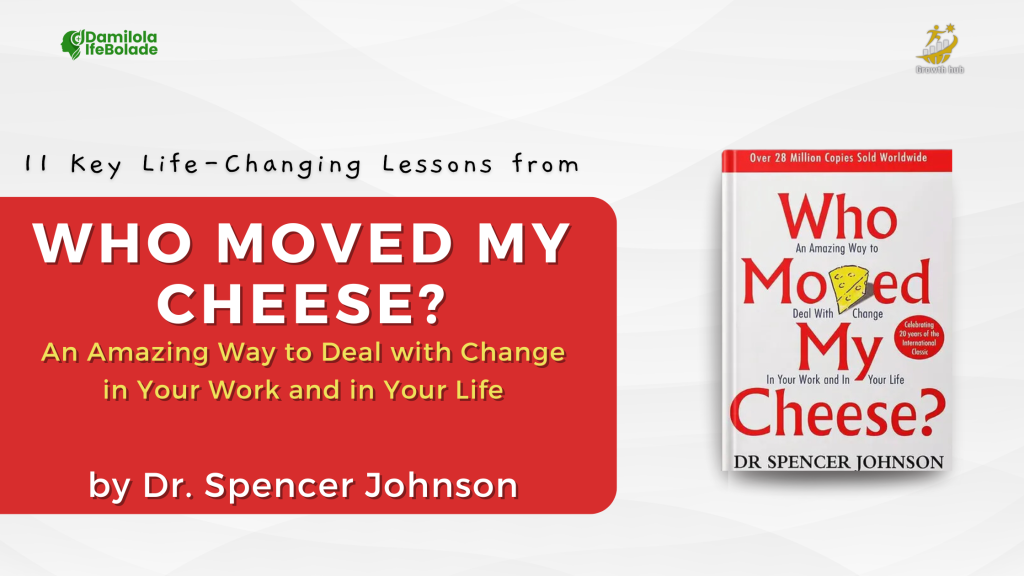
11 Key Life-Changing Lessons from Who Moved My Cheese by Dr. Spencer Johnson

It is no news that change is inevitable, yet so many of us resist its tides, clinging to the familiar while yearning for growth. If you’ve ever felt stuck or paralyzed by fear of the unknown, unwilling to move from your comfort zone, “Who Moved My Cheese?” by Spencer Johnson is a sure wake-up call. This short read tells the story of four characters – Sniff, Scurry, Hem, and Haw – each on a journey through a maze, in search of their elusive “Cheese.” But here’s the twist: the “Cheese” is a metaphor for everything we hold dear. Meanwhile, the maze mirrors the unpredictable landscapes of life we all face. As I turned the pages of this book, I found myself chuckling and sometimes nodding at the profound truths tucked into its simplicity. It’s a story that reveals our relationship with change and challenges us to look inward to see whether we sniff out new opportunities, scurry toward growth, resist in fear, or adapt and thrive. Here, I’ll share some lessons on embracing change from this insightful book. Let’s dive in! 1. What You Fear Might Never Happen Fear often paralyzes us, but most of the things we fear never come to pass. Often, breakthroughs come when you simply decide to take a step forward. Whatever it is you’ve set your mind to do, and you’re afraid of failure, ask yourself: Is this fear truly valid, or is it just my mind creating roadblocks? Instead of thinking “what if I fail?”, think “what if I succeed?” 2. Your Friends Are Great Determinants of Your Success or Failure Sometime ago, I stumbled upon a humorous video clip that cleverly pointed out: when surrounded by five foolish people, the total count is actually six.  In other words, the people you surround yourself with can either inspire you to move forward or limit you to remain in stagnation. You become the average of the closest people to you. Therefore, choose your company wisely. 3. Nothing Will Move If You Don’t Move We’ve all heard the saying “if wishes were horses, even beggars would ride.” This is a reminder that no great achievement happens solely through wishful thinking. To make progress in any area of life, action is needed. It is true that the first steps may be uncomfortable, but know that hesitation only prolongs discomfort and prolongs the process. So, it’s time you decide to take that first uncomfortable step and let the momentum build. Just start somewhere! 4. Set Your Heart on Positive ‘What Ifs’ Rather Than Negativity It’s natural for our brains to be on the lookout for threats and what may go wrong. This is because our brains are wired to keep us safe from danger. But to achieve more in life, you may need to shift your focus to the potential good that lies ahead, instead of dwelling on negatives. What if things work out better than you ever imagined? This should be your focus. Don’t dwell too long on negativity. 5. Dare to Stretch; You Have More Strength Than You Think Life’s challenges often reveal untapped strength within us. You’re capable of more than you realize – all it takes is the courage to stretch. You’d be surprised at how far you can go. Go outside your usual space, go a step further. Dare to stretch! 6. Picture the Future You Desire Have you ever heard the saying, “What the mind can conceive, the hands can achieve”? It’s a powerful truth. When you vividly imagine your desired future, you’ll be amazed at how it can motivate and inspire you to take action. What’s your vision for your life? What dreams do you want to achieve? Take a moment to close your eyes, visualize your goals. Write it down, post it somewhere you can see it often, and let it propel you forward. 7. No One Gives Up and Makes It Big Reading biographies and stories of great achievers has always been a great encouragement to me. That’s why I have a blog session for people who want to Get Inspired by other people’s stories of resilient. Every great achievement story involves consistency and persistence. Giving up is a surefire way to miss out on what could have been. So, even when the journey gets tough, keep pressing on. You cannot make it big if you give up! 8. Change Doesn’t Seek Permission Change is inevitable; it doesn’t wait for an invitation, neither does it seek permission from anyone but it will surely come. The question is, will you prepare for it or be caught off guard? While many soar on the winds of change to do big stuff, others crash. The best thing you can do is stay alert and ready to adapt. Change will always come, prepare for it. 9. Start Early, Start Now—Why Wait? Procrastination has always and will always be a dream-killer. The longer you wait to take action, the harder it becomes to get started. Don’t let delay hold you back from achieving your goals. While you may be dragging your feet, someone somewhere may seize that same idea in your head and get ahead of you. Why not start now? Remember, momentum is your friend. Take the first step today. 10. Let Go of the Past The past is where it belongs – behind us. Why bring it into the present? Clinging to the past can hold you back; it’s no longer relevant. Your past doesn’t define your future unless you let it. If there’s a need for corrections or restitution, please make amends and then move on. Release the past and move forward – beautiful things are ahead! 11. Laugh at Your Foolishness Transformation begins with self-awareness and a dash of humor. When you learn to laugh at your own mistakes, you’ll be amazed at how much lighter and freer you’ll feel. Instead of beating yourself up over errors, smile at your missteps, learn from them, and decide to do better. And ensure you

11 Key Life-Changing Lessons from Who Moved My Cheese by Dr. Spencer Johnson Read More »

Book Summaries, , , , , , , , , , , , , , , , , ,

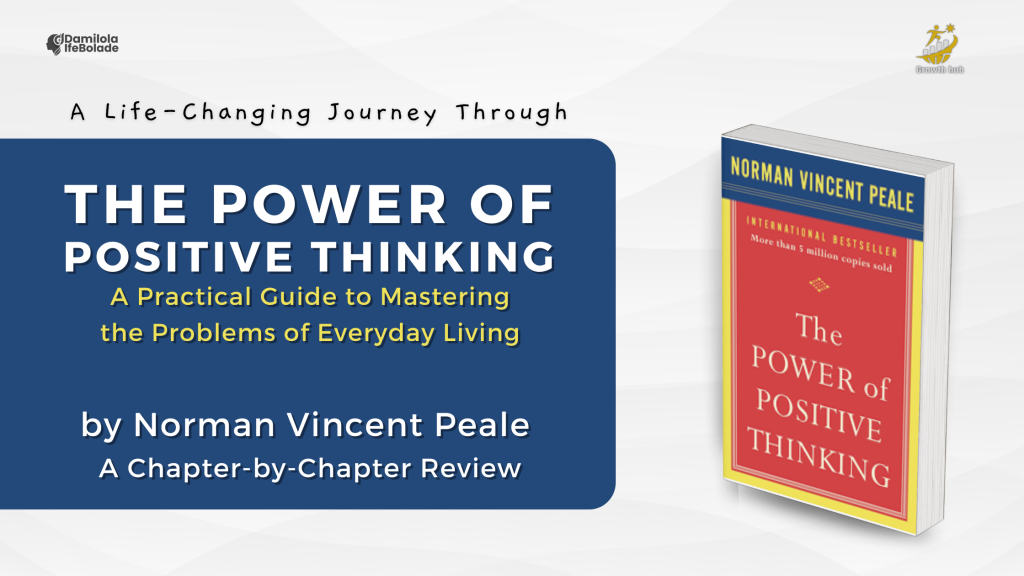
A Life-Changing Journey Through “The Power of Positive Thinking” by Norman Vincent Peale: A Chapter-by-Chapter Review

We have all been blessed with a gift, called LIFE! Even though it is a gift, it is sometimes full of challenges. But how we face these challenges determines the story we tell. Norman Vincent Peale’s timeless classic, The Power of Positive Thinking, is an inspiring reminder that our thoughts shape our realities. I’m not just about wishful thinking but about cultivating an inner strength that transforms our lives, no matter the circumstances. The central message of this book is simple yet profound: believe in yourself, trust in God’s power, and you can achieve remarkable things. Let’s dive into the chapter-by-chapter summary. Chapter 1: Believe in Yourself It is no news a sense of inferiority and inadequacy can block the path to achieving our dreams. But you need to know this: self-confidence paves the way to self-realisation and success. I know, believing in yourself isn’t always easy. Yet, faith in your abilities is a non-negotiable foundation for success and happiness. Without it, we risk stumbling over doubts that were never meant to define us. Here are some actionable steps to build self-confidence: Create a mental picture of success: Visualize yourself as a winner. Not once, not twice, but repeatedly, if possible daily, until this image becomes part of who you are. Counter negativity with positivity: When those “I’m not good enough” thoughts creep in, replace them with uplifting affirmations. For example, “I am capable,” or better still, “I can do all things through Christ who strengthens me.” Stop magnifying obstacles: We’re often our own worst enemies, blowing challenges out of proportion in our imagination. Instead, focus on solutions and opportunities. Be authentically you: While it isn’t bad to have mentors or role models, trying to mimic others only robs you of your unique brilliance. Remember, there’s only one you, and that’s your superpower. Anchor your faith in God: Say this affirmation with confidence, “If God be for me, who can be against me?” It is a game-changer. Say it. Believe it. Live it. Chapter 2: A Peaceful Mind Generates Power Let’s face it, life can be noisy, externally and internally. But know that a peaceful mind is the secret to unlocking inner strength. Think about it: when your mind is calm, you’re more creative, focused, and resilient. You can achieve more. But how do we achieve such peace in a world filled with distractions? Try these practical techniques: Practice emptying your mind: Every day, set aside a moment to let go of mental clutter. Whether it’s unresolved worries or lingering frustrations, visualize yourself releasing them. Breathe deeply and let peace wash over you. Fill your mind with healthy thoughts: Emptying your mind is just half the battle. Immediately replace the void with thoughts that inspire, uplift, and energize you. For me, this could be reflecting on God’s promises or recalling moments of gratitude. Speak peaceful words audibly: Words carry power. Peale suggests using soothing phrases like “peace,” “calm,” or “contentment.” Scripture or poetry works beautifully too—lines that resonate deeply with your soul. Begin each day with positive affirmations: Set the tone for your day by affirming peace, joy, and success over yourself. It’s amazing how this simple habit can influence your mood and outcomes. Chapter 3: How to Have Constant Energy It’s easy to feel drained when we are constantly doing so much. But here’s the thing, TRUE energy doesn’t come from a cup of coffee or a power nap. The source of all energy is God. The universe is filled with energy—whether it’s atomic energy, electric energy, or spiritual energy—and God is the source of it all. When we connect with God, we tap into that divine energy, the same energy that creates and recreates the world. Just as spring renews itself every year, God’s energy refreshes us, too. By staying in touch with Him, we can feel that constant flow of energy in our lives. It’s not about trying to push through each day; it’s about letting God’s energy flow through you, fueling your actions and thoughts. Chapter 4: Try Prayer Power Prayer has the potential to change our lives. The author, quoting a famous psychologist, tells us that prayer is the greatest power available for solving personal problems. It’s not just a way to ask for help; it’s a force that can refresh us every time and renew us every day. Prayer brings us back to our Creator, and enables us to face the world with a calm and positive outlook. One of the most effective approaches to prayer is what Peale calls the “Prayerize, Picturize, Actualize” method. This means that you start by praying for the situations or challenges in your life. Picture them in your mind as already resolved, and then take action to make them a reality. This powerful formula helps us align our spiritual energy with our physical world. To get the most out of prayer, follow these simple rules: Set aside a few minutes each day to pray. Use simple, natural words when you pray. God is our Father, we can be real and open in His presence. Pray as you go about your day; make it part of your routine. Spend more time giving thanks than asking for things. Gratitude opens the door for even greater blessings. Chapter 5: How to Create Your Own Happiness Happiness isn’t something that happens to you; it’s something you choose. You have the power to decide whether to be happy or unhappy. And the way you think has a massive impact on your happiness. Our mindsets are habits we cultivate, and as we change spiritually, we begin to see the physical world around us shift. Happiness becomes more attainable, and success feels easier when we align our thoughts with positivity and gratitude. Here’s how you can create your own happiness: Keep your heart free from hate and worry. These emotions only weigh you down. Live simply and expect little, but give much. The less you hold onto, the more you can share. Scatter love and

A Life-Changing Journey Through “The Power of Positive Thinking” by Norman Vincent Peale: A Chapter-by-Chapter Review Read More »

Book Summaries, , , , , , , , , , , , , , , , , , ,