

spiritual growth

Insights from John Mark Comer’s The Ruthless Elimination of Hurry

Lately, I’ve been noticing how easy it is to live in a constant state of rush. Not always because there’s too much to do, but because everything around us seems to be moving fast. Reading The Ruthless Elimination of Hurry by John Mark Comer made me pause in a way I didn’t expect. This book made me realise some errors that could have been avoided if I were calmer and more patient. John Mark Comer begins with his own story, and it’s surprisingly relatable. On the outside, everything looked fine, he was leading a growing church, doing meaningful work and showing up where he was needed. But internally, something was off. He describes it not just as burnout, but as a loss of joy, a growing frustration, even towards people he loved. What stood out to me is that the problem wasn’t what he was doing, it was the pace at which he was living. And that alone feels worth sitting with, because it’s possible to be doing the right things… at the wrong pace. Part One: The problem we don’t always name This part gently confronts something we often normalise, HURRY. Not just being busy, but living in a constant state of rushing mentally, emotionally, and even spiritually. The book describes hurry as one of the greatest enemies of a meaningful life, because the things that truly matter, love, joy, and peace, don’t grow well in a rushed life. Love needs time. Joy needs presence. Peace needs stillness. And when life is always moving quickly, those things begin to fade quietly. What made this even more real is how he explains where this comes from. From how our world has evolved, from natural rhythms to clock-driven schedules, and now to a digital life where everything is always on. There’s barely any boundary anymore. You’re reachable at all times. There’s always something to respond to, something to check, something to consume, information everywhere. Over time, it creates a kind of restlessness that doesn’t go away, it just gets managed with more distraction. And if I’m being honest, that part felt very familiar. Part Two: Why more time isn’t the answer If we’re given the opportunity to, most of us will ask for more time. Comer challenges the idea that stress can be fixed with setting our priorities right. He reminds us that we are finite our time, energy, and capacity are limited. These limits are actually gifts, guiding us to focus on what truly matters. Instead of doing more, we are called to do less, but with our whole hearts. He draws on Matthew 11:28-30, explaining that Jesus’ “yoke” represents His lifestyle. Many try to experience His peace without adopting His rhythms. The invitation is simple: stop striving and start learning to live at the unhurried pace of Jesus. Comer also introduces the concept of a “Rule of Life,” a framework of habits that shapes our days. Like a trellis helping a vine grow, this structure helps our soul grow toward God. Most people live by a default rule dictated by the world, which fuels hurry. Creating an intentional rule protects our spiritual health. Spiritual disciplines, prayer, fasting, silence, aren’t just tasks to check off. They are practices that place us where God can transform our hearts, helping us grow in love, patience, and presence. Part Three: Learning a new way to live This part becomes very practical, which I love. It introduces simple practices including silence and solitude, sabbath, simplicity and slowing down. Silence and solitude stood out to me as a starting point. I learned to create a space to be still, away from noise and regular activities. It sounds simple, but it’s not something we naturally do anymore. Then there’s Sabbath, not just as rest, but as intentional rest. A time to pause, to enjoy, and to step out of constant productivity. Simplicity made me reflect on how much we carry, physically and mentally. Sometimes, having more actually costs us more time, more energy, and more attention. And finally, slowing down not just in big ways, but in small, everyday choices. Choosing not to rush through everything. Choosing to be present in what you’re doing. In summary, this kind of life won’t come naturally in a fast-paced world. It takes intention. It takes consistency. But the reward is something deeper than productivity. This is calling you to connection with God, with people, and even with yourself. And ultimately, it’s becoming a person of love. So for now, I’m choosing to: slow down, breathe, and be present. Because sometimes, the change we desire isn’t found in doing more, it’s learning how to fully be in what already is.

Insights from John Mark Comer’s The Ruthless Elimination of Hurry Read More »

Book Summaries, , , , , , , , , , , , , , ,
Think Better, Live Better | The Power of Words for Mental Wellness

Did you know that every time you repeat a thought or speak certain words, your brain literally rewires itself? You’re not just thinking—you’re building. Brick by brick, your words and thoughts shape your mental architecture. So… what are you feeding your brain today? Our brain absorbs input daily—from food, emotions, environment, and especially our words. And those words? They’re not just sound. They carry weight. Power. Instruction. Science calls it neuroplasticity—your brain’s God-given ability to reshape itself based on repeated thoughts and beliefs. The Bible calls it renewing your mind (Romans 12:2). Here’s the truth I wish someone told me earlier: Your words are not just motivational fluff. They’re spiritual and scientific tools of transformation. When you speak things like: – “I have the mind of Christ” – “God has given me power, love, and a sound mind” – “I am calm under pressure” …you’re not escaping reality—you’re declaring a higher one. You’re feeding your brain truth. And over time, your brain leans in that direction. But when you say things like: “I’m always tired,” or “I can’t get anything right” …your brain takes note too. It adapts. It rewires. It agrees. So here’s my encouragement: 💛 Choose truth. 💛 Speak it daily. 💛 Let your ears hear it. 💛 Write it out. 💛 Keep going, even when it feels slow. Because this is more than mindset—it’s warfare. The enemy wins when he hijacks your words. But you win when you align them with God’s Word. Let the weak say, “I am strong.” (Joel 3:10) Say it until your soul believes it. Your brain is listening. Nourish it well. If this resonates with you, drop a truth you’re affirming this week in the comments—I’d love to hear from you. Until next time, Stay rooted. Stay renewed. And remember: Your mental space matters. Protect it daily.

Think Better, Live Better | The Power of Words for Mental Wellness Read More »

Blog, , , , , , , , , , , , , ,

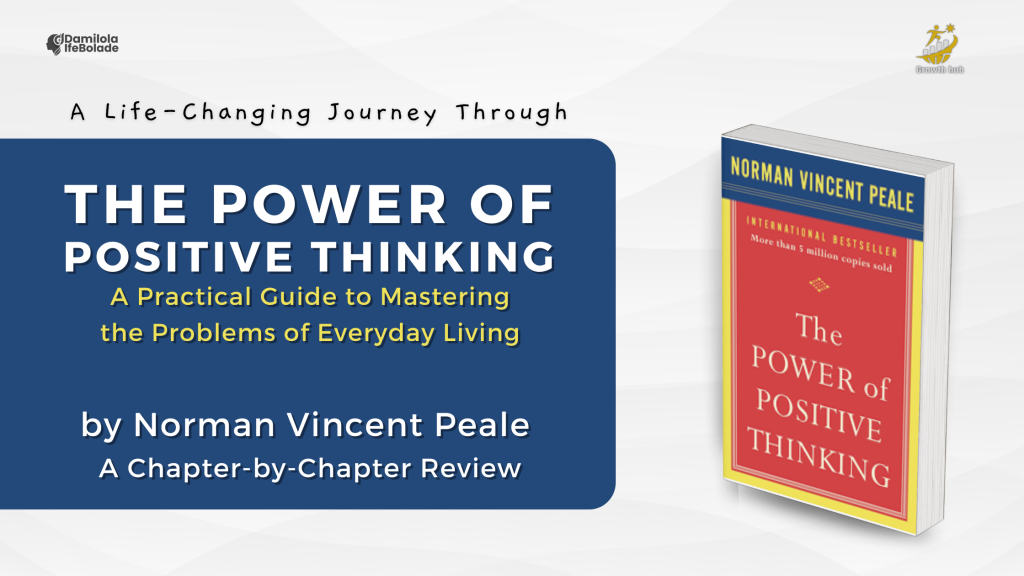
A Life-Changing Journey Through “The Power of Positive Thinking” by Norman Vincent Peale: A Chapter-by-Chapter Review

We have all been blessed with a gift, called LIFE! Even though it is a gift, it is sometimes full of challenges. But how we face these challenges determines the story we tell. Norman Vincent Peale’s timeless classic, The Power of Positive Thinking, is an inspiring reminder that our thoughts shape our realities. I’m not just about wishful thinking but about cultivating an inner strength that transforms our lives, no matter the circumstances. The central message of this book is simple yet profound: believe in yourself, trust in God’s power, and you can achieve remarkable things. Let’s dive into the chapter-by-chapter summary. Chapter 1: Believe in Yourself It is no news a sense of inferiority and inadequacy can block the path to achieving our dreams. But you need to know this: self-confidence paves the way to self-realisation and success. I know, believing in yourself isn’t always easy. Yet, faith in your abilities is a non-negotiable foundation for success and happiness. Without it, we risk stumbling over doubts that were never meant to define us. Here are some actionable steps to build self-confidence: Create a mental picture of success: Visualize yourself as a winner. Not once, not twice, but repeatedly, if possible daily, until this image becomes part of who you are. Counter negativity with positivity: When those “I’m not good enough” thoughts creep in, replace them with uplifting affirmations. For example, “I am capable,” or better still, “I can do all things through Christ who strengthens me.” Stop magnifying obstacles: We’re often our own worst enemies, blowing challenges out of proportion in our imagination. Instead, focus on solutions and opportunities. Be authentically you: While it isn’t bad to have mentors or role models, trying to mimic others only robs you of your unique brilliance. Remember, there’s only one you, and that’s your superpower. Anchor your faith in God: Say this affirmation with confidence, “If God be for me, who can be against me?” It is a game-changer. Say it. Believe it. Live it. Chapter 2: A Peaceful Mind Generates Power Let’s face it, life can be noisy, externally and internally. But know that a peaceful mind is the secret to unlocking inner strength. Think about it: when your mind is calm, you’re more creative, focused, and resilient. You can achieve more. But how do we achieve such peace in a world filled with distractions? Try these practical techniques: Practice emptying your mind: Every day, set aside a moment to let go of mental clutter. Whether it’s unresolved worries or lingering frustrations, visualize yourself releasing them. Breathe deeply and let peace wash over you. Fill your mind with healthy thoughts: Emptying your mind is just half the battle. Immediately replace the void with thoughts that inspire, uplift, and energize you. For me, this could be reflecting on God’s promises or recalling moments of gratitude. Speak peaceful words audibly: Words carry power. Peale suggests using soothing phrases like “peace,” “calm,” or “contentment.” Scripture or poetry works beautifully too—lines that resonate deeply with your soul. Begin each day with positive affirmations: Set the tone for your day by affirming peace, joy, and success over yourself. It’s amazing how this simple habit can influence your mood and outcomes. Chapter 3: How to Have Constant Energy It’s easy to feel drained when we are constantly doing so much. But here’s the thing, TRUE energy doesn’t come from a cup of coffee or a power nap. The source of all energy is God. The universe is filled with energy—whether it’s atomic energy, electric energy, or spiritual energy—and God is the source of it all. When we connect with God, we tap into that divine energy, the same energy that creates and recreates the world. Just as spring renews itself every year, God’s energy refreshes us, too. By staying in touch with Him, we can feel that constant flow of energy in our lives. It’s not about trying to push through each day; it’s about letting God’s energy flow through you, fueling your actions and thoughts. Chapter 4: Try Prayer Power Prayer has the potential to change our lives. The author, quoting a famous psychologist, tells us that prayer is the greatest power available for solving personal problems. It’s not just a way to ask for help; it’s a force that can refresh us every time and renew us every day. Prayer brings us back to our Creator, and enables us to face the world with a calm and positive outlook. One of the most effective approaches to prayer is what Peale calls the “Prayerize, Picturize, Actualize” method. This means that you start by praying for the situations or challenges in your life. Picture them in your mind as already resolved, and then take action to make them a reality. This powerful formula helps us align our spiritual energy with our physical world. To get the most out of prayer, follow these simple rules: Set aside a few minutes each day to pray. Use simple, natural words when you pray. God is our Father, we can be real and open in His presence. Pray as you go about your day; make it part of your routine. Spend more time giving thanks than asking for things. Gratitude opens the door for even greater blessings. Chapter 5: How to Create Your Own Happiness Happiness isn’t something that happens to you; it’s something you choose. You have the power to decide whether to be happy or unhappy. And the way you think has a massive impact on your happiness. Our mindsets are habits we cultivate, and as we change spiritually, we begin to see the physical world around us shift. Happiness becomes more attainable, and success feels easier when we align our thoughts with positivity and gratitude. Here’s how you can create your own happiness: Keep your heart free from hate and worry. These emotions only weigh you down. Live simply and expect little, but give much. The less you hold onto, the more you can share. Scatter love and

A Life-Changing Journey Through “The Power of Positive Thinking” by Norman Vincent Peale: A Chapter-by-Chapter Review Read More »

Book Summaries, , , , , , , , , , , , , , , , , , ,