

personal growth

The Space Between What Happens and How You Respond: A Lesson from Viktor Frankl

About two years ago, during a course I was taking, it was my first time hearing about concentration camps. Concentration camps were places where large groups of people were forcibly held and confined, usually because of their ethnicity, religion, political views, or other targeted identities. During World War II, they were most infamously used by Nazi Germany as part of the events of the Holocaust. People were kept in overcrowded, harsh conditions with very little food, poor sanitation, and limited freedom. Many were subjected to forced labor, and millions lost their lives as a result of the conditions and systematic violence. So we were talking about ethics and some of the extreme things humans have gone through in history, and I remember a few of the stories touched me deeply. It honestly made me pause and wonder how situations like that were ever allowed to happen in the first place. It made me wonder how anyone could ever justify or normalize inflicting such an unquantifiable level of pain on another person. But that’s not the subject of discussion for today. When people talk about World War II, the focus is often on the war itself, the fighting, and the massive loss that came with it. But tucked inside that history is something many people don’t really talk about. Despite the harsh conditions people were subjected to, some persons didn’t give up on life. I know a lot of what happened there wasn’t just physical suffering, but also the loss of identity, freedom, and basic dignity. But in the middle of that reality was a man named Viktor Frankl. Let’s talk about Viktor Frankl. Before the war, Frankl was a neurologist and psychiatrist in Vienna. He spent his early years studying the human mind, particularly what gives life a sense of purpose. Then the war interrupted everything. He was taken into a concentration camp along with his family. Over time, he lost his parents, his brother, and his pregnant wife. The life he had built disappeared piece by piece. He moved through multiple camps and lived under conditions defined by hunger, uncertainty, and constant exposure to suffering. Yet even there, he paid attention, not just to what people were going through, but to how they responded to their experiences. Viktor noticed that, while many people were overwhelmed by the conditions, some still made small, intentional choices about life. Someone would share food even when they barely had enough. Someone would offer a word of comfort to others, even when they were in pain. These actions didn’t change their situation, but they revealed something about the people making them. That observation led him to conclude that even when circumstances are extremely bad, there is still a point at which a person decides how to respond. You have a choice. Yes, you do. Viktor described it as a space between what happens and what you do next. After the war, Viktor returned to Vienna and began rebuilding his life. He continued his work in psychology and developed an approach called logotherapy. Logotherapy is a form of therapy based on the idea that finding meaning in life is the central human drive and a key source of resilience, even in suffering. He also wrote Man’s Search for Meaning, where he documented both his experiences in the camps and the psychological insights that came from them. The book has remained widely read because it speaks to something fundamental about being human. When you reflect on his story, it naturally brings your attention back to your own life. Most people are not facing the kind of extreme conditions Viktor endured, but that doesn’t mean life feels easy. Challenges still show up, plans don’t always work out, relationships can be complicated, and there are moments that feel your world is crushing right before your eyes. In those situations, it’s common to react quickly. Something happens, and the response follows almost immediately. It can feel automatic. But Viktor’s perspective suggests something slightly different. There is a brief moment, sometimes barely noticeable, where a decision is made. It might look like choosing how long to stay in a negative spiral after something goes wrong. I used to be very guilty of this. It might be deciding whether to speak to yourself or others with harshness or with patience. It might be recognizing when a reaction is coming from habit rather than intention. These are not dramatic decisions, but they are consistent ones. Over time, they influence how you experience life. I am not saying you should ignore how you truly or pretend everything is fine. Viktor’s work does not dismiss pain; it acknowledges it directly. His point was that even within difficult experiences, you still have a level of control. You can feel frustrated and still decide what to do next. You can feel disappointed and still choose how you move forward. You can feel uncertain and still take your next step. Viktor’s life shows that what’s happening around you doesn’t fully decide what happens within you. He could have given up on life like most people did. We wouldn’t blame him if he had. But do you know that instead of trying to control everything outside, your attention can shift to how you respond on the inside? That kind of awareness gives you control and helps you respond better. And over time, it can shape the way you live your life. Take this as a reminder not to let what’s happening around you control how you respond to life. I hope this blesses you. Rooting for you, always.

The Space Between What Happens and How You Respond: A Lesson from Viktor Frankl Read More »

Get Inspired, , , , , , , , , , , , , , , , , , , ,
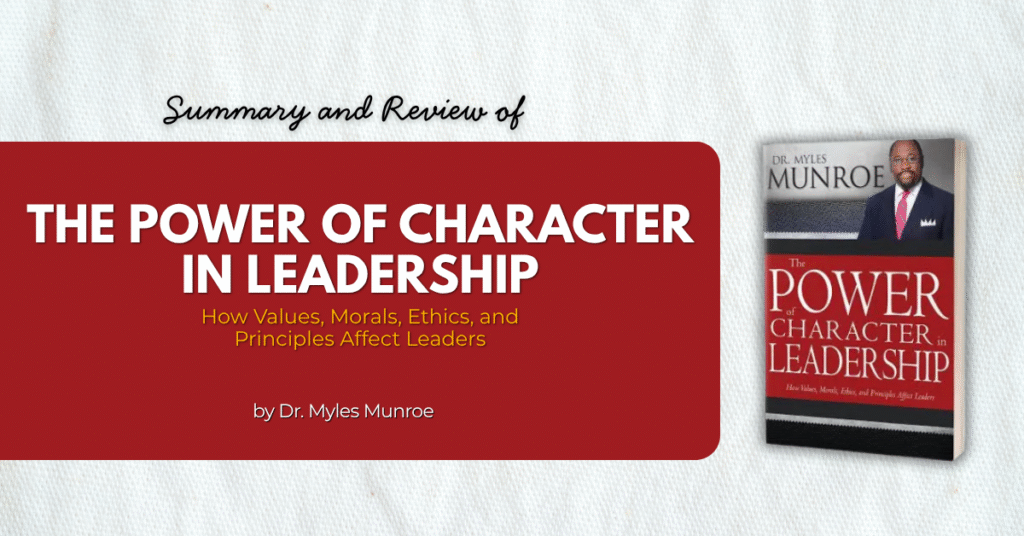
The Power of Character in Leadership | Lessons from Myles Munroe’s Book

I used to think a lot about why some leaders rise so fast… and still fall just as quickly. Not because they weren’t gifted. Not because they lacked vision. But because something deeper wasn’t solid. That’s exactly what The Power of Character in Leadership by Myles Munroe addressed. This book doesn’t just show you where you are, but quietly asks who you’re becoming. One of the strongest truths I learned from the book is that leadership is not only sustained by talent, charisma, or even vision. It is sustained by CHARACTER. This is not the kind we perform in public, but the kind that we hold dear in private, when no one is watching. Dr. Munroe talks about the crisis of character in leadership, and it’s hard to ignore how real that is. We’ve all seen people rise, sometimes brilliantly, and then fall in ways that undo years of influence. And while it’s easy to think of “leaders out there,” this book brings it closer, to you and me. It reminds us that without the right foundation, anyone can drift. Let’s dive into some of the key lessons. Part 1: How character is really formed This section confronts a truth most people don’t like to admit: leadership failure is rarely about lack of skill; it is usually a result of lack of character. Myles Munroe makes it very clear that talent, charisma, intelligence, or even vision cannot sustain a leader. They can open doors, but they cannot keep them open. What keeps a leader standing, especially when pressure, success, or temptation shows up is character. Many leaders don’t crash because they weren’t gifted enough, but because they weren’t grounded enough. You can build something impressive on the outside while slowly collapsing on the inside. A relatable way to think about it: You might be doing well publicly, school, work, leadership roles, but privately, you cut corners, avoid accountability, or compromise small values. Those “small things” are actually cracks forming in your foundation. Character is like a personal security system. It protects you not just from external pressure, but from your own weaknesses. Without it, success becomes dangerous. Ponder on this – if people described your character, not your achievements, what would they say? Part II: The Source of Moral Leadership Here’s a powerful question: Where does character actually come from? It was broken down into three layers: What you believe, what you value, and what you serve. Your beliefs shape your values, and your values shape your actions. So leadership isn’t first about what you do, it’s about what is happening inside you consistently. For example:If you believe success is everything, you may justify unethical shortcuts.If you value integrity, you’ll choose differently, even when no one is watching. Munroe also emphasises that principles are not optional tools, they are laws. Just like gravity works whether you believe it or not, principles like honesty, discipline, and responsibility have consequences when ignored. This part becomes very practical when applied to everyday life: How do you behave when no one is checking? What do you prioritise when things get hard? What do you protect: your image or your integrity? Leadership is not just personal; it spreads. Part III: Personal Character Development This section becomes very introspective and honest. It moves from theory to self-examination and growth. Character isn’t automatic, you build it intentionally. And one of the biggest tests of character is temptation. Not always big, dramatic failures, but subtle ones like cutting corners, being inconsistent, letting emotions control decisions, choosing convenience over discipline. Every decision you make is like writing a sentence in your life story. Over time, those sentences form your character. Some of the qualities of principled leaders include self-discipline, integrity, consistency, and responsibility. What makes this part relatable is how it highlights everyday behaviors: Being late repeatedly, avoiding responsibility, reacting emotionally; these things quietly weaken leadership. One powerful takeaway here is: You don’t suddenly fail; you gradually drift. And the opposite is also true: You don’t suddenly become strong; you build strength daily. Part IV: Restoring a Culture of Character This final part is both hopeful and challenging. It acknowledges something real: People fail. Leaders fail. But failure doesn’t have to be the end. Munroe introduces the idea of “falling up”, that is, learning from failure, rebuilding your values, and becoming stronger from it. He emphasises that character can be restored, integrity can be rebuilt, but it requires honesty, responsibility, and change. He also talks about aligning your vision with your values. Because having a big dream without strong character is dangerous. You might achieve it, but lose yourself in the process. This part expands beyond individuals to society. If leaders lack character, systems break. Trust disappears. People become skeptical. And you can see this in real life, people often question leaders, institutions, even success itself, because trust has been broken too many times. If we want better leadership, we need better character, starting with ourselves. Final Reflection The whole book can be summed up in one honest thought: You can build influence, success, and visibility, but only character determines whether it lasts. Now ask yourself: Who am I when no one is watching? What am I building my life on? Am I becoming someone people can truly trust? Never forget this: leadership is not just what you achieve, it is who you become while achieving it.

The Power of Character in Leadership | Lessons from Myles Munroe’s Book Read More »

Book Summaries, , , , , , , , , , , , , , , , , , , , , , , , ,

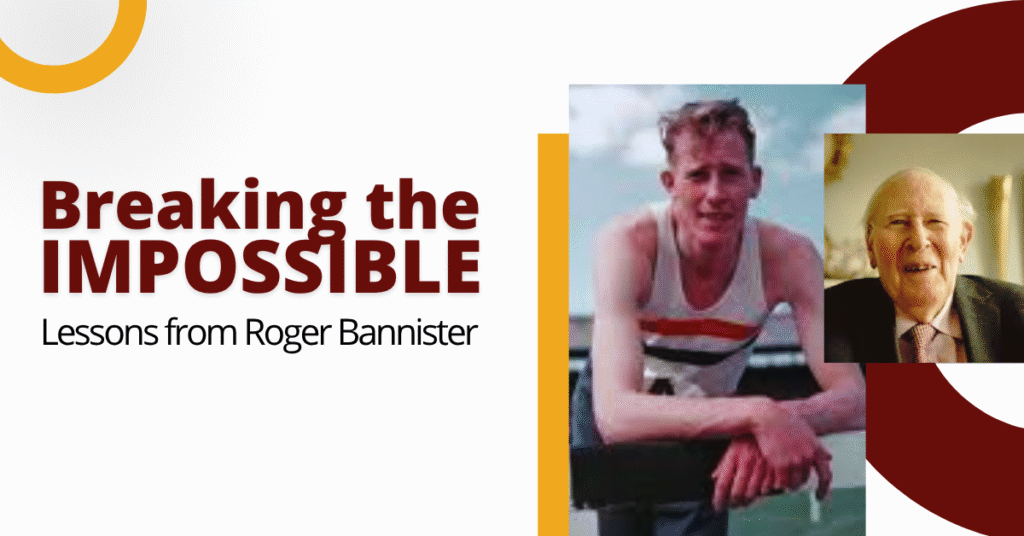
Breaking the Impossible: What Roger Bannister Teaches Us About Our Limits

I saw this beautiful quote: ‘Limits exist only until someone decides to challenge them.’ It perfectly describes the story of the man I’m about to share — Roger Bannister. I recently came across the story of Roger Bannister, and it completely blew my mind. Who is he? You may want to ask. Roger Bannister was a British medical student who, on May 6, 1954, became the first person in history to run a mile in under four minutes. Despite training minimally while studying to become a doctor, he finished in 3 minutes and 59.4 seconds. Here’s the back story. In the early 1950s, the four-minute mile was widely considered an unbreakable physical limit. Doctors, coaches, and athletes believed the human body simply couldn’t handle the speed and endurance required. Some experts even warned it could cause the heart to explode or lead to collapse. Scientists wrote papers, experts debated, and the world collectively agreed: it was impossible. And then Bannister did it. He didn’t just break a record, he shattered a belief. Within years, can you believe that dozens of people did same? Today, over 2,000 athletes have run a sub-four-minute mile. His feat didn’t just change athletics; it changed what people thought was humanly possible. He proved that many limits exist only in our minds, until someone dares to challenge them. And that is what made him stand out. There’s something quietly revolutionary in that story. Bannister didn’t wait for permission, for the world to believe in him, or for conditions to be perfect. He took a bold step. He acted on what He believed was possible. He ran. He focused on what he could do, not what everyone else said he couldn’t. And in doing so, he shifted the horizon for everyone who came after him. What a great way to live! I find myself thinking about this in my own life. I imagine the small battles we fight every day. Maybe it’s a dream that seems too big, a skill you want to master, or just a habit you want to change. The truth is, the world may tell you “impossible” in one way or another, but impossible only becomes real when you accept it. When you act, when you take that step, you begin to rewrite what’s possible for yourself, and maybe even for someone else who’s watching. So today, I want to invite you to run your own mile. Not necessarily on a track, not literally (unless you want to, of course!), but in life. Take that step toward what feels impossible. Do the thing that makes you doubt, that scares you, that everyone else says you can’t do. The more you practice challenging your limits, the more you realise those “impossible” walls are often just ideas waiting to be shattered. Because here’s what you need to know: when you do the little things that feel right, when you push yourself just a little further than yesterday, you don’t just achieve, you become a better version of yourself. And just like Bannister, your courage to act might open the door for someone else to believe, to try, and to run their own mile. What are you doing differently today? This month? Challenge your fears, break the barrier. Go for gold. Do the impossible. Yes, you can! I hope this encourages you.

Breaking the Impossible: What Roger Bannister Teaches Us About Our Limits Read More »

Get Inspired, , , , , , , , , , , , , ,

Insights from John Mark Comer’s The Ruthless Elimination of Hurry

Lately, I’ve been noticing how easy it is to live in a constant state of rush. Not always because there’s too much to do, but because everything around us seems to be moving fast. Reading The Ruthless Elimination of Hurry by John Mark Comer made me pause in a way I didn’t expect. This book made me realise some errors that could have been avoided if I were calmer and more patient. John Mark Comer begins with his own story, and it’s surprisingly relatable. On the outside, everything looked fine, he was leading a growing church, doing meaningful work and showing up where he was needed. But internally, something was off. He describes it not just as burnout, but as a loss of joy, a growing frustration, even towards people he loved. What stood out to me is that the problem wasn’t what he was doing, it was the pace at which he was living. And that alone feels worth sitting with, because it’s possible to be doing the right things… at the wrong pace. Part One: The problem we don’t always name This part gently confronts something we often normalise, HURRY. Not just being busy, but living in a constant state of rushing mentally, emotionally, and even spiritually. The book describes hurry as one of the greatest enemies of a meaningful life, because the things that truly matter, love, joy, and peace, don’t grow well in a rushed life. Love needs time. Joy needs presence. Peace needs stillness. And when life is always moving quickly, those things begin to fade quietly. What made this even more real is how he explains where this comes from. From how our world has evolved, from natural rhythms to clock-driven schedules, and now to a digital life where everything is always on. There’s barely any boundary anymore. You’re reachable at all times. There’s always something to respond to, something to check, something to consume, information everywhere. Over time, it creates a kind of restlessness that doesn’t go away, it just gets managed with more distraction. And if I’m being honest, that part felt very familiar. Part Two: Why more time isn’t the answer If we’re given the opportunity to, most of us will ask for more time. Comer challenges the idea that stress can be fixed with setting our priorities right. He reminds us that we are finite our time, energy, and capacity are limited. These limits are actually gifts, guiding us to focus on what truly matters. Instead of doing more, we are called to do less, but with our whole hearts. He draws on Matthew 11:28-30, explaining that Jesus’ “yoke” represents His lifestyle. Many try to experience His peace without adopting His rhythms. The invitation is simple: stop striving and start learning to live at the unhurried pace of Jesus. Comer also introduces the concept of a “Rule of Life,” a framework of habits that shapes our days. Like a trellis helping a vine grow, this structure helps our soul grow toward God. Most people live by a default rule dictated by the world, which fuels hurry. Creating an intentional rule protects our spiritual health. Spiritual disciplines, prayer, fasting, silence, aren’t just tasks to check off. They are practices that place us where God can transform our hearts, helping us grow in love, patience, and presence. Part Three: Learning a new way to live This part becomes very practical, which I love. It introduces simple practices including silence and solitude, sabbath, simplicity and slowing down. Silence and solitude stood out to me as a starting point. I learned to create a space to be still, away from noise and regular activities. It sounds simple, but it’s not something we naturally do anymore. Then there’s Sabbath, not just as rest, but as intentional rest. A time to pause, to enjoy, and to step out of constant productivity. Simplicity made me reflect on how much we carry, physically and mentally. Sometimes, having more actually costs us more time, more energy, and more attention. And finally, slowing down not just in big ways, but in small, everyday choices. Choosing not to rush through everything. Choosing to be present in what you’re doing. In summary, this kind of life won’t come naturally in a fast-paced world. It takes intention. It takes consistency. But the reward is something deeper than productivity. This is calling you to connection with God, with people, and even with yourself. And ultimately, it’s becoming a person of love. So for now, I’m choosing to: slow down, breathe, and be present. Because sometimes, the change we desire isn’t found in doing more, it’s learning how to fully be in what already is.

Insights from John Mark Comer’s The Ruthless Elimination of Hurry Read More »

Book Summaries, , , , , , , , , , , , , , ,

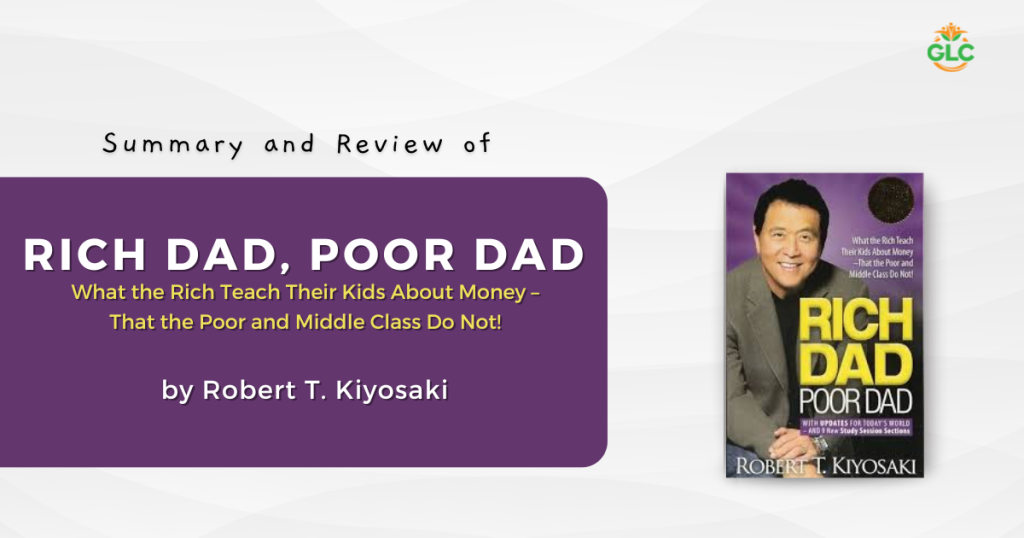
Rich Dad Poor Dad Summary: Life-Changing Money Lessons from Robert Kiyosaki

What truly separates those who merely earn money from those who build lasting wealth? That’s the big question at the heart of this best-selling book: Rich Dad, Poor Dad by Robert Kiyosaki. This isn’t just a book about money. It’s about how we think. It’s about mindset. Through two very different father figures, his highly educated but financially limited “Poor Dad” and his entrepreneurial, wealthy “Rich Dad”, Kiyosaki shows us just how deeply our beliefs about work, money, and success shape our future. One dad encouraged job security, saving, and climbing the corporate ladder. The other encouraged learning how money works, taking calculated risks, and building assets that create freedom. In this summary, we’ll walk through each chapter and unpack the core lessons that continue to challenge, inspire, and guide readers around the world. Let’s dive in. Chapter 1: The Rich Don’t Work for Money Most of us grow up being told to get a good job, work hard, and chase promotions. But the rich think differently. They don’t work for money, they make money work for them. It’s not just about income; it’s about mindset. Fear and greed often drive us into financial traps: staying in jobs we don’t love or overspending to feel secure. The rich learn to master their emotions and focus on building capacity and clarity, not just comfort. Chapter 2: Why Teach Financial Literacy? It’s not always just about how much we earn, it’s about how much we keep and how wisely we manage that which is kept. Many of us make the mistake of buying liabilities that drain our pockets while calling them assets. But real financial literacy starts with understanding the difference. Assets put money into our lives. Liabilities take it out. It’s simple, but powerful, and it changes how we handle everything from housing to habits. Chapter 3: Mind Your Own Business Too often, we spend our entire lives working for someone else’s dream. Even if we’re employed, we can still build our own businesses, our own asset columns. This is so essential. Kiyosaki encourages us to think beyond our professions. What we do for a living is one thing, of course it must be well done. But what we own, what builds wealth in the background, is our true business. We must learn to think long-term and invest in ownership, not just labour. Chapter 4: The History of Taxes and the Power of Corporations The rich play the money game by a different set of rules, unlike the poor. While most employees earn, pay taxes, and spend what’s left, the rich earn, spend, and then pay taxes on what remains, legally, through corporations. This isn’t about trickery; it’s about understanding the system and making it work for us. It’s a powerful reminder that complaining about the rules won’t change our lives, but learning them might be the game-changer. Chapter 5: The Rich Invent Money We often believe that wealth comes from luck or connections. But in truth, financially intelligent people create their own opportunities. They spot possibilities that others miss because they’ve trained their minds to look for them. They act when others freeze. We don’t have to wait for perfect conditions to move. With knowledge, creativity, and courage, we can learn to invent money too. Chapter 6: Work to Learn, Don’t Work for Money What if we chose jobs not just for the paycheck, but for the skills they teach us? Rich Dad urged Robert to try different roles so he could learn how money, business, and people really work. Sales. Leadership. Investing. Communication. These aren’t just “nice to have” skills, they’re wealth-building tools that should be learnt. As leaders and learners, we grow the most when we step out of our comfort zones and stretch our abilities. Chapter 7: Overcoming Obstacles Even when we know what to do, many of us still don’t act. Why? Because of fear, doubt, laziness, bad habits, and ego. These are the inner blocks that keep us stuck. Kiyosaki reminds us that success isn’t about being fearless, it’s about being brave enough to act anyway. Personal growth, financial mastery, and leadership all start with the same thing: courage to move forward. Chapter 8: Getting Started So how do we begin? Kiyosaki offers simple but powerful action steps. Define your “why.” Surround yourself with people who push you to grow. Learn a few key money principles and apply them. Pay yourself first. Use assets, not salaries, to fund your lifestyle. Start small. Start now. We don’t need to have it all figured out. We just need to take one step, then another. Chapter 9: Still Want More? Here Are Some To-Dos Finally, the book closes with a challenge: most people read books, feel inspired, and then do nothing. Don’t let that be you. Kiyosaki encourages readers to make offers, invest in knowledge, shadow mentors, and take baby steps. You don’t have to be perfect. You just have to be intentional. Remember, execution beats theory. Watch the market. Test your ideas. We grow by doing, not just by reading. Perfection isn’t the goal. Progress is. Final Thought Rich Dad Poor Dad is a reminder that financial freedom doesn’t start with money, it starts with mindset. It’s about challenging what we’ve been taught, stepping outside our comfort zones, and leading ourselves toward growth. Financial intelligence, emotional mastery, and a bias for action aren’t optional anymore, they’re essential. So build your vision. Master your finances. Lead your life.

Rich Dad Poor Dad Summary: Life-Changing Money Lessons from Robert Kiyosaki Read More »

Book Summaries, , , , , , , , , , , , , , , , , , , ,

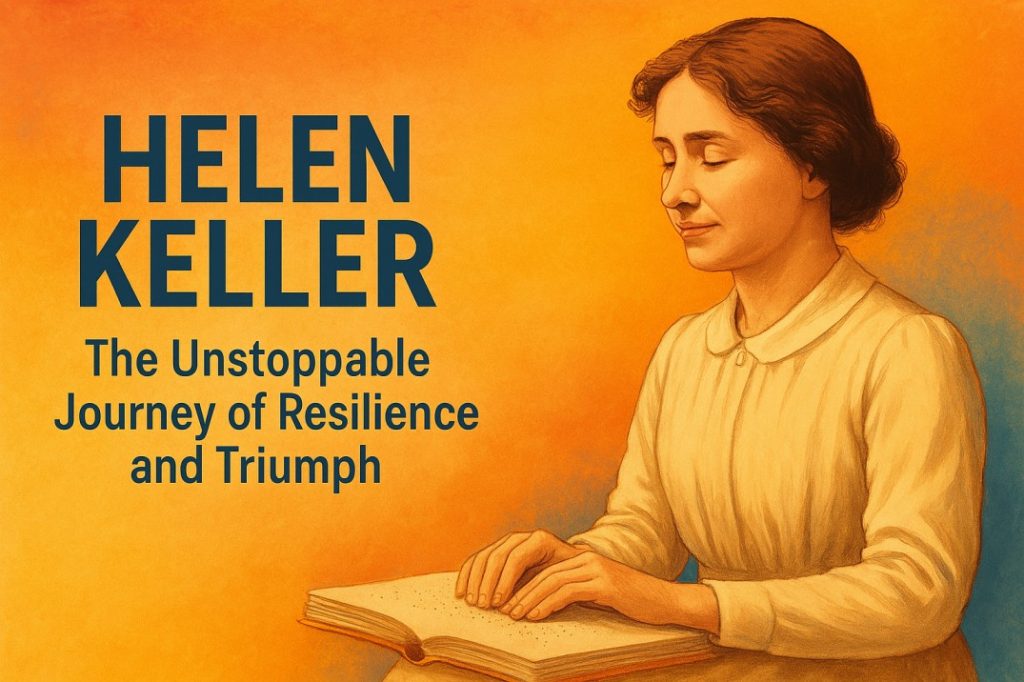
Helen Keller: The Unstoppable Journey of Resilience and Triumph

There’s a story I once read about a young girl who, at just 19 months old, was struck by an illness that left her both deaf and blind. For most, that would have been the end of the road. Who amounts to something in life without the eyes and eyes? Many would ask. But this girl refused to let her circumstances define her. That girl was Helen Keller. Her story is one of perseverance against all odds, I’ve ever read. It shows us that even in the darkest moments, there is a way to break through and find light. Hellen’s life is a powerful testament to the strength of the human spirit, how far we can go, even in the face of unimaginable challenges. Let’s take a closer look at how Helen turned her challenges into triumph. Helen Keller was born on June 27, 1880 as a healthy child in Tuscumbia, Alabama, 1880 to Kate Adams Keller and Colonel Arthur Keller. she lost her sight and hearing at just 19 months old due to an illness. In 1882, Helen fell ill with what the family doctor referred to as “brain fever,” causing a high fever. The exact nature of the illness is still uncertain, but some experts speculate it could have been scarlet fever or meningitis. A few days after the fever subsided, Keller’s mother observed that her daughter no longer reacted to sounds, such as the dinner bell, or to visual cues, like a hand being waved in front of her face. Imagine the pain of her m For most, such a loss would seem like an insurmountable barrier, but for Helen, it became the foundation for an extraordinary journey of perseverance and triumph. Instead of succumbing to her limitations, Helen found a way to communicate, learn, and thrive. Many thanks to her devoted teacher, Anne Sullivan, who was always there for her. She transformed her from an unruly child, once known for throwing temper tantrums that shook the household, into a disciplined and focused young girl. Helen learned to read, write, and engage with the world through touch. The darkness that once defined her world began to fade as she discovered the power of language and connection. Despite her disabilities, Keller attended Radcliffe College and graduated in 1904. Can you imagine the significant challenges she would have encountered along the way? Her path wasn’t just about surviving; it was about thriving. Helen became the first deaf-blind person to earn a college degree, an accomplishment that seemed impossible to many. She went on to become an influential author, speaker, and activist, using her platform to advocate for the rights of people with disabilities and inspiring millions with her message of hope and resilience. What makes Helen’s story even more powerful is her unwavering determination. She didn’t just overcome her challenges—she transformed them into opportunities. Helen once said, “Alone we can do so little; together we can do so much.” Her life shows us that even in our darkest moments, human connection and belief in ourselves can light the way forward. Helen Keller’s legacy teaches us that the only limits we face are the ones we accept. Her story is a reminder that no matter how difficult life may seem, with determination and the right support, we can rise above anything. Here are some lessons from her story No matter how tough life gets, you have the strength within you to push forward and overcome challenges. Success doesn’t come easily, but with hard work, determination and consistency, you can turn obstacles into stepping stones. Yes, you can. Having the right people by your side can make all the difference in achieving your goals. We need people to go far. Believing in yourself, even when the world doubts you, is the first step toward achieving greatness. Half of the battle is won, if you believe in you. Your challenges don’t define your potential; they can become the foundation for something extraordinary. Your scars should serve as a testament to your victories, not your defeat. So, don’t give up when things get tough—sometimes, all you need is to re-strategize or seek guidance. This is a reminder that you are stronger than you realize. While taking a break is important, let it be a time to recharge and find new ways to move forward, not a reason to settle Rooting for you, always. References Hellen Keller’s Biography More About Hellen

Helen Keller: The Unstoppable Journey of Resilience and Triumph Read More »

Get Inspired, , , , , , , , , , , , , , , , , , ,

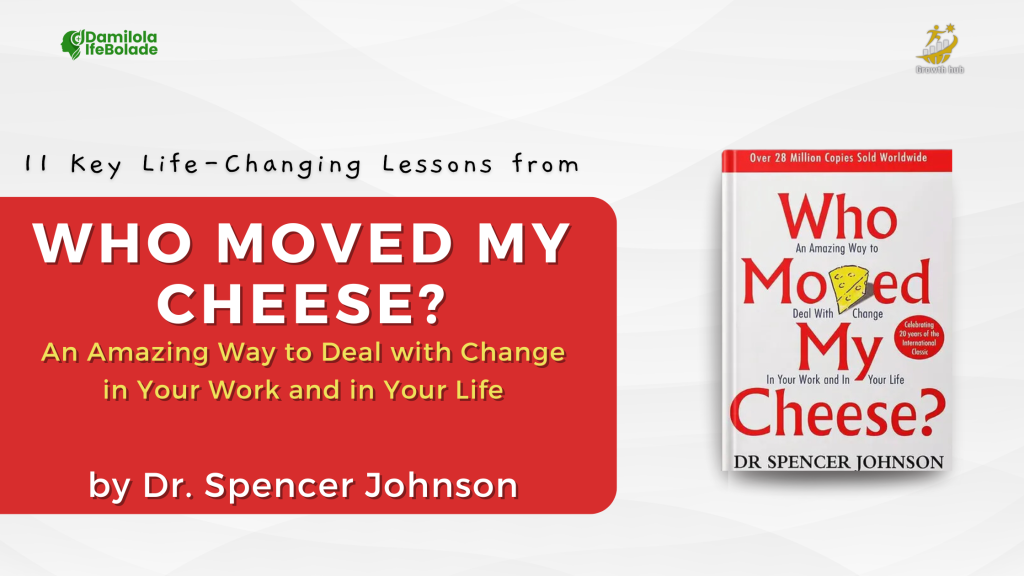
11 Key Life-Changing Lessons from Who Moved My Cheese by Dr. Spencer Johnson

It is no news that change is inevitable, yet so many of us resist its tides, clinging to the familiar while yearning for growth. If you’ve ever felt stuck or paralyzed by fear of the unknown, unwilling to move from your comfort zone, “Who Moved My Cheese?” by Spencer Johnson is a sure wake-up call. This short read tells the story of four characters – Sniff, Scurry, Hem, and Haw – each on a journey through a maze, in search of their elusive “Cheese.” But here’s the twist: the “Cheese” is a metaphor for everything we hold dear. Meanwhile, the maze mirrors the unpredictable landscapes of life we all face. As I turned the pages of this book, I found myself chuckling and sometimes nodding at the profound truths tucked into its simplicity. It’s a story that reveals our relationship with change and challenges us to look inward to see whether we sniff out new opportunities, scurry toward growth, resist in fear, or adapt and thrive. Here, I’ll share some lessons on embracing change from this insightful book. Let’s dive in! 1. What You Fear Might Never Happen Fear often paralyzes us, but most of the things we fear never come to pass. Often, breakthroughs come when you simply decide to take a step forward. Whatever it is you’ve set your mind to do, and you’re afraid of failure, ask yourself: Is this fear truly valid, or is it just my mind creating roadblocks? Instead of thinking “what if I fail?”, think “what if I succeed?” 2. Your Friends Are Great Determinants of Your Success or Failure Sometime ago, I stumbled upon a humorous video clip that cleverly pointed out: when surrounded by five foolish people, the total count is actually six.  In other words, the people you surround yourself with can either inspire you to move forward or limit you to remain in stagnation. You become the average of the closest people to you. Therefore, choose your company wisely. 3. Nothing Will Move If You Don’t Move We’ve all heard the saying “if wishes were horses, even beggars would ride.” This is a reminder that no great achievement happens solely through wishful thinking. To make progress in any area of life, action is needed. It is true that the first steps may be uncomfortable, but know that hesitation only prolongs discomfort and prolongs the process. So, it’s time you decide to take that first uncomfortable step and let the momentum build. Just start somewhere! 4. Set Your Heart on Positive ‘What Ifs’ Rather Than Negativity It’s natural for our brains to be on the lookout for threats and what may go wrong. This is because our brains are wired to keep us safe from danger. But to achieve more in life, you may need to shift your focus to the potential good that lies ahead, instead of dwelling on negatives. What if things work out better than you ever imagined? This should be your focus. Don’t dwell too long on negativity. 5. Dare to Stretch; You Have More Strength Than You Think Life’s challenges often reveal untapped strength within us. You’re capable of more than you realize – all it takes is the courage to stretch. You’d be surprised at how far you can go. Go outside your usual space, go a step further. Dare to stretch! 6. Picture the Future You Desire Have you ever heard the saying, “What the mind can conceive, the hands can achieve”? It’s a powerful truth. When you vividly imagine your desired future, you’ll be amazed at how it can motivate and inspire you to take action. What’s your vision for your life? What dreams do you want to achieve? Take a moment to close your eyes, visualize your goals. Write it down, post it somewhere you can see it often, and let it propel you forward. 7. No One Gives Up and Makes It Big Reading biographies and stories of great achievers has always been a great encouragement to me. That’s why I have a blog session for people who want to Get Inspired by other people’s stories of resilient. Every great achievement story involves consistency and persistence. Giving up is a surefire way to miss out on what could have been. So, even when the journey gets tough, keep pressing on. You cannot make it big if you give up! 8. Change Doesn’t Seek Permission Change is inevitable; it doesn’t wait for an invitation, neither does it seek permission from anyone but it will surely come. The question is, will you prepare for it or be caught off guard? While many soar on the winds of change to do big stuff, others crash. The best thing you can do is stay alert and ready to adapt. Change will always come, prepare for it. 9. Start Early, Start Now—Why Wait? Procrastination has always and will always be a dream-killer. The longer you wait to take action, the harder it becomes to get started. Don’t let delay hold you back from achieving your goals. While you may be dragging your feet, someone somewhere may seize that same idea in your head and get ahead of you. Why not start now? Remember, momentum is your friend. Take the first step today. 10. Let Go of the Past The past is where it belongs – behind us. Why bring it into the present? Clinging to the past can hold you back; it’s no longer relevant. Your past doesn’t define your future unless you let it. If there’s a need for corrections or restitution, please make amends and then move on. Release the past and move forward – beautiful things are ahead! 11. Laugh at Your Foolishness Transformation begins with self-awareness and a dash of humor. When you learn to laugh at your own mistakes, you’ll be amazed at how much lighter and freer you’ll feel. Instead of beating yourself up over errors, smile at your missteps, learn from them, and decide to do better. And ensure you

11 Key Life-Changing Lessons from Who Moved My Cheese by Dr. Spencer Johnson Read More »

Book Summaries, , , , , , , , , , , , , , , , , ,

Valentine’s Day and Self Love: Why You Should Be Your Own First Valentine

Another February 14 is here, and you know what it’s known for – Valentine! Valentine’s Day often comes wrapped in grand displays of affection. But beyond the noise of traditions and trends, there’s one person who deserves your love most – YOU, yes you! Just yesterday, I was discussing with husby, I mentioned to him that for many years, I didn’t know it’s okay to take oneself out on a date. It never occurred to me until one of my mentors mentioned that she constantly have lunch dates with herself, and yes, she’s married. She buys herself ice cream, just breathe and rest. This makes so much sense to me, and guess what, I’ve tried that a couple of times, even in marriage. Believe me, it’s a great thing to try. Valentine’s Day isn’t only for couples or romance. It’s a reminder that love, in its purest form, starts from within. I love to talk a lot about self-love since I understood the fact that, we cannot give what we do not have. If you don’t love yourself, how can you love your neigbour as our Father, as recorded in the Scripture, wants us to? The verse actually encourages us to love others, as we do ourselves. In other words, the amount of love you can give, is proportional to the amount you have in you. So, while the world celebrates their lovers – the real, fake or arranged – remember that the relationship you’ll carry for a lifetime is the one you have with yourself. What if, today, you became your own Valentine? Not out of loneliness, but out of deep, intentional love for who you are. I’m not a relationship expert or counsellor, but I’ve seen and learned that relationship or marriage doesn’t cure loneliness. A lonely person as a single will remain lonely even when in a company of others. So, we learn to be happy while alone, and that happiness will only multiply when shared. I am not underestimating the beauty or essence of relationship, companionship or marriage, I am simply emphasising that true happiness and fulfillment start from within, and that a healthy, whole individual is the best foundation for any successful partnership. Today is another day to encourage you to: Celebrate your wins, big or small. No matter how bad it looks, I’m sure you’ve had some victories. It’s a good time to pause and acknowledge how far you’ve come. Make time for joy. This requires intentionality, against the noise out there. It could be your favourite meal, a peaceful walk, or a playlist that lifts your spirit, just choose something that makes your heart smile, that thing that makes you come alive. Speak kindly to yourself. When there is external voices against you, should you join the critic hub? I encourage you to silence the inner critic. You may want to look into the mirror and see the beautiful work God has made. Speak out loud sweet words to who you see in the mirror. Rest, without guilt. This seems to be the sweetest thing I’m learning to do lately. Rest isn’t a reward; it’s a necessity. You don’t need permission to slow down and breathe. You don’t need to break down or crash before you sabbath. There are times we retreat from energy draining people and rest without apologies. Invest in your growth. How about you mark this year’s Valentine by starting a book or try something new? You are worth every moment you spend becoming your best self. Remember the saying, the best time to start was yesterday, a better time is today, and NOW. Express gratitude for who you are. Take time to reflect and write down things you appreciate about yourself, I’ll recommend a minimum of three. Self-love grows and thrives in the soil of self-acceptance. This Valentine’s Day, whether you’re spending it with someone or on your own, remember: You are worthy of the same tenderness you offer others. Let love start where it always should, from within. Do not forget this: the most beautiful relationship you’ll ever have is the one you nurture with yourself. Loving yourself should be a lifestyle. And it’s one you deserve—today and every day. Rooting for you, always!

Valentine’s Day and Self Love: Why You Should Be Your Own First Valentine Read More »

Blog, , , , , , , , , , , , , ,

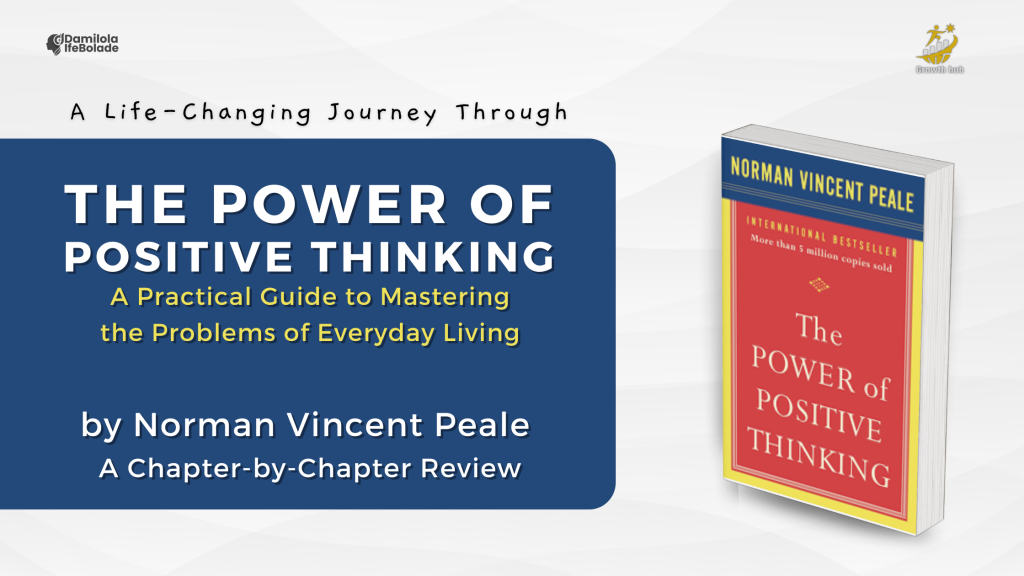
A Life-Changing Journey Through “The Power of Positive Thinking” by Norman Vincent Peale: A Chapter-by-Chapter Review

We have all been blessed with a gift, called LIFE! Even though it is a gift, it is sometimes full of challenges. But how we face these challenges determines the story we tell. Norman Vincent Peale’s timeless classic, The Power of Positive Thinking, is an inspiring reminder that our thoughts shape our realities. I’m not just about wishful thinking but about cultivating an inner strength that transforms our lives, no matter the circumstances. The central message of this book is simple yet profound: believe in yourself, trust in God’s power, and you can achieve remarkable things. Let’s dive into the chapter-by-chapter summary. Chapter 1: Believe in Yourself It is no news a sense of inferiority and inadequacy can block the path to achieving our dreams. But you need to know this: self-confidence paves the way to self-realisation and success. I know, believing in yourself isn’t always easy. Yet, faith in your abilities is a non-negotiable foundation for success and happiness. Without it, we risk stumbling over doubts that were never meant to define us. Here are some actionable steps to build self-confidence: Create a mental picture of success: Visualize yourself as a winner. Not once, not twice, but repeatedly, if possible daily, until this image becomes part of who you are. Counter negativity with positivity: When those “I’m not good enough” thoughts creep in, replace them with uplifting affirmations. For example, “I am capable,” or better still, “I can do all things through Christ who strengthens me.” Stop magnifying obstacles: We’re often our own worst enemies, blowing challenges out of proportion in our imagination. Instead, focus on solutions and opportunities. Be authentically you: While it isn’t bad to have mentors or role models, trying to mimic others only robs you of your unique brilliance. Remember, there’s only one you, and that’s your superpower. Anchor your faith in God: Say this affirmation with confidence, “If God be for me, who can be against me?” It is a game-changer. Say it. Believe it. Live it. Chapter 2: A Peaceful Mind Generates Power Let’s face it, life can be noisy, externally and internally. But know that a peaceful mind is the secret to unlocking inner strength. Think about it: when your mind is calm, you’re more creative, focused, and resilient. You can achieve more. But how do we achieve such peace in a world filled with distractions? Try these practical techniques: Practice emptying your mind: Every day, set aside a moment to let go of mental clutter. Whether it’s unresolved worries or lingering frustrations, visualize yourself releasing them. Breathe deeply and let peace wash over you. Fill your mind with healthy thoughts: Emptying your mind is just half the battle. Immediately replace the void with thoughts that inspire, uplift, and energize you. For me, this could be reflecting on God’s promises or recalling moments of gratitude. Speak peaceful words audibly: Words carry power. Peale suggests using soothing phrases like “peace,” “calm,” or “contentment.” Scripture or poetry works beautifully too—lines that resonate deeply with your soul. Begin each day with positive affirmations: Set the tone for your day by affirming peace, joy, and success over yourself. It’s amazing how this simple habit can influence your mood and outcomes. Chapter 3: How to Have Constant Energy It’s easy to feel drained when we are constantly doing so much. But here’s the thing, TRUE energy doesn’t come from a cup of coffee or a power nap. The source of all energy is God. The universe is filled with energy—whether it’s atomic energy, electric energy, or spiritual energy—and God is the source of it all. When we connect with God, we tap into that divine energy, the same energy that creates and recreates the world. Just as spring renews itself every year, God’s energy refreshes us, too. By staying in touch with Him, we can feel that constant flow of energy in our lives. It’s not about trying to push through each day; it’s about letting God’s energy flow through you, fueling your actions and thoughts. Chapter 4: Try Prayer Power Prayer has the potential to change our lives. The author, quoting a famous psychologist, tells us that prayer is the greatest power available for solving personal problems. It’s not just a way to ask for help; it’s a force that can refresh us every time and renew us every day. Prayer brings us back to our Creator, and enables us to face the world with a calm and positive outlook. One of the most effective approaches to prayer is what Peale calls the “Prayerize, Picturize, Actualize” method. This means that you start by praying for the situations or challenges in your life. Picture them in your mind as already resolved, and then take action to make them a reality. This powerful formula helps us align our spiritual energy with our physical world. To get the most out of prayer, follow these simple rules: Set aside a few minutes each day to pray. Use simple, natural words when you pray. God is our Father, we can be real and open in His presence. Pray as you go about your day; make it part of your routine. Spend more time giving thanks than asking for things. Gratitude opens the door for even greater blessings. Chapter 5: How to Create Your Own Happiness Happiness isn’t something that happens to you; it’s something you choose. You have the power to decide whether to be happy or unhappy. And the way you think has a massive impact on your happiness. Our mindsets are habits we cultivate, and as we change spiritually, we begin to see the physical world around us shift. Happiness becomes more attainable, and success feels easier when we align our thoughts with positivity and gratitude. Here’s how you can create your own happiness: Keep your heart free from hate and worry. These emotions only weigh you down. Live simply and expect little, but give much. The less you hold onto, the more you can share. Scatter love and

A Life-Changing Journey Through “The Power of Positive Thinking” by Norman Vincent Peale: A Chapter-by-Chapter Review Read More »

Book Summaries, , , , , , , , , , , , , , , , , , ,