

Entrepreneurship

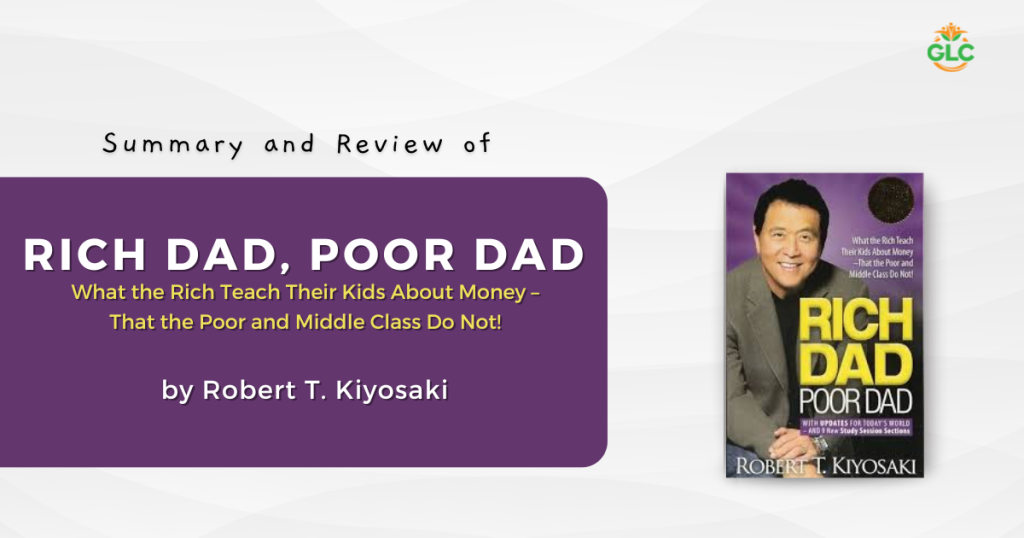
Rich Dad Poor Dad Summary: Life-Changing Money Lessons from Robert Kiyosaki

What truly separates those who merely earn money from those who build lasting wealth? That’s the big question at the heart of this best-selling book: Rich Dad, Poor Dad by Robert Kiyosaki. This isn’t just a book about money. It’s about how we think. It’s about mindset. Through two very different father figures, his highly educated but financially limited “Poor Dad” and his entrepreneurial, wealthy “Rich Dad”, Kiyosaki shows us just how deeply our beliefs about work, money, and success shape our future. One dad encouraged job security, saving, and climbing the corporate ladder. The other encouraged learning how money works, taking calculated risks, and building assets that create freedom. In this summary, we’ll walk through each chapter and unpack the core lessons that continue to challenge, inspire, and guide readers around the world. Let’s dive in. Chapter 1: The Rich Don’t Work for Money Most of us grow up being told to get a good job, work hard, and chase promotions. But the rich think differently. They don’t work for money, they make money work for them. It’s not just about income; it’s about mindset. Fear and greed often drive us into financial traps: staying in jobs we don’t love or overspending to feel secure. The rich learn to master their emotions and focus on building capacity and clarity, not just comfort. Chapter 2: Why Teach Financial Literacy? It’s not always just about how much we earn, it’s about how much we keep and how wisely we manage that which is kept. Many of us make the mistake of buying liabilities that drain our pockets while calling them assets. But real financial literacy starts with understanding the difference. Assets put money into our lives. Liabilities take it out. It’s simple, but powerful, and it changes how we handle everything from housing to habits. Chapter 3: Mind Your Own Business Too often, we spend our entire lives working for someone else’s dream. Even if we’re employed, we can still build our own businesses, our own asset columns. This is so essential. Kiyosaki encourages us to think beyond our professions. What we do for a living is one thing, of course it must be well done. But what we own, what builds wealth in the background, is our true business. We must learn to think long-term and invest in ownership, not just labour. Chapter 4: The History of Taxes and the Power of Corporations The rich play the money game by a different set of rules, unlike the poor. While most employees earn, pay taxes, and spend what’s left, the rich earn, spend, and then pay taxes on what remains, legally, through corporations. This isn’t about trickery; it’s about understanding the system and making it work for us. It’s a powerful reminder that complaining about the rules won’t change our lives, but learning them might be the game-changer. Chapter 5: The Rich Invent Money We often believe that wealth comes from luck or connections. But in truth, financially intelligent people create their own opportunities. They spot possibilities that others miss because they’ve trained their minds to look for them. They act when others freeze. We don’t have to wait for perfect conditions to move. With knowledge, creativity, and courage, we can learn to invent money too. Chapter 6: Work to Learn, Don’t Work for Money What if we chose jobs not just for the paycheck, but for the skills they teach us? Rich Dad urged Robert to try different roles so he could learn how money, business, and people really work. Sales. Leadership. Investing. Communication. These aren’t just “nice to have” skills, they’re wealth-building tools that should be learnt. As leaders and learners, we grow the most when we step out of our comfort zones and stretch our abilities. Chapter 7: Overcoming Obstacles Even when we know what to do, many of us still don’t act. Why? Because of fear, doubt, laziness, bad habits, and ego. These are the inner blocks that keep us stuck. Kiyosaki reminds us that success isn’t about being fearless, it’s about being brave enough to act anyway. Personal growth, financial mastery, and leadership all start with the same thing: courage to move forward. Chapter 8: Getting Started So how do we begin? Kiyosaki offers simple but powerful action steps. Define your “why.” Surround yourself with people who push you to grow. Learn a few key money principles and apply them. Pay yourself first. Use assets, not salaries, to fund your lifestyle. Start small. Start now. We don’t need to have it all figured out. We just need to take one step, then another. Chapter 9: Still Want More? Here Are Some To-Dos Finally, the book closes with a challenge: most people read books, feel inspired, and then do nothing. Don’t let that be you. Kiyosaki encourages readers to make offers, invest in knowledge, shadow mentors, and take baby steps. You don’t have to be perfect. You just have to be intentional. Remember, execution beats theory. Watch the market. Test your ideas. We grow by doing, not just by reading. Perfection isn’t the goal. Progress is. Final Thought Rich Dad Poor Dad is a reminder that financial freedom doesn’t start with money, it starts with mindset. It’s about challenging what we’ve been taught, stepping outside our comfort zones, and leading ourselves toward growth. Financial intelligence, emotional mastery, and a bias for action aren’t optional anymore, they’re essential. So build your vision. Master your finances. Lead your life.

Rich Dad Poor Dad Summary: Life-Changing Money Lessons from Robert Kiyosaki Read More »

Book Summaries, , , , , , , , , , , , , , , , , , , ,
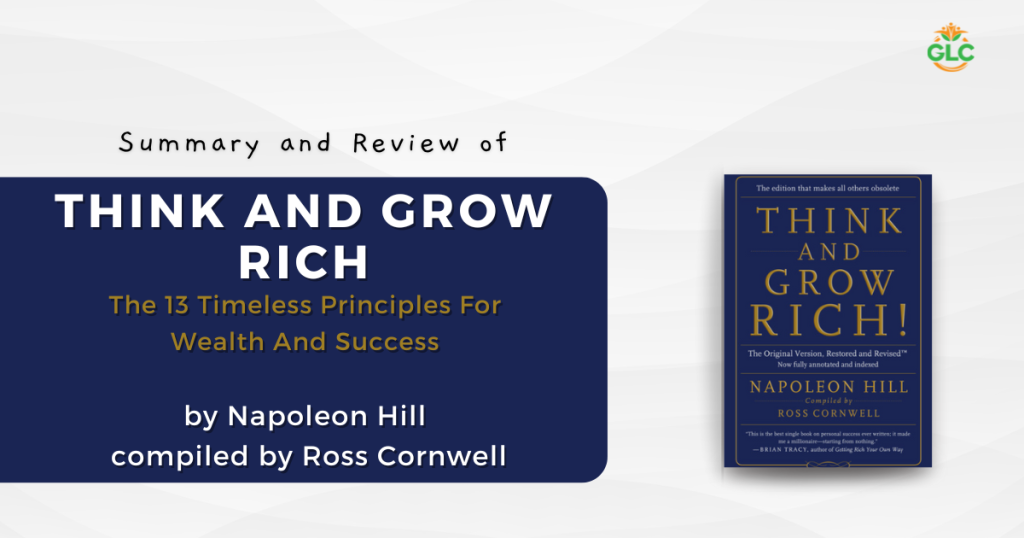
THINK AND GROW RICH- The 13 Timeless Principles For Wealth And Success

INTRODUCTION Think and Grow Rich by Napoleon Hill is a timeless classic, which talks about unlocking the power of your mind to achieve anything you truly desire.  More than a book, it’s a blueprint for personal transformation. It teaches that your mindset shapes your destiny and with the right belief, desire, as well as persistence, no goal is out of reach. This isn’t just about growing rich in wealth, it’s about growing rich in purpose, clarity and self-belief. Whether you’re an entrepreneur, a student, a dreamer, or someone just searching for direction, success isn’t just about luck, talent or where you were born, real success comes from mastering your thoughts, habits and beliefs.  Join me as we explore the principles of lifetime riches together. CHAPTER 1 – DESIRE: The Starting Point of All Achievement In this chapter Napoleon Hill made one thing very clear, which is if you truly want to succeed, you must deeply, passionately want it, not just wish for it, not just hope, it has to burn like a fire inside you. “Desire is the starting point of all achievement.” This isn’t about daydreaming, it is about having a burning desire, backed by faith and action, which separates successful people from everyone else. A good example is the story of Edwin C. Barnes, a man who had one dream: to work with the famous inventor Thomas Edison. Barnes didn’t know Edison personally, he had no money, no connections just a clear goal in his mind, but he was so determined that he hopped on a freight train and showed up at Edison’s lab. He didn’t get a high position right away, but he worked hard and stayed focused, eventually, his moment came. Edison gave him a chance to sell one of his inventions, Barnes grabbed the opportunity, proved himself and went on to become Edison’s partner. A burning desire will unlock the doors for greatest achievements. CHAPTER 2 – FAITH: The Visualization of and Belief in the Attainment of Desire If desire is the spark that starts the fire of success, then faith is the fuel that keeps it burning.  Faith is the foundation of all great achievements. This doesn’t mean religious faith (though the concept can overlap); it means belief in yourself, in your dreams and in your ability to succeed even before there’s any physical proof. Faith is more than just hope or positive thinking, it is a state of mind that can be created through repeated affirmations (what Nill calls “auto-suggestion”) and emotional involvement. When you repeat something to yourself often enough and truly believe it; you begin to act as if it’s already real. The mind is like a garden, your thoughts are the seeds. When you mix those thoughts with emotion especially belief and desire they start to take root and grow. The combination of desire and faith is a kind of spiritual power. When they are blended together, you gain the inner strength to take bold actions, to push through obstacles and to remain confident even when the world doubts you. Success doesn’t start with outside conditions, it starts in the mind. CHAPTER 3 – Auto-Suggestion: The Medium for Influencing the Subconscious Mind Auto-suggestion: Simply put, it’s the practice of feeding your mind with positive, goal-driven thoughts over and over until they become part of your belief system. It is a way to influence your subconscious mind by repeating thoughts, ideas or goals regularly with emotions and beliefs, think of it as self-talk with a purpose. The subconscious mind doesn’t filter what it receives, it simply accepts repeated thoughts as truth, especially when they come with strong emotion. So, if you want to change your life, you must first change what you constantly say to yourself. Hill writes: “Plain, unemotional words do not influence the subconscious mind, you will get no appreciable results until you learn to reach your subconscious mind with thoughts or spoken words which have been well emotionalized with belief.” That means your affirmations must not only be repeated often, but also felt deeply. This combination of repetition and emotion rewires your beliefs and habits. CHAPTER 4 – Specialized Knowledge: Personal Experiences or Observations You’ve probably heard the saying: “Knowledge is power” but in this chapter, Napoleon Hill makes an important clarification: “Knowledge is only potential power. It becomes power only when it is organized into definite plans of action and directed toward a clear goal.” In other words, just knowing things isn’t enough, what matters is what you do with what you know. There are two types of power: General Knowledge: This includes facts, theories and random information like what you might learn in school. It’s broad and scattered. Specialized Knowledge: This is focused, practical and useful knowledge, the kind that can help you make money or achieve a specific goal.  Hill emphasizes that success comes from acquiring and using specialized knowledge that helps you solve problems or create value. You Don’t Need to Know Everything Just What Matters. An example is the story of Henry Ford, who wasn’t highly educated in a traditional sense, but he surrounded himself with people who had the knowledge he needed. He organized and directed that knowledge to build one of the greatest industrial empires of his time. In a world overwhelmed with information, those who know how to apply the right knowledge at the right time, for the right reason have the advantage. CHAPTER 5 –  Imagination: The Workshop of the Mind Ever heard the saying, “If you can dream it, you can achieve it”? This chapter dives into the mental engine behind that idea: Imagination. Hill calls it “the workshop of the mind,” because it’s where desire, faith and knowledge are shaped into plans. It’s where success is first born not in the real world, but in your thoughts. “Man can create anything which he can imagine.” According to Hill, imagination is the ability to form mental pictures of things that don’t yet exist. It’s your inner workshop,

THINK AND GROW RICH- The 13 Timeless Principles For Wealth And Success Read More »

Book Summaries, , , , , , , , , , , , , , , , , , ,