

success habits

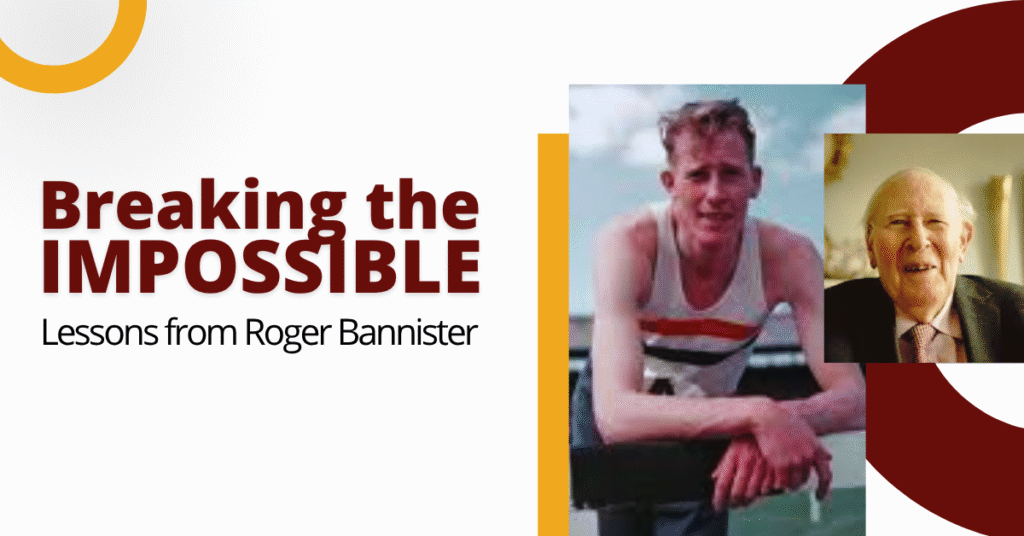
Breaking the Impossible: What Roger Bannister Teaches Us About Our Limits

I saw this beautiful quote: ‘Limits exist only until someone decides to challenge them.’ It perfectly describes the story of the man I’m about to share — Roger Bannister. I recently came across the story of Roger Bannister, and it completely blew my mind. Who is he? You may want to ask. Roger Bannister was a British medical student who, on May 6, 1954, became the first person in history to run a mile in under four minutes. Despite training minimally while studying to become a doctor, he finished in 3 minutes and 59.4 seconds. Here’s the back story. In the early 1950s, the four-minute mile was widely considered an unbreakable physical limit. Doctors, coaches, and athletes believed the human body simply couldn’t handle the speed and endurance required. Some experts even warned it could cause the heart to explode or lead to collapse. Scientists wrote papers, experts debated, and the world collectively agreed: it was impossible. And then Bannister did it. He didn’t just break a record, he shattered a belief. Within years, can you believe that dozens of people did same? Today, over 2,000 athletes have run a sub-four-minute mile. His feat didn’t just change athletics; it changed what people thought was humanly possible. He proved that many limits exist only in our minds, until someone dares to challenge them. And that is what made him stand out. There’s something quietly revolutionary in that story. Bannister didn’t wait for permission, for the world to believe in him, or for conditions to be perfect. He took a bold step. He acted on what He believed was possible. He ran. He focused on what he could do, not what everyone else said he couldn’t. And in doing so, he shifted the horizon for everyone who came after him. What a great way to live! I find myself thinking about this in my own life. I imagine the small battles we fight every day. Maybe it’s a dream that seems too big, a skill you want to master, or just a habit you want to change. The truth is, the world may tell you “impossible” in one way or another, but impossible only becomes real when you accept it. When you act, when you take that step, you begin to rewrite what’s possible for yourself, and maybe even for someone else who’s watching. So today, I want to invite you to run your own mile. Not necessarily on a track, not literally (unless you want to, of course!), but in life. Take that step toward what feels impossible. Do the thing that makes you doubt, that scares you, that everyone else says you can’t do. The more you practice challenging your limits, the more you realise those “impossible” walls are often just ideas waiting to be shattered. Because here’s what you need to know: when you do the little things that feel right, when you push yourself just a little further than yesterday, you don’t just achieve, you become a better version of yourself. And just like Bannister, your courage to act might open the door for someone else to believe, to try, and to run their own mile. What are you doing differently today? This month? Challenge your fears, break the barrier. Go for gold. Do the impossible. Yes, you can! I hope this encourages you.

Breaking the Impossible: What Roger Bannister Teaches Us About Our Limits Read More »

Get Inspired, , , , , , , , , , , , , ,
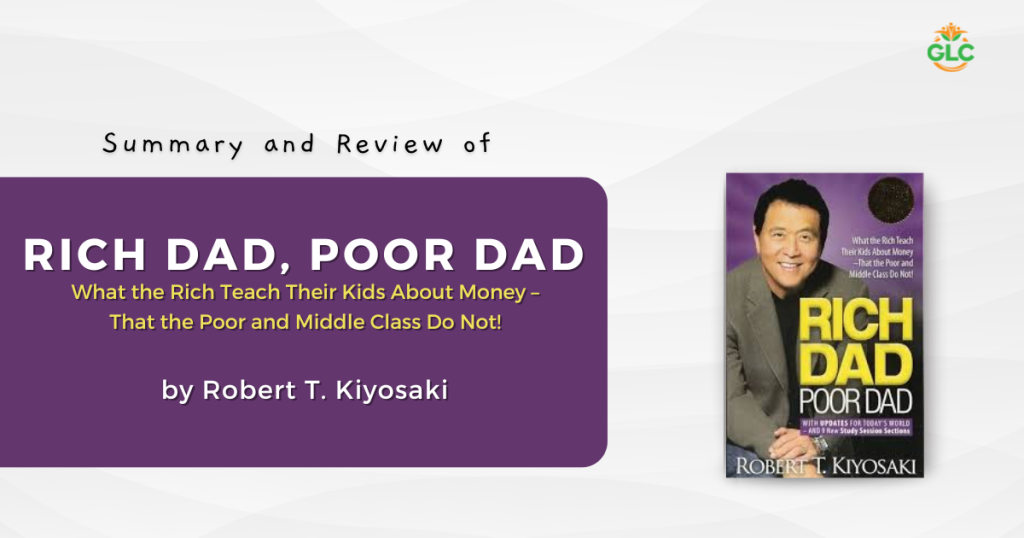
Rich Dad Poor Dad Summary: Life-Changing Money Lessons from Robert Kiyosaki

What truly separates those who merely earn money from those who build lasting wealth? That’s the big question at the heart of this best-selling book: Rich Dad, Poor Dad by Robert Kiyosaki. This isn’t just a book about money. It’s about how we think. It’s about mindset. Through two very different father figures, his highly educated but financially limited “Poor Dad” and his entrepreneurial, wealthy “Rich Dad”, Kiyosaki shows us just how deeply our beliefs about work, money, and success shape our future. One dad encouraged job security, saving, and climbing the corporate ladder. The other encouraged learning how money works, taking calculated risks, and building assets that create freedom. In this summary, we’ll walk through each chapter and unpack the core lessons that continue to challenge, inspire, and guide readers around the world. Let’s dive in. Chapter 1: The Rich Don’t Work for Money Most of us grow up being told to get a good job, work hard, and chase promotions. But the rich think differently. They don’t work for money, they make money work for them. It’s not just about income; it’s about mindset. Fear and greed often drive us into financial traps: staying in jobs we don’t love or overspending to feel secure. The rich learn to master their emotions and focus on building capacity and clarity, not just comfort. Chapter 2: Why Teach Financial Literacy? It’s not always just about how much we earn, it’s about how much we keep and how wisely we manage that which is kept. Many of us make the mistake of buying liabilities that drain our pockets while calling them assets. But real financial literacy starts with understanding the difference. Assets put money into our lives. Liabilities take it out. It’s simple, but powerful, and it changes how we handle everything from housing to habits. Chapter 3: Mind Your Own Business Too often, we spend our entire lives working for someone else’s dream. Even if we’re employed, we can still build our own businesses, our own asset columns. This is so essential. Kiyosaki encourages us to think beyond our professions. What we do for a living is one thing, of course it must be well done. But what we own, what builds wealth in the background, is our true business. We must learn to think long-term and invest in ownership, not just labour. Chapter 4: The History of Taxes and the Power of Corporations The rich play the money game by a different set of rules, unlike the poor. While most employees earn, pay taxes, and spend what’s left, the rich earn, spend, and then pay taxes on what remains, legally, through corporations. This isn’t about trickery; it’s about understanding the system and making it work for us. It’s a powerful reminder that complaining about the rules won’t change our lives, but learning them might be the game-changer. Chapter 5: The Rich Invent Money We often believe that wealth comes from luck or connections. But in truth, financially intelligent people create their own opportunities. They spot possibilities that others miss because they’ve trained their minds to look for them. They act when others freeze. We don’t have to wait for perfect conditions to move. With knowledge, creativity, and courage, we can learn to invent money too. Chapter 6: Work to Learn, Don’t Work for Money What if we chose jobs not just for the paycheck, but for the skills they teach us? Rich Dad urged Robert to try different roles so he could learn how money, business, and people really work. Sales. Leadership. Investing. Communication. These aren’t just “nice to have” skills, they’re wealth-building tools that should be learnt. As leaders and learners, we grow the most when we step out of our comfort zones and stretch our abilities. Chapter 7: Overcoming Obstacles Even when we know what to do, many of us still don’t act. Why? Because of fear, doubt, laziness, bad habits, and ego. These are the inner blocks that keep us stuck. Kiyosaki reminds us that success isn’t about being fearless, it’s about being brave enough to act anyway. Personal growth, financial mastery, and leadership all start with the same thing: courage to move forward. Chapter 8: Getting Started So how do we begin? Kiyosaki offers simple but powerful action steps. Define your “why.” Surround yourself with people who push you to grow. Learn a few key money principles and apply them. Pay yourself first. Use assets, not salaries, to fund your lifestyle. Start small. Start now. We don’t need to have it all figured out. We just need to take one step, then another. Chapter 9: Still Want More? Here Are Some To-Dos Finally, the book closes with a challenge: most people read books, feel inspired, and then do nothing. Don’t let that be you. Kiyosaki encourages readers to make offers, invest in knowledge, shadow mentors, and take baby steps. You don’t have to be perfect. You just have to be intentional. Remember, execution beats theory. Watch the market. Test your ideas. We grow by doing, not just by reading. Perfection isn’t the goal. Progress is. Final Thought Rich Dad Poor Dad is a reminder that financial freedom doesn’t start with money, it starts with mindset. It’s about challenging what we’ve been taught, stepping outside our comfort zones, and leading ourselves toward growth. Financial intelligence, emotional mastery, and a bias for action aren’t optional anymore, they’re essential. So build your vision. Master your finances. Lead your life.

Rich Dad Poor Dad Summary: Life-Changing Money Lessons from Robert Kiyosaki Read More »

Book Summaries, , , , , , , , , , , , , , , , , , , ,