

Get Inspired

The Space Between What Happens and How You Respond: A Lesson from Viktor Frankl

About two years ago, during a course I was taking, it was my first time hearing about concentration camps. Concentration camps were places where large groups of people were forcibly held and confined, usually because of their ethnicity, religion, political views, or other targeted identities. During World War II, they were most infamously used by Nazi Germany as part of the events of the Holocaust. People were kept in overcrowded, harsh conditions with very little food, poor sanitation, and limited freedom. Many were subjected to forced labor, and millions lost their lives as a result of the conditions and systematic violence. So we were talking about ethics and some of the extreme things humans have gone through in history, and I remember a few of the stories touched me deeply. It honestly made me pause and wonder how situations like that were ever allowed to happen in the first place. It made me wonder how anyone could ever justify or normalize inflicting such an unquantifiable level of pain on another person. But that’s not the subject of discussion for today. When people talk about World War II, the focus is often on the war itself, the fighting, and the massive loss that came with it. But tucked inside that history is something many people don’t really talk about. Despite the harsh conditions people were subjected to, some persons didn’t give up on life. I know a lot of what happened there wasn’t just physical suffering, but also the loss of identity, freedom, and basic dignity. But in the middle of that reality was a man named Viktor Frankl. Let’s talk about Viktor Frankl. Before the war, Frankl was a neurologist and psychiatrist in Vienna. He spent his early years studying the human mind, particularly what gives life a sense of purpose. Then the war interrupted everything. He was taken into a concentration camp along with his family. Over time, he lost his parents, his brother, and his pregnant wife. The life he had built disappeared piece by piece. He moved through multiple camps and lived under conditions defined by hunger, uncertainty, and constant exposure to suffering. Yet even there, he paid attention, not just to what people were going through, but to how they responded to their experiences. Viktor noticed that, while many people were overwhelmed by the conditions, some still made small, intentional choices about life. Someone would share food even when they barely had enough. Someone would offer a word of comfort to others, even when they were in pain. These actions didn’t change their situation, but they revealed something about the people making them. That observation led him to conclude that even when circumstances are extremely bad, there is still a point at which a person decides how to respond. You have a choice. Yes, you do. Viktor described it as a space between what happens and what you do next. After the war, Viktor returned to Vienna and began rebuilding his life. He continued his work in psychology and developed an approach called logotherapy. Logotherapy is a form of therapy based on the idea that finding meaning in life is the central human drive and a key source of resilience, even in suffering. He also wrote Man’s Search for Meaning, where he documented both his experiences in the camps and the psychological insights that came from them. The book has remained widely read because it speaks to something fundamental about being human. When you reflect on his story, it naturally brings your attention back to your own life. Most people are not facing the kind of extreme conditions Viktor endured, but that doesn’t mean life feels easy. Challenges still show up, plans don’t always work out, relationships can be complicated, and there are moments that feel your world is crushing right before your eyes. In those situations, it’s common to react quickly. Something happens, and the response follows almost immediately. It can feel automatic. But Viktor’s perspective suggests something slightly different. There is a brief moment, sometimes barely noticeable, where a decision is made. It might look like choosing how long to stay in a negative spiral after something goes wrong. I used to be very guilty of this. It might be deciding whether to speak to yourself or others with harshness or with patience. It might be recognizing when a reaction is coming from habit rather than intention. These are not dramatic decisions, but they are consistent ones. Over time, they influence how you experience life. I am not saying you should ignore how you truly or pretend everything is fine. Viktor’s work does not dismiss pain; it acknowledges it directly. His point was that even within difficult experiences, you still have a level of control. You can feel frustrated and still decide what to do next. You can feel disappointed and still choose how you move forward. You can feel uncertain and still take your next step. Viktor’s life shows that what’s happening around you doesn’t fully decide what happens within you. He could have given up on life like most people did. We wouldn’t blame him if he had. But do you know that instead of trying to control everything outside, your attention can shift to how you respond on the inside? That kind of awareness gives you control and helps you respond better. And over time, it can shape the way you live your life. Take this as a reminder not to let what’s happening around you control how you respond to life. I hope this blesses you. Rooting for you, always.

The Space Between What Happens and How You Respond: A Lesson from Viktor Frankl Read More »

Get Inspired, , , , , , , , , , , , , , , , , , , ,
Breaking the Impossible: What Roger Bannister Teaches Us About Our Limits

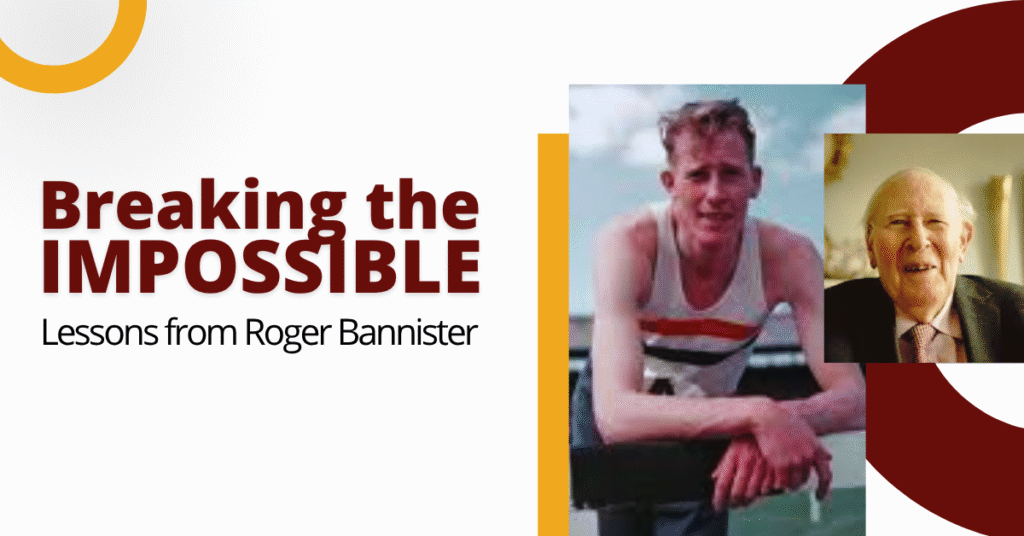
I saw this beautiful quote: ‘Limits exist only until someone decides to challenge them.’ It perfectly describes the story of the man I’m about to share — Roger Bannister. I recently came across the story of Roger Bannister, and it completely blew my mind. Who is he? You may want to ask. Roger Bannister was a British medical student who, on May 6, 1954, became the first person in history to run a mile in under four minutes. Despite training minimally while studying to become a doctor, he finished in 3 minutes and 59.4 seconds. Here’s the back story. In the early 1950s, the four-minute mile was widely considered an unbreakable physical limit. Doctors, coaches, and athletes believed the human body simply couldn’t handle the speed and endurance required. Some experts even warned it could cause the heart to explode or lead to collapse. Scientists wrote papers, experts debated, and the world collectively agreed: it was impossible. And then Bannister did it. He didn’t just break a record, he shattered a belief. Within years, can you believe that dozens of people did same? Today, over 2,000 athletes have run a sub-four-minute mile. His feat didn’t just change athletics; it changed what people thought was humanly possible. He proved that many limits exist only in our minds, until someone dares to challenge them. And that is what made him stand out. There’s something quietly revolutionary in that story. Bannister didn’t wait for permission, for the world to believe in him, or for conditions to be perfect. He took a bold step. He acted on what He believed was possible. He ran. He focused on what he could do, not what everyone else said he couldn’t. And in doing so, he shifted the horizon for everyone who came after him. What a great way to live! I find myself thinking about this in my own life. I imagine the small battles we fight every day. Maybe it’s a dream that seems too big, a skill you want to master, or just a habit you want to change. The truth is, the world may tell you “impossible” in one way or another, but impossible only becomes real when you accept it. When you act, when you take that step, you begin to rewrite what’s possible for yourself, and maybe even for someone else who’s watching. So today, I want to invite you to run your own mile. Not necessarily on a track, not literally (unless you want to, of course!), but in life. Take that step toward what feels impossible. Do the thing that makes you doubt, that scares you, that everyone else says you can’t do. The more you practice challenging your limits, the more you realise those “impossible” walls are often just ideas waiting to be shattered. Because here’s what you need to know: when you do the little things that feel right, when you push yourself just a little further than yesterday, you don’t just achieve, you become a better version of yourself. And just like Bannister, your courage to act might open the door for someone else to believe, to try, and to run their own mile. What are you doing differently today? This month? Challenge your fears, break the barrier. Go for gold. Do the impossible. Yes, you can! I hope this encourages you.

Breaking the Impossible: What Roger Bannister Teaches Us About Our Limits Read More »

Get Inspired, , , , , , , , , , , , , ,

Helen Keller: The Unstoppable Journey of Resilience and Triumph

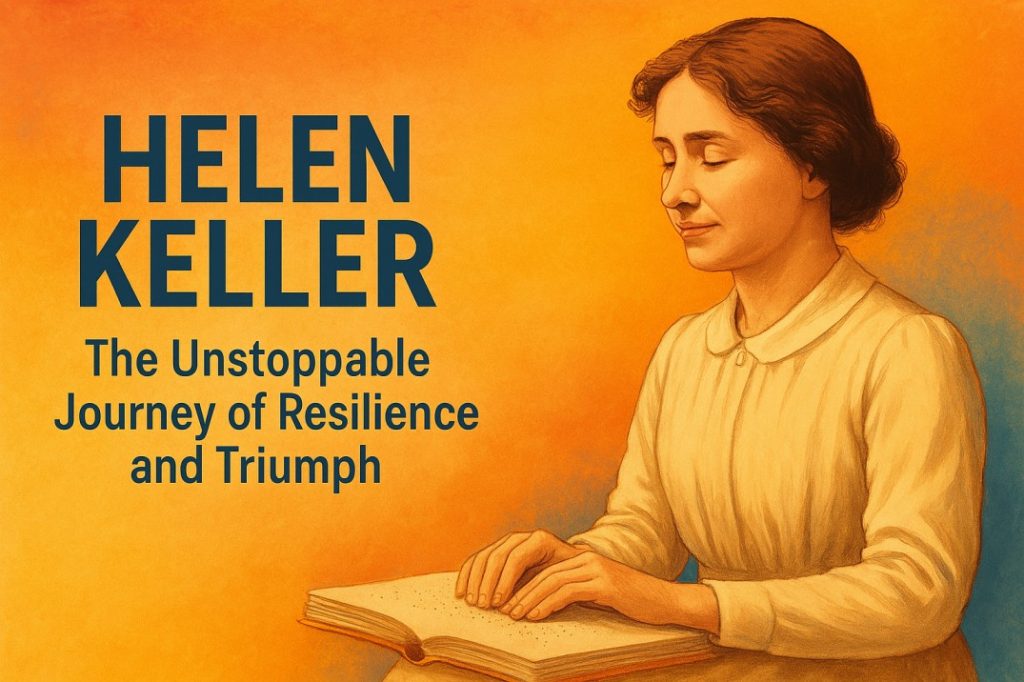
There’s a story I once read about a young girl who, at just 19 months old, was struck by an illness that left her both deaf and blind. For most, that would have been the end of the road. Who amounts to something in life without the eyes and eyes? Many would ask. But this girl refused to let her circumstances define her. That girl was Helen Keller. Her story is one of perseverance against all odds, I’ve ever read. It shows us that even in the darkest moments, there is a way to break through and find light. Hellen’s life is a powerful testament to the strength of the human spirit, how far we can go, even in the face of unimaginable challenges. Let’s take a closer look at how Helen turned her challenges into triumph. Helen Keller was born on June 27, 1880 as a healthy child in Tuscumbia, Alabama, 1880 to Kate Adams Keller and Colonel Arthur Keller. she lost her sight and hearing at just 19 months old due to an illness. In 1882, Helen fell ill with what the family doctor referred to as “brain fever,” causing a high fever. The exact nature of the illness is still uncertain, but some experts speculate it could have been scarlet fever or meningitis. A few days after the fever subsided, Keller’s mother observed that her daughter no longer reacted to sounds, such as the dinner bell, or to visual cues, like a hand being waved in front of her face. Imagine the pain of her m For most, such a loss would seem like an insurmountable barrier, but for Helen, it became the foundation for an extraordinary journey of perseverance and triumph. Instead of succumbing to her limitations, Helen found a way to communicate, learn, and thrive. Many thanks to her devoted teacher, Anne Sullivan, who was always there for her. She transformed her from an unruly child, once known for throwing temper tantrums that shook the household, into a disciplined and focused young girl. Helen learned to read, write, and engage with the world through touch. The darkness that once defined her world began to fade as she discovered the power of language and connection. Despite her disabilities, Keller attended Radcliffe College and graduated in 1904. Can you imagine the significant challenges she would have encountered along the way? Her path wasn’t just about surviving; it was about thriving. Helen became the first deaf-blind person to earn a college degree, an accomplishment that seemed impossible to many. She went on to become an influential author, speaker, and activist, using her platform to advocate for the rights of people with disabilities and inspiring millions with her message of hope and resilience. What makes Helen’s story even more powerful is her unwavering determination. She didn’t just overcome her challenges—she transformed them into opportunities. Helen once said, “Alone we can do so little; together we can do so much.” Her life shows us that even in our darkest moments, human connection and belief in ourselves can light the way forward. Helen Keller’s legacy teaches us that the only limits we face are the ones we accept. Her story is a reminder that no matter how difficult life may seem, with determination and the right support, we can rise above anything. Here are some lessons from her story No matter how tough life gets, you have the strength within you to push forward and overcome challenges. Success doesn’t come easily, but with hard work, determination and consistency, you can turn obstacles into stepping stones. Yes, you can. Having the right people by your side can make all the difference in achieving your goals. We need people to go far. Believing in yourself, even when the world doubts you, is the first step toward achieving greatness. Half of the battle is won, if you believe in you. Your challenges don’t define your potential; they can become the foundation for something extraordinary. Your scars should serve as a testament to your victories, not your defeat. So, don’t give up when things get tough—sometimes, all you need is to re-strategize or seek guidance. This is a reminder that you are stronger than you realize. While taking a break is important, let it be a time to recharge and find new ways to move forward, not a reason to settle Rooting for you, always. References Hellen Keller’s Biography More About Hellen

Helen Keller: The Unstoppable Journey of Resilience and Triumph Read More »

Get Inspired, , , , , , , , , , , , , , , , , , ,

The Best Response to Failure

Well, it’s JO again. Yesterday, I noticed a notification about JO’s post, but it was such a busy day that I had to skip it. This morning, during my meditation time, I decided to check out the content he shared, and wow—what a gem! It was the story of an extraordinary individual who recounted his father’s golden lessons on resilience. I almost screamed, “What?! This is resilience pro maxx!” The lessons were so profound that I was tempted to create contents from single point, but instead, I thought it best to share the link with you so you can experience it firsthand. Read it here: Golden Lessons of Resilience Which of these lessons resonated the most with you? Let me know in the chat! Many times, we may not be at fault for the unpleasant things that happen to us, but it becomes our responsibility if we allow them to keep us down. And hey, do you remember how we always say it? “Na who give up, fuck up!” I won’t give up, you won’t give up. We’re the generation that stays true to our dreams and aspirations because we are helped by God. This is where we belong!

The Best Response to Failure Read More »

Get Inspired

Bounce Back, Not Break!

Today, I’ll share about Mark Mero. Mark Mero was born in Buffalo, New York on July 9, 1960. Growing up, he faced significant challenges, including poverty and a troubled family life. According to Wikipedia, “His parents divorced when he was eight years old, with his mother supporting him and his two siblings by working two jobs.” Despite these difficulties, Mero found solace in sports, particularly football, wrestling, and boxing. He competed in high school wrestling and football. Mero’s passion for wrestling eventually led him to pursue a career in the sport. He began training and competing in independent professional wrestling promotions. Marc Mero’s wrestling journey began in 1990 when he traveled to Tampa, Florida to train under the renowned Malenko wrestling family. This marked the start of his path to becoming a professional wrestler. In 1991, Mero made his debut in World Championship Wrestling (WCW) as “Johnny B. Badd” at the SuperBrawl pay-per-view event. Over the next few years, he achieved significant success, winning the WCW World Television Championship three times between 1994 and 1996. His title reigns came after victories over notable opponents Lord Steven Regal, Diamond Dallas Page, and Lex Luger. In 1996, Mero made the move to the World Wrestling Federation (now WWE), debuting at WrestleMania XII. His impact was immediate, as he won the WWF Intercontinental Championship just six months later. Mero defeated a formidable lineup of opponents, including Steve Austin, Owen Hart, and Farooq to claim the title. Throughout his career, Mero faced some of the biggest names in wrestling, including Steve Austin, HHH, Edge, and Diamond Dallas Page, in high-profile pay-per-view events. Despite all the challenges he faced while growing up raised by a single mom, Marc dreamed big and set lofty goals, and the rest, they say, is history. In his book The 12 Traits of the Greats: Mastering The Qualities Of Uncommon Achievers, author Dave Martin remarked, “Marc Mero, a former WWE champion, turned his life around by consistently recording his dreams, transitioning from a blue-collar job to becoming a successful wrestler and motivational speaker.” Through determination and perseverance, Mero overcame his early struggles and went on to achieve success in the wrestling world. What is your story? No matter how bad it seems, refuse to let it keep you down. Rise beyond your boundaries. Let your story inspire someone. Remember, “Believe you can and you’re halfway there.” – Theodore Roosevelt Until next time, stay inspired!

Bounce Back, Not Break! Read More »

Get Inspired

Discovering Inner Fortitude

Have you ever reached your breaking point, feeling exhausted and overwhelmed? You are not alone! Imagine being trapped in a pool of water, exhausted and on the verge of giving up. This was the reality for a group of rats in Dr. Curt Richter’s groundbreaking Harvard study in the 1950s. The rats were forced to tread water for 15 minutes before reaching the point of despair. However, just as they were about to sink, the researchers intervened, pulling them out, drying them off, and providing a brief respite. Then, they were placed back in the pool for a second round. Contrary to expectations, these resilient rats swam for an astonishing 60 hours straight! The turning point? Hope. Believing they would be rescued unlocked a deep well of strength and determination within them. The study’s conclusion is profound: when we believe in ourselves and our abilities, we can achieve the impossible. Remember your inner strength, purpose, and capabilities. Keep swimming, even when the waters get rough. You never know what incredible feats you might achieve! Key Takeaways: – Believe in yourself and your abilities. – Hope can unlock inner strength and determination. – You are capable of more than you think. Even when the waters get rough and life feels overwhelming, keep trying. You never know what incredible feats you might achieve. The greatest glory in living lies not in never falling, but in rising every time we fall.” – Nelson Mandela Greatness awaits you!  

Discovering Inner Fortitude Read More »

Get Inspired

Experts Are Not Always Right!

Have you heard about the story of the automaker who tasked experienced engineers to reduce car weight, only to be told it was impossible? But then, a team of younger, less experienced engineers came along and made it happen! Read the summary: In the 1970s, soaring oil prices prompted the government to mandate car fuel efficiency. A leading automaker tasked a team of seasoned engineers to reduce vehicle weight drastically. Despite their expertise, they concluded that lighter cars were impossible to build due to cost and safety concerns. Their conventional thinking limited their solution. In a surprising move, the automaker reassigned the challenge to a younger, less experienced engineer team. With fresh perspectives and a can-do attitude, they successfully reduced the car’s weight by hundreds of pounds, proving that innovative solutions can emerge when possibilities are embraced. Their secret? They believed it was possible. The Lesson Don’t let traditional thinking hold you back from achieving greatness. Allow yourself to: – Challenge assumptions – Push boundaries – Explore fresh perspectives – Foster creativity – Embody a can-do attitude So, go ahead! Challenge the status quo, and unleash your full potential. You got this! Photo Credit: AI

Experts Are Not Always Right! Read More »

Get Inspired