

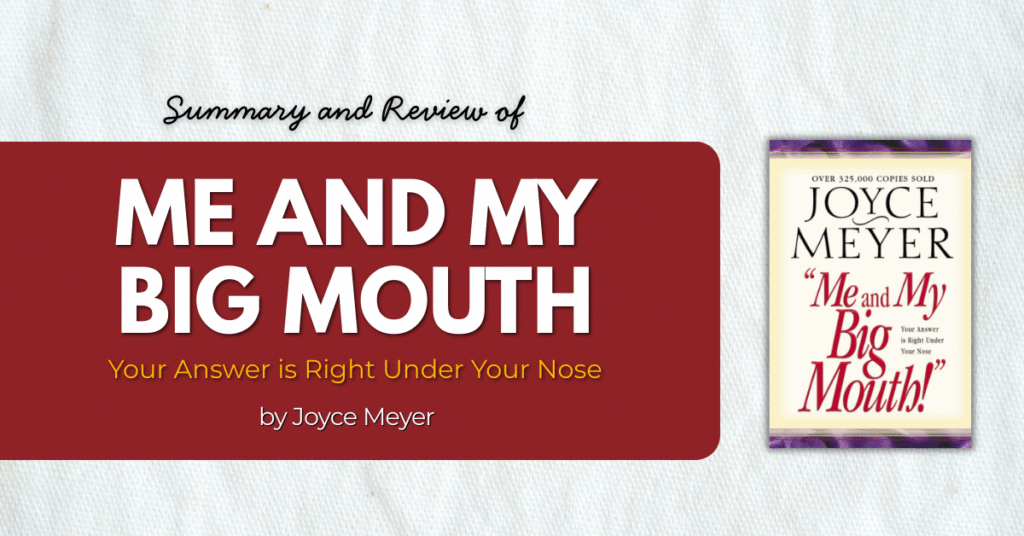
How the Words We Speak Quietly Shape Our Lives | A Review of “Me and My Big Mouth” by Joyce Meyer
I’ve read a few books by Joyce, but this one really stands out for me. The first time I saw the title, it immediately caught my attention, and I knew I had to read it. From the very start, Joyce lays down a truth that’s hard to ignore: our words are never neutral. Everything we say reflects what’s going on inside, our thoughts, our emotions, the choices we’re making. This reminded me that I’ve heard Mummy Funke Felix-Adejumo say words don’t die, and shouldn’t be taken lightly. Words aren’t just sounds; they carry weight. They can reveal fear, doubt, or resentment, or echo truth that lines up with God’s heart. They either build life or slowly drain it, and understanding that is the first step toward speaking differently, not just for appearances, but in a way that shapes how we live. I couldn’t help but pause and think: when was the last time I really considered the impact of my own words? Below is a quick summary of each chapter of the book. Chapter 1: Learning to Speak God’s Language From the first chapter, Joyce challenges a habit many of us don’t even notice: constantly talking about problems. We rehearse them in conversations, repeat them in prayer requests, and replay them in our own minds. She points back to Jesus’ instruction to speak to obstacles with faith. This isn’t about pretending life isn’t hard, it’s about refusing to let fear set the tone. Words only carry power when they’re backed by obedience and aligned with God’s character. I found myself wondering: how often have I spoken without thinking about whether my words matched my faith? Chapter 2: The Effect of Words in the Natural Realm Here, the author brings the idea down to everyday life. Words don’t stay in the spiritual realm, they shape how we respond, what we expect, and what we quietly accept as normal. And we must understand that confession isn’t empty repetition; it’s agreement. Over time, what we say becomes the lens through which we live. By pointing back to creation, Joyce reminds us that God has always taken speech seriously. While we’re not creating worlds, we are invited to reflect His nature by speaking life, truth, and intention into ordinary moments. That invitation carries responsibility: faith doesn’t excuse carelessness or lack of discernment. Let me ask you: are your everyday words reflecting life or draining it? Think about this! Chapter 3: Calling Things into Alignment Do you know that negative words have quiet, cumulative effects? Fear-filled speech doesn’t just express worry, it trains the soul to expect negativity. Using Abraham’s story, Joyce shows how faith-filled words can shape identity long before circumstances change. Positive confession isn’t wishful thinking; it’s disciplined agreement with what God has already said. Over time, these repeated truths loosen resignation and make space for expectation. I couldn’t help but reflect: what patterns in my speech might be quietly shaping who I am becoming? You may ask yourself, too. Chapter 4: Prophesying the Future Words don’t just describe where we are, they nudge us toward where we’re headed. Joyce compares the tongue to a steering mechanism: small, consistent words quietly influence direction. The things we casually complain about, when repeated often enough, don’t just pass through; they start to settle into our lives. Over time, they can shape what feels normal. In the same way, words spoken with intention and rooted in faith don’t always show immediate results, but they quietly begin to align our lives with what God has promised. It made me realise that my words are giving my life direction, and over time, they’re shaping the path I walk. Chapter 5: Becoming God’s Mouthpiece At this point, the focus shifts from self-expression to stewardship. Speaking for God requires more listening than talking. A consecrated mouth isn’t loud or dramatic; it’s rooted in humility, obedience, and alignment with His Word. True influence doesn’t come from personality; it comes from living in step with God’s will. Joyce asks a simple question that stuck with me: how aligned am I with His heart in what I speak every day? It is becoming a quiet daily check for me. Chapter 6: Complain and Remain, Praise and Be Raised This chapter hits differently. It reminded me that complaining isn’t just a slip, it’s a posture. Joyce uses Israel’s wilderness journey to show how persistent grumbling kept a whole generation stuck for 40 whole years. What a complete waste of time! But do you know praise works differently? I’m not saying the circumstances are going to change magically, but by shifting perspective. Gratitude redirects attention and creates space for God’s presence. What the mouth consistently magnifies gradually shapes the heart. Think about this, do you let small complaints always dictate your mood, emotions and focus? Chapter 7: Crossing to the Other Side Faith is tested in the middle of the journey. Promises often meet resistance after they’re spoken, not before. Storms reveal what we’ve truly anchored to. Words spoken in panic can undo months of quiet trust. Choosing steady, faith-filled speech during difficulty is an act of endurance. God secures the destination, but our words shape how we travel there. It made me reflect: when life feels hard, do my words reflect trust or fear? Chapter 8: Is Your Mouth Saved? This question sounds funny, but it’s real. Here Joyce asks a question most of us are guilty of: what happens when faith lives in the heart but never reaches the mouth? Spiritual growth eventually shows up in daily speech. When the Holy Spirit has room to work, our words start to carry grace, restraint, and truth more consistently. I paused and asked myself: are my words reflecting what I truly believe in my heart? If they don’t, then something needs to shift, either what I’m holding onto within, or the way I choose to speak. Chapter 9: When Fasting Includes Silence When we think of fasting, we often think of staying away from