

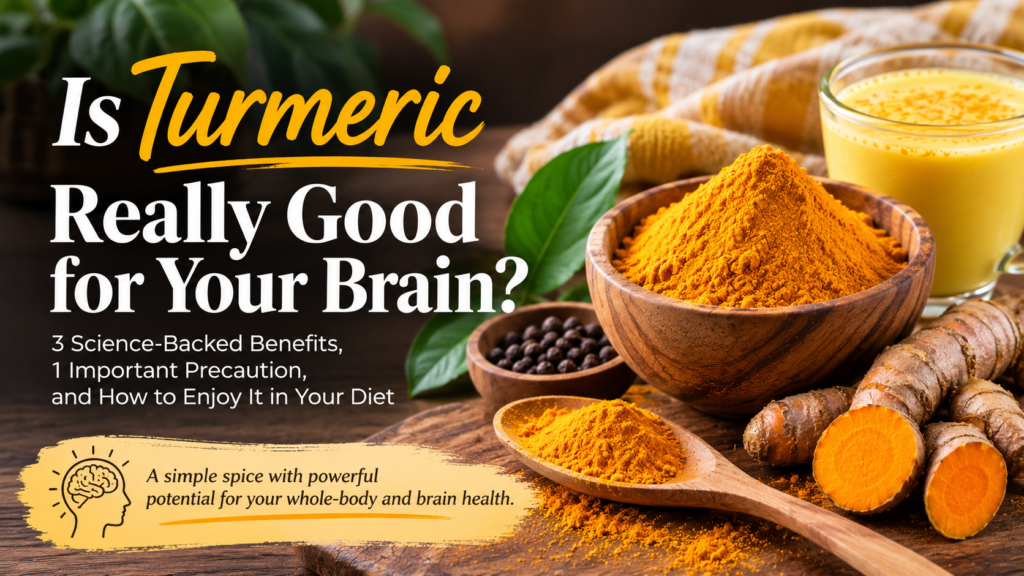
Did you know that turmeric is often called the “golden spice“?
It has been praised for centuries, and today it’s everywhere, from social media wellness posts to supermarket shelves and local markets. Some people even describe it as a miracle spice, claiming it can cure everything from arthritis to Alzheimer’s disease.
But is turmeric really that powerful?
The truth is, while turmeric isn’t a miracle cure, scientific research suggests it has several properties that may support your overall health, including your brain.
Let’s take a closer look at what the science actually says.
A Brief History of Turmeric
Turmeric has been used for thousands of years in cooking and traditional medicine, particularly in India and other parts of Asia. Beyond adding colour and flavour to food, it has long been valued in traditional healing systems such as Ayurveda.
Today, scientists are studying turmeric’s main active compound, curcumin, to better understand how it may contribute to human health.
Below are three science-backed reasons turmeric deserves a place in your kitchen.
1. It May Help Reduce Chronic Inflammation
Inflammation is your body’s natural defence against injury and infection. In the short term, it’s essential for healing. The problem begins when inflammation becomes chronic. Long-term inflammation has been linked to several health conditions, including heart disease, type 2 diabetes, and diseases that affect the brain.
Curcumin, the main active compound in turmeric, has natural anti-inflammatory properties. While turmeric is not a treatment or cure, but adding it to a balanced diet may help support your overall well-being, including your brain health.
2. It is Rich in Antioxidants
Did you know your brain is one of the most energy-demanding organs in your body? Because it uses so much oxygen, it’s also more vulnerable to oxidative stress, a process caused by an imbalance between harmful free radicals and your body’s natural defences.
Curcumin acts as an antioxidant, helping protect your cells from damage caused by free radicals. Although no single food can prevent brain ageing, regularly eating antioxidant-rich foods is one way to support long-term brain health.
3. Scientists Are Exploring Its Role in Brain Health
Laboratory and animal studies suggest that curcumin may help protect brain cells and influence processes involved in learning and memory. Some early human studies have also produced encouraging results. However, at the moment, we don’t have enough high-quality human evidence to say turmeric prevents Alzheimer’s disease or dementia. Research is ongoing, and scientists continue to explore its potential role in brain health.
Before You Start Taking Turmeric, please note the following…
– Turmeric is generally safe when used as a cooking spice. However, if you’re taking blood-thinning medication, have gallbladder disease, or are considering high-dose turmeric supplements, it’s important to speak with your healthcare provider first.
– Pair Turmeric with Black Pepper.
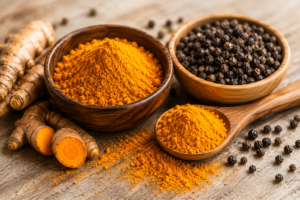
Here’s something many people don’t know. Your body doesn’t absorb curcumin very well on its own. Black pepper contains a natural compound called piperine, which can significantly improve the absorption of curcumin. Pairing turmeric with a pinch of black pepper and a source of healthy fat, such as olive oil or avocado, can help your body make better use of it.
Sometimes, it’s not just what you eat that matters, it’s how you eat it.
How I Enjoy Turmeric
Personally, turmeric has become one of my favourite kitchen spices. I sometimes:
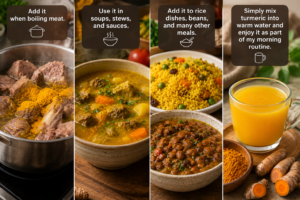 – use it in soups, stews, and sauces.
– add it to rice dishes, beans, and many other meals.
– simply mix turmeric into warm water and enjoy it as part of my morning routine.
As with most things, moderation is key.
As I wrap up, I’ll love to re-emphasise that, turmeric isn’t a miracle spice, and remember, good brain health isn’t built on one superfood. It’s built on the small, healthy choices you make every single day.
I’d love to hear from you.
Do you regularly cook with turmeric? What’s your favourite way to use it? Share your thoughts in the comments below, you might inspire someone else to try it too.
Rooting for you, always.
References
- Askarpour, M., et al. (2023). Antioxidant and anti-inflammatory effects of curcumin/turmeric supplementation in adults: A systematic review and dose-response meta-analysis of randomized controlled trials. Critical Reviews in Food Science and Nutrition. PubMed Abstract
- Hewlings, S. J., & Kalman, D. S. (2017). Curcumin: A review of its effects on human health. Foods, 6(10), 92. PubMed Record
- Mousavi, S. M., et al. (2023). Curcumin-piperine co-supplementation and human health: A comprehensive review of preclinical and clinical studies. Phytotherapy Research. PubMed Abstract